

5 Common Real Estate Scams and How to Avoid Them
- Updated
- Originally published
- 6 min read
-
 Richard Haddad Executive EditorClose
Richard Haddad Executive Editor
Richard Haddad Executive EditorClose
Richard Haddad Executive EditorRichard Haddad is the executive editor of HomeLight.com. He works with an experienced content team that oversees the company’s blog featuring in-depth articles about the home buying and selling process, homeownership news, home care and design tips, and related real estate trends. Previously, he served as an editor and content producer for World Company, Gannett, and Western News & Info, where he also served as news director and director of internet operations.
If you’re buying or selling a home right now, scams are no longer just a rare or distant risk; they’re part of the housing market landscape. Real estate transactions involve large sums of money, tight timelines, and multiple parties. That makes them a prime target for fraud.
And increasingly, scammers are getting a powerful assist from artificial intelligence (AI).
According to the FBI’s latest Internet Crime Complaint Center report, cyber-enabled fraud now accounts for the vast majority of reported losses, with total losses surpassing $20 billion in 2025 alone.
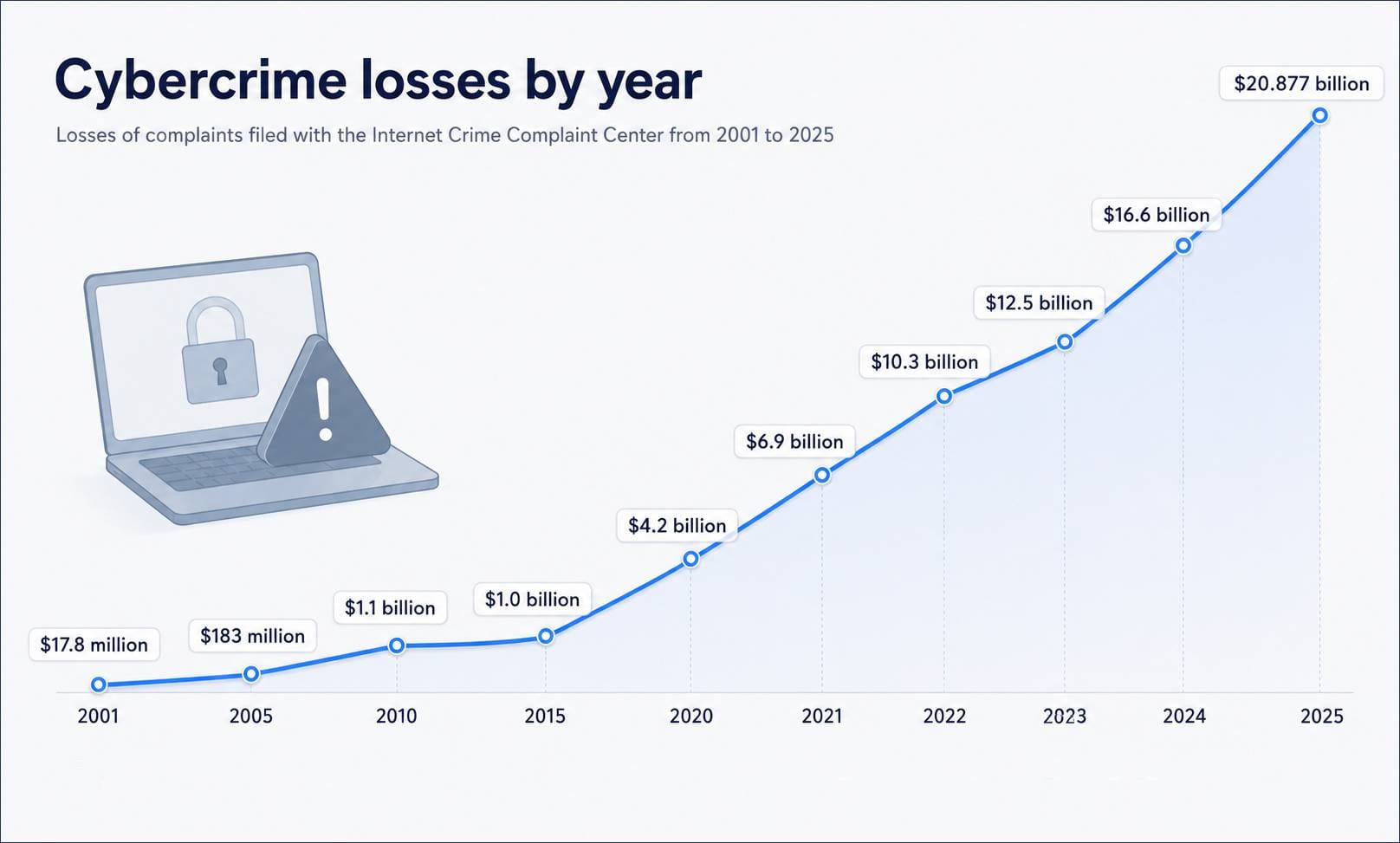
Criminals are using technology to impersonate, intercept communications, and create highly convincing messages and images that are harder to spot than ever.
AI is fueling real estate scams
The FBI notes that cyber threats are continuing to evolve alongside emerging technologies, enabling scammers to operate faster, scale their attacks, and make their outreach feel more personal and legitimate. In fact, the report logged more than 22,000 AI-related crime complaints, tied to nearly $900 million in losses.
Real estate is firmly in the crosshairs, says Matthew Gibbs, a top agent in Middletown, New York. “Scammers are using AI to mimic property owners and [real estate] professionals, targeting unencumbered homes or vacant land.”
In 2025 alone, there were more than 12,000 reported real estate-related fraud complaints, with losses exceeding $275 million. From fake wire instructions to impersonation scams that mimic agents, lenders, or title companies, these schemes are becoming more sophisticated and more convincing.
Whether you’re buying or selling, HomeLight can connect you to a trusted real estate agent who knows how to spot and avoid scams. Our free Agent Match platform analyzes over 27 million transactions and thousands of reviews to find top-rated local agents.
5 real estate scams agents are reporting most
To understand what this looks like on the ground, HomeLight surveyed 950 top real estate agents across the country. The findings revealed a troubling statistic; 63% of agents reported an increase in home and property scams in their markets.
Below are the five most common real estate scams agents are seeing right now, and what you can do to protect yourself.
1. Seller impersonation scams
Scammers pose as home or land owners using forged identification and stolen public records to list and sell properties they don’t own.
“The seller won’t meet in person or on a live video call,” says Kip Barnard, a top-rated agent in San Jose, California. “Communication happens exclusively through email or text, and the price is often meaningfully below comparable sales with little explanation.”
Barnard explains that the seller will typically push for a fast close with minimal contingencies and may specify their own title company. He says the title company requirement is a clear tell.
“A motivated, legitimate seller doesn’t care which reputable title company you use. Only someone with something to hide cares deeply about controlling that relationship.”
How to avoid this scam: “Ask your agent to verify the seller’s identity before you spend a dollar,” Barnard advises. “Insist on a title company you select independently. Ask the seller for documentation tied specifically to that parcel — a property tax bill, a recorded deed — something that connects them to the Assessor’s Parcel Number (APN). If they resist, you have your answer.”
2. Wire fraud scams
Cybercriminals hack the email accounts of real estate agents, buyers, or title companies to intercept closing communications and documents. They then send fake wire instructions to the buyer for down payments and closing costs.
Gina Bentley, a top agent in Livermore, California, says this crime can be devastating. “A buyer involved in one of my listings received fraudulent wire instructions that appeared legitimate, but they did not independently verify them with the escrow company before sending the funds. The victim lost hundreds of thousands of dollars.”
As with other real estate scams, AI technology is aiding this deception.
“Scammers are becoming increasingly sophisticated. They can mimic emails, logos, and even communication styles from trusted parties in a transaction,” Bentley explains. “These fraudulent messages often look exactly like they are coming from your escrow officer, lender, or real estate professional.”
How to avoid this scam: “If you get an email about money, you pick up the phone and call a known number — not the one that’s in the email,” says Jennifer Hupke, a top agent in Milwaukee, Wisconsin. “This isn’t about being overly cautious; it’s about protecting your money at the most vulnerable point in the transaction.”
3. Fake rental listing scams
Scammers steal listing photos and repost the properties as rentals to collect upfront deposits or fees.
“I see so many of our homes that are for sale being listed by scammers as rental properties,” says Barry Monday, a top agent in Hattiesburg, Mississippi. “Unfortunately, a lot of people don’t verify that the house is actually for rent before sending money.”
In many cases, victims don’t realize it’s a fake listing until move-in day.
“Many tenants are coming from out of the area, so they may not be able to see the home prior to their actual arrival for move-in,” says Anne Skinner, a top agent serving Colorado’s north-central mountain communities.
She adds that this scam is especially prevalent in markets like hers, where there is a high volume of second homes that may remain unoccupied for months.
How to avoid this scam: “If someone is renting out a home and they won’t let you tour the house without a deposit, that’s a red flag,” says Mariah Little, a top Delaware agent. “Check to see if the property is also listed for sale. If so, it’s probably not for rent. Call the listing agent and confirm.”
Also, if the rental price seems surprisingly low for the area, it may be a scam.
4. Fake Zoom and Google Meet scams
Scammers pose as buyers or sellers and push victims to click a fake video meeting link. The goal is often to install malware or steal passwords. Listing agents are often the target, but it can also happen to home sellers.
“The ‘buyer’ says they are from out of state and moving here for work,” explains Judah Sameth, a top agent in DeKalb County, Illinois. “They say they want to have a Zoom call to discuss the buying process, but the link installs malware on your computer to steal your passwords.”
How to avoid this scam: “Don’t do any Zoom or Google Meet calls unless you verify the individual,” advises Jessica Smith, a top agent in Mobile, Alabama. “Ask for identifying information and a pre-approval letter from their lender, or proof of funds.”
Another safeguard against this scam is to use only video links you create.
5. Deed and title fraud scams
Scammers transfer property ownership to themselves using fake IDs and forged signatures. They often target vacant land, rentals, or vacation homes. The criminals then sell the property for cash, leaving two victims behind.
“You have the victim who really owns the property and doesn’t know any of this went on, and the victim who just gave up their life savings, thinking they’re now a homeowner,” Brian O’Malley, Cuyahoga County’s director of transfer and recording, tells News 5 Cleveland.
How to avoid this scam: Beaufort, South Carolina, agent Julianne Clark says many county clerks or recorders offer free fraud alert notifications for property filings. “Register with your local county courthouse for deed scam protection,” she advises, noting that this is especially important if your property isn’t actively being used. She adds that vacant land scams were especially common last year.

Find a Trusted Real Estate Agent to Buy or Sell
Whether you are buying or selling, HomeLight can connect you with a trusted, top-rated real estate agent in your market. Our free Agent Match tool analyzes over 27 million transactions and thousands of reviews to determine which agent is best for you based on your needs.
The common thread behind real estate scams
Agents nationwide warn that real estate scammers follow predictable moments in a transaction. If you know where they show up, you can stay in control.
“Every scam (wire fraud, seller impersonation, rental scams, etc.) leans on urgency, emotion, or confusion,” says Amanda Stanford, a San Antonio, Texas, agent with 30 years of experience. “Most people don’t lose money because they’re careless. They lose money because the scam looks exactly like a normal transaction at the exact moment they’re least likely to question it.”
Agents also say it’s wise to remember an old adage: If a deal seems too good to be true, it probably is, especially when you’re being pressured to move fast.
“Scammers lure victims with prices significantly below market value,” says Eric Broesamle, a top agent in New Baltimore, Michigan. “If a deal seems suspiciously cheap or the ‘owner’ is pressuring you to act with extreme urgency, it is likely a scam.”
Stanford adds, “Trust the process, not the message. Slow down and verify everything by phone with partners you or your agent trust.”
Header Image Source: (Feverpitch / Deposit Photos)
At HomeLight, our vision is a world where every real estate transaction is simple, certain, and satisfying. Therefore, we promote strict editorial integrity in each of our posts.
