
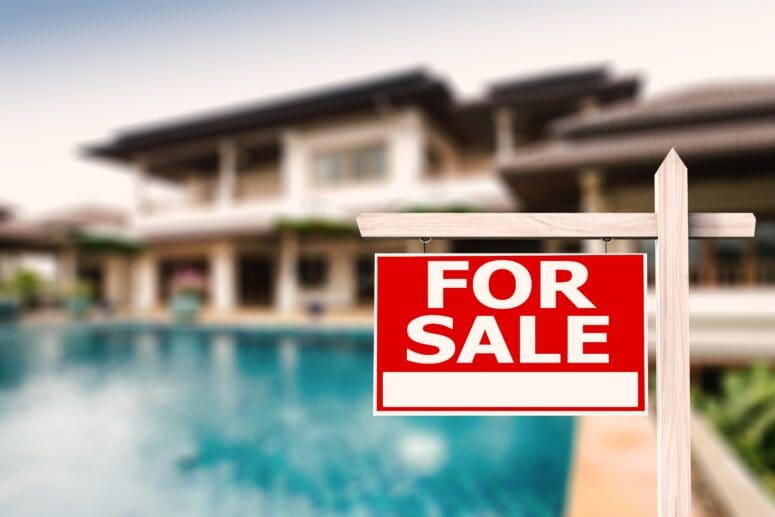
Does a Real Estate For-Sale Sign Help Sell My House?
- Published on
- 5 min read
-
 Cheyenne Wiseman EditorClose
Cheyenne Wiseman Editor
Cheyenne Wiseman EditorClose
Cheyenne Wiseman EditorCheyenne Wiseman is an Editor at HomeLight. Previously, she worked as a writer for Static Media (Mashed.com and Chowhound.com) and as an editor for CBR.com. Cheyenne holds a bachelor’s degree in English from UC Davis. She has more than five years of experience writing and editing on topics including real estate, financial advising, and pharmaceuticals.
If you’re getting ready to sell your home, you may be wondering whether real estate for-sale signs still make a difference. After all, most buyers begin their home search online. According to the National Association of Realtors (NAR), nearly all recent buyers used the internet during their home search, and 43% said their first step was looking at properties online.
Even in today’s digital-first market, for-sale signs can still play an important role. They can increase your home’s visibility, attract drive-by buyers, and generate interest from neighbors who may know someone looking to move into the area. The key is to think of a sign as one part of a broader marketing strategy, not the strategy itself.

Find a Top Listing Agent to Market Your Home
HomeLight makes it easy to connect with a top real estate agent who can develop a marketing strategy tailored to your home. Your agent will be equipped to provide complete service including: professional photography, listing on major online home search sites, open houses, and more.
Do real estate for-sale signs actually help sell houses?
Yes, a for-sale sign can still help sell a house, even though most buyers now search for homes online. In a 2025 report, NAR notes that 4% of buyers found the home they ultimately purchased through a yard sign or open house sign.
But signs can also reach people who aren’t actively house hunting, including those who live in, visit, or drive through the neighborhood. They can also get neighbors talking about the home with friends or family who might be interested.
“Signs capture passive buyers,” says Jason Farris, a HomeLight Elite Agent based in California with 22 years of experience. “They see a sign and think, well, gosh, I wonder what houses cost in this neighborhood. Like, we’re not really looking, but it could be an option for us.”
While accurate pricing, strong online marketing, and professional photos are still key to selling a home, a for-sale sign gives interested passersby an easy way to learn more, whether by calling the agent or scanning a QR code. If you’re selling directly to a cash buyer, however, you typically don’t need to market the home to the public in the first place.


What are the biggest benefits of using a real estate for-sale sign?
Real estate for-sale signs provide another way to get your home in front of potential buyers. Some of the biggest benefits include:
- More local exposure: Neighbors and visitors can see that your home is available.
- Word-of-mouth: Neighbors may know friends or family looking to move nearby.
- Drive-by interest: A sign can catch buyers who weren’t actively searching your neighborhood.
- Easier showings: Signs can help buyers find your home and direct traffic during open houses.
- Online connections: QR codes can send interested buyers directly to your listing.
Farris says he’s received calls from out-of-town buyers after they spotted his signs. “They see a sign and think, well, you know, maybe we’d move here. They don’t know a lot about the market, but that’s where the introduction comes from.”
Are there any drawbacks to using real estate for-sale signs?
For-sale signs aren’t right for every property. You might decide to skip one if:
- You want to keep the sale private: This may apply if you’re selling during a divorce, have tenants in the home, or simply don’t want to advertise the sale to neighbors.
- You’re selling off-market or for cash: If your agent is marketing the home privately to their network or you’re considering a cash sale, a sign may not be necessary.
- Your HOA or local rules restrict signs: Some HOAs and local governments limit the size, placement, or use of real estate signs.
- The home is vacant: A sign can draw unwanted attention to an unoccupied property.
Farris saw this risk firsthand with a vacant home he and a partner had renovated. They put up a for-sale sign, but after people began entering the backyard, they took it down, concerned it was drawing attention to the fact that no one lived there.
“If you put a sign outside, my recommendation would be to hang a rider, a sign, on it that says, ‘Do not disturb the occupant,’ something along those lines,” Farris says.
He recommends weighing the pros and cons with your agent before putting up a sign.
Sell Your House Fast With a Cash Offer
Get an all-cash, no-obligation offer through HomeLight’s Simple Sale platform whenever you’re ready. Receive your offer in as little as a week and close in as few as 7 days. No showings, no repairs, no open houses.
How can you make a real estate for-sale sign more effective?
A for-sale sign should catch attention and make it easy for interested buyers to learn more. To get the most from yours:
- Choose a professional, uncluttered design that’s easy to read from the street.
- Make the listing agent’s name and contact information prominent.
- Add a QR code that takes buyers directly to the listing, virtual tour, or property details.
- Place the sign where passing drivers can easily see it.
- Add riders, or smaller panels attached to the main sign, to advertise an open house or show when the home is pending or sold.
- Keep the lawn, landscaping, and exterior tidy to boost curb appeal and make a strong first impression.
“Sometimes people will take a picture of the sign, and they drive by, and they forget the sign and where it was located,” says Farris. That’s why he recommends including a QR code so interested buyers can pull up the listing immediately and easily return to it later.
More broadly, Farris says sellers should look for an agent who knows how to turn that interest into action. “Choose an agent who’s up-to-date with technology, so that they can capture those people that are driving by — not just get their attention and let them go to the wind.”

A for-sale sign is only one part of selling your home
A for-sale sign can bring more eyes to your property, but whether you need one depends in part on how you plan to sell. If you’re listing on the open market, a sign can complement other efforts to reach buyers. If you’re selling directly to a cash buyer, you may not need to market the home at all.
If you want maximum market exposure…
An experienced real estate agent can build a marketing strategy that includes accurate pricing, professional photos, MLS exposure, online marketing, open houses, and signage. HomeLight’s Agent Match can connect you with top-performing agents in your area.
If you’d rather skip traditional marketing…
HomeLight Simple Sale lets you request a cash offer from a vetted buyer. Since you aren’t marketing your home to traditional buyers, you can skip many of the usual steps, including putting up a sign, preparing for showings, and hosting open houses.
Real estate for-sale signs can be a useful part of a traditional listing, but they aren’t necessary for every sale. The right approach depends on your priorities and how you choose to sell.
Header Image Source: (Phonlamai Photo/ Shutterstock)
At HomeLight, our vision is a world where every real estate transaction is simple, certain, and satisfying. Therefore, we promote strict editorial integrity in each of our posts.