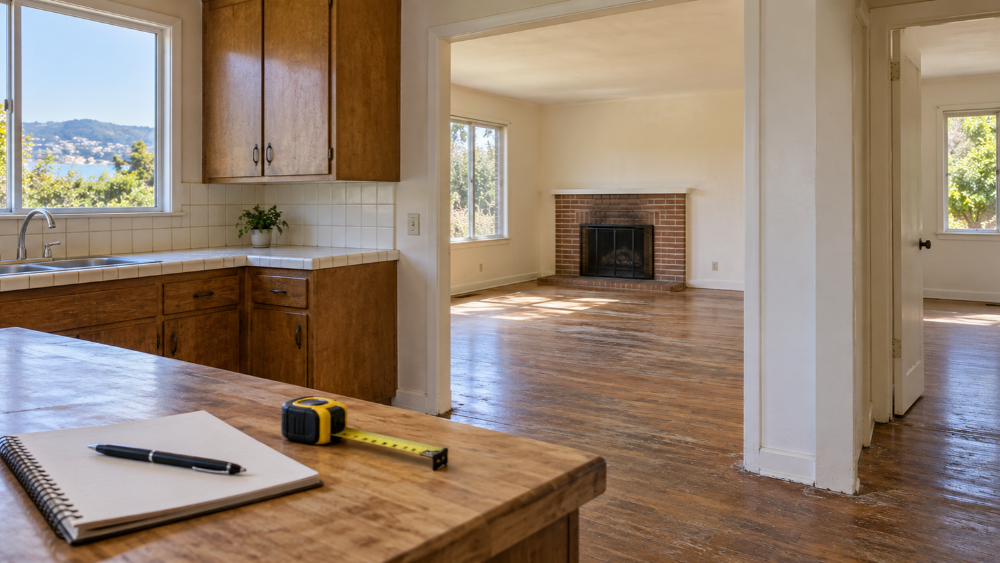
Direct answer
Selling as-is can be worth evaluating when the estate’s cash, timing, distance, or property condition makes repairs difficult to justify. It does not automatically mean a cash or off-market sale. Compare an as-is listing, direct offers, and selected repairs using local evidence, realistic net proceeds, and the authorized seller’s obligations before choosing a route.
Connect with an agent in the property’s market. HomeLight can match you with local agents. For this decision, ask each candidate to address the property condition, repair tradeoffs, and Bay Area timing needs.
Authority first
Identify the current authorized seller.
Property facts
Use actual condition and location.
Sale procedure
Coordinate notice and court dependencies.
Distribution later
A closing does not end administration.
As-is is not one particular selling method
When a family says it wants to sell as-is, it often means it does not want to undertake repairs before selling. The exact contract wording and legal obligations still matter. Ask the agent and attorney to explain what the proposed agreement means for inspections, disclosures, requested repairs, and the seller’s responsibilities.
Do not assume an as-is description permits concealment or removes every disclosure or other obligation. Estate and trust sales can raise specific legal questions, and requirements depend on the facts. Have the relevant professionals review the actual sale rather than relying on a general label.
Keep condition, financing, and marketing separate. A cash buyer might purchase through an open-market listing. An as-is property might attract more than one type of buyer. A direct offer might contain conditions even if it is described as cash. Compare the actual offer and process instead of assuming those labels determine the outcome.
HomeLight’s inherited-house cash-sale guide provides national context for a direct-offer discussion. It does not establish a Bay Area discount, closing time, or net result for your property. Use a local, property-specific review before treating one route as financially preferable.
Clarify the decision-maker
Have counsel identify who can approve marketing and sign for the inherited house; a preference for an as-is sale does not establish that authority.
Planning checkpointConfirm who can authorize preparation and sale
An expected inheritance does not automatically give a family member authority to sign a listing, accept an offer, or authorize work. The house may remain in an estate, be held in a trust, or already belong to co-owners. Ask counsel and the title professional to identify the current status and authorized seller.
The California Courts probate guide and formal-probate overview offer general orientation. Your estate’s appointment, governing documents, and applicable procedure control the specific sale. Confirm whether notices, court supervision, or other steps are needed before making commitments.
Probate Code section 9650 addresses reasonable steps to manage, protect, and preserve estate property. Selling without elective upgrades does not mean leaving necessary protective questions unanswered. Ask the representative and attorney how security, insurance, damage prevention, and other care should be handled.
Separate the estate’s belongings from the property’s preparation plan. Family members may need a process for identifying, storing, or distributing personal items. Do not discard or sell contents merely to speed up photography without understanding the authority and ownership involved. A clear plan can protect both the property and relationships during a difficult period.
Create a property decision file
Ask a local agent for condition-specific comparisons and preparation estimates so the family can assess the inherited property as it stands today.
Planning checkpointDistinguish protection, basic preparation, and elective upgrades
The choice is not necessarily a major renovation or doing nothing. Ask the agent and appropriate property professionals to separate protective needs, practical preparation, and improvements intended to affect sale value. Each category has a different purpose and may justify a different budget.
| Work category | Question to ask | Decision evidence |
|---|---|---|
| Property protection | What is needed to prevent damage or maintain required care? | Professional assessment and legal guidance about authority |
| Basic preparation | Would cleanup or access improve marketing without a large project? | Written scope, cost, and a manageable schedule |
| Selected repairs | Could a defined issue affect buyers, financing, or offers? | Property findings and local comparable evidence |
| Elective upgrades | Is the expected benefit enough to justify cost and delay? | Alternative net-proceeds scenarios, not a guaranteed return |
Obtain written estimates for work being considered. Ask what is included, what could change, who manages it, and when payment is due. The estate should understand the commitment before authorizing it. A price quoted for a partial scope can make a preparation plan look less expensive than it actually is.
Consider the practical burden on the representative. A project that looks attractive on paper may require frequent access, decisions, or travel. Ask whether the estate has both the authority and capacity to manage it. Do not assume a relative living nearby can take responsibility for every vendor or expense without a documented arrangement.
Review uncertainty explicitly. Repairs can reveal further work, while delaying the listing can extend holding costs. An agent can discuss potential market effects, but should not promise a sale-price increase that exactly reimburses the project. Use a range of outcomes and identify what would cause the estate to revise the plan.
Compare an as-is listing with direct offers on equal terms
An open-market as-is listing and a direct offer can both be evaluated without treating one as automatically superior. Ask which buyers can realistically consider the property, what financing or inspection questions might arise, and how the actual proposed sale handles them. The answers depend on the house and the offer, not just the route’s name.
| Route | What to compare | What remains uncertain |
|---|---|---|
| Open-market as-is listing | Exposure, agent services, asking-price strategy, and offer terms | Buyer response, contract changes, financing, and timing |
| Direct offer in current condition | Written price, conditions, fees, due diligence, and closing process | Whether the proposed terms remain after review and can close |
| Selected preparation then listing | Project cost, delay, holding expense, and potential buyer response | Actual repair scope and incremental proceeds |
Request the same property facts and assumed dates in every comparison. Otherwise, one route may seem better because it excludes a cost or assumes a different condition. Be careful with headline offer amounts that later depend on inspection, fees, concessions, or other adjustments. Read the actual agreement and have uncertain terms explained.
If a direct buyer offers speed, ask what must happen before that closing can occur. Estate authority and title requirements still need to be resolved. Cash financing does not bypass probate law or make every proposed closing date feasible. An agent, attorney, and settlement professional should coordinate the requirements.
For an open-market strategy, ask the agent to explain the evidence behind the pricing recommendation. The analysis should identify relevant comparable properties and account for condition and location. Do not apply a regional average to a particular inherited home without examining the local context.
Compare choices, not labels
As-is and open market are not opposites. Cash and full-price proceeds are not equivalents. A repair budget and a guaranteed return are not the same thing. Keep the assumptions visible so the estate can make a documented decision.
Coordinate the legal and sale calendars
Coordinate access, cleanout, disclosures, notice obligations, and any court step before scheduling the launch, and identify which work the estate can authorize.
Planning checkpointWhich Bay Area questions need property-level evidence?
Begin with the exact county, city, and property type. A Bay Area label is too broad to establish a price, buyer pool, preparation return, or timeline. Ask for a local analysis of the particular home. A regional label does not establish a property-level price discount.
Ask the agent and relevant professionals whether local point-of-sale requirements, permit history, inspections, utility or sewer requirements, or other property-specific rules need investigation. These are questions to verify, not claims that the same rule applies everywhere in the region. The municipality and the property’s facts matter.
For a condominium or other property with an association, ask what documents, condition issues, fees, or sale requirements need review. For an occupied property, ask counsel about access and occupancy rights. For a vacant home, review security and insurance needs. These details can change the preparation and sale plan without changing the basic as-is goal.
Ask for current comparable evidence supporting the recommended route. How similar are the properties? Were they sold in comparable condition? Do the examples actually support the proposed repair choice? An agent should explain the limits of the comparison rather than turning selected examples into a guaranteed result.
Compare an as-is cash option. If speed or condition is central, request a no-obligation HomeLight Simple Sale offer while checking the property condition, repair tradeoffs, and Bay Area timing needs.
Use net proceeds and holding costs to make the decision
For each route, list the expected gross price or written offer, repair spending, selling costs, applicable concessions, payoff obligations, and expenses while the property is held. Keep uncertain amounts clearly labeled. A scenario is a planning tool, not a valuation or promise.
Do not count a repair cost twice or omit it because a vendor is paid later. Identify whether an amount comes from estate cash, is advanced by someone, or is paid through settlement. Have the attorney review authority and reimbursement issues. The estate should understand both the final proceeds and the cash needed before closing.
Include a slower-sale scenario where useful. A lower gross offer with a shorter proposed schedule might or might not produce a better net outcome. A higher anticipated listing price might or might not justify the added work. Calculate the differences using the estate’s actual cost assumptions rather than a universal shortcut.
Ask the tax adviser about tax and basis questions separately from the agent’s sale estimate. Expected tax treatment should not be guessed from the property’s inherited status. The proceeds left at closing also may not be immediately distributable to beneficiaries. Estate accounting, debts, reserves, and distribution procedures require their own review.
Document the reason for the selected route and the conditions that would cause a change. This can help the representative explain the decision and keep the plan current. If estimates, legal requirements, or the property’s condition change, revisit the comparison rather than treating the original choice as permanent.
Keep distribution separate
Keep the as-is closing estimate separate from heir distribution and ask the estate team what debts, reserves, and accounting remain after the property sells.
Planning checkpointRecord the tradeoff the estate is choosing
A useful decision summary states what the selected route is expected to accomplish and what remains uncertain. It might prioritize avoiding a large project, limiting the representative’s workload, or testing open-market demand without elective upgrades. Those are reasons to evaluate, not promises about the amount or date of the sale.
Keep the underlying estimates and offers with that summary. If a buyer changes terms or a preparation proposal expands, compare the revised option again. A direct offer should not retain its original ranking merely because it once looked simplest, and a renovation should not continue solely because the family already discussed it.
Ask the agent to explain the review points and the attorney to identify decisions requiring legal approval. That coordination lets the estate respond to new information without confusing ordinary market adjustments with authority or disclosure questions. The selected route should stay connected to the property’s actual facts and the estate’s documented priorities.
Practical coordination insight
The market plan and legal authority answer different questions. A local agent can organize condition evidence, pricing options, offers, and transaction dependencies. Estate counsel determines the legal sale path. Keep those responsibilities explicit for inherited-property condition and marketing decisions.
Frequently asked questions
Does selling as-is mean I cannot list the home?
No. An as-is sale can be marketed through an open-market listing. Condition, marketing channel, and buyer financing are separate questions. Review the actual agreement and applicable legal requirements with the appropriate professionals.
Is a cash offer always the best net result?
No universal result should be assumed. Compare the written price, conditions, costs, possible adjustments, and proposed timeline with a local listing analysis. Cash describes financing, not a guaranteed proceeds advantage.
Can an estate avoid every repair?
Do not assume that. Separate optional upgrades from property protection and any applicable sale obligations. The representative, attorney, agent, and relevant property professionals can help identify what the estate must address.
How much less will a Bay Area as-is home sell for?
There is no supported regional discount in this draft. The effect depends on the property’s condition, location, comparable evidence, buyer response, and offer terms. Request a current property-specific analysis.
Should heirs pay for repairs personally?
Obtain legal advice before making an advance or assuming reimbursement. Authority, estate funds, accounting, and the arrangement’s terms matter. A personal payment does not automatically change ownership or inheritance shares.
What should the estate do first?
Confirm the authorized seller and legal sale path. Then obtain a condition and local-market assessment and compare preparation and marketing options. Keep tax, mortgage, and distribution questions connected to the relevant advisers.
Prepare for a local property consultation. Bring the authority documents and property facts, then ask how the agent would handle the property condition, repair tradeoffs, and Bay Area timing needs with counsel.
Related in this series
Series role: Focused California probate spoke connected to the Bay Area end-to-end sale-process hub.
Sources and review scope
- California Courts, Guide to property after someone dies.
- California Courts, Overview of formal probate.
- California Courts, Estate representative.
- California Courts, Simplified transfer procedures.
- California Courts, Inventory and estate value.
- Judicial Council, Report of Sale and Petition for Order Confirming Sale, DE-260.
- California Legislature, Probate Code section 9650.
- HomeLight, related national editorial context.
Source reconciliation for comparing current-condition marketing and preparation choices: October 6, 2026. The court guidance explains the general process; the governing documents and current procedure for the actual estate need review by qualified counsel.
At HomeLight, our vision is a world where every real estate transaction is simple, certain, and satisfying. Therefore, we promote strict editorial integrity in each of our posts.