

6 Condo Maintenance Tips to Protect Your Resale Value
- Published on
- 8 min read
-
 Jacob Bourne, Contributing AuthorClose
Jacob Bourne Contributing Author
Jacob Bourne, Contributing AuthorClose
Jacob Bourne Contributing AuthorJacob Bourne is a journalist based in California’s Bay Area. He’s covered real estate news for Bisnow, The Registry, and local Bay Area newspapers.
-
Jedda Fernandez, Associate EditorClose
Jedda Fernandez Associate Editor
Jedda Fernandez is an associate editor for HomeLight's Resource Centers with more than five years of editorial experience in the real estate industry.
In exchange for monthly dues between $20 and $1,000 per month, your condo association maintains shared amenities and grounds, covering some big-ticket items like roof repairs and landscaping. However, as a condo owner, you’re still on the hook for most interior maintenance.
“The main misconception about condo maintenance is that the purchasers or owners of condominiums think that the association takes care of everything,” shares Richard Harrison, a top real estate agent and condo specialist who serves the Oakland County, Michigan area.
Don’t neglect your condo maintenance and let your property drop in value. Heed these tips to care for your unit and avoid bank-breaking repairs.

Sell Your Condo With a Top Agent
HomeLight data shows that top agents sell homes faster and for more money than average agents. Connect with a top, local agent to help maximize the sale of your condo.
Condo maintenance items that typically fall on the homeowner
Harrison shares that condo owners are usually responsible for maintaining everything in the interior of their units, while the association is responsible for everything inside the building walls and common areas.
However, there are exceptions. For example, homeowners are typically responsible for maintaining windows, doors, bathtub connections, and light switches.
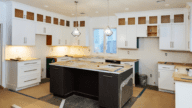
Harrison shares that much of condo maintenance is keeping your property up to date to maintain your unit’s value. If your appliances, cabinets, or countertops become antiquated or dated, you may struggle to sell your condo for the best price possible when you’re ready to move.
Here’s a quick rundown of some common condo maintenance items and their respective price tags:
| Maintenance item | Average cost |
| Appliance repair | $100 – $300 |
| Appliance replacement | $100 – $1,200 per appliance |
| New countertops | $40 – $140 per sq. ft. |
| Cabinets | Installation: $274 – $422 per cabinet, Materials: $1,500 to $3,000 |
| Windows | $700 – $1,200 per window |
Appliances
Dishwasher leaks are common and cost about $200 on average to fix. For more significant issues, consider replacing the dishwasher altogether for $500 to $1,000.
If your condo’s refrigerator dates back to the last century, it’s time to upgrade. Choose an energy-efficient model that’s gentler on the environment and your utility bills. Although a stylish, high-end fridge can cost upwards of $4,000, you can find a quality model for under $2,000.
When updating your condo’s stove, there are many considerations, such as choosing a freestanding or built-in stove or a stove/oven combo or deciding whether to go electric or use a gas appliance. Expect to pay between $400 and $1,300.
Countertops
If your condo lacks quartz, marble, or granite countertops, consider making the upgrade to meet the expectations of future buyers. The average cost to replace kitchen countertops is $3,000, but the range can be anywhere from $1,400 to $5,250.
Cabinets
Old cabinets significantly date your kitchen’s design. If your condo’s cabinets have seen better days, paint, reface, or replace them. According to HomeAdvisor, replacing cabinets in an average kitchen with 24 linear feet of cabinets costs between $2,400 and $28,000 on average for materials and installation.
Windows and doors
Windows are a big gray area in condo maintenance, Harrison advises. The only way to know what repairs you’ll be on the hook for is by reading the details in the association’s documents.
If window maintenance falls on your shoulders, note the following repair costs:
- Window pane replacement: $181 – $413
- Window frame repair costs: $75 – $800
- Window flashing repair: $400
- Window leak repair: $100 – $600
- Full window replacement: $300 to $2,500 per window
Flooring
Maintain the flooring in your condo following the rules in your condo association’s guidelines. Carpet requires regular vacuuming and periodic deep cleaning; it has a highly variable lifespan of between five and 15 years, depending on the level of routine care and quality.
Concrete flooring’s value lies in its needing very little maintenance; however, the costs of installation can vary widely from $3 to $20+ per square foot.
Hardwood floors offer the highest in terms of return on investment, reaching over 100%. However, over time, hardwood flooring can become scratched and worn, requiring an inexpensive buffing procedure, as well as a fresh coat of polyurethane from time to time to protect it.
Known for its affordability and durability, laminate flooring is made from engineered materials that can be made to look like hardwood or tile. Laminate flooring is generally easy to clean and maintain but lacks the aesthetics of hardwood.
Plumbing
In general, condo owners are responsible for maintenance and repairs on all plumbing inside their units, while the association covers plumbing that runs inside the walls and in common areas.
However, when a plumbing emergency occurs that results in damage to other units, you may or may not be responsible for repairs depending on your condo’s rules. Your condo insurance may cover some of the damage if your association does not.


Obtain a copy of your condo bylaws to learn about your maintenance responsibilities
The level of condo maintenance homeowners are responsible for varies widely from state to state and from condo to condo. Condo associations also may change their services over time, covering maintenance for more or fewer features than previously.
“That’s why it’s so important when a person gets involved in a condominium to first off get a copy of the bylaws, a current copy,” Harrison says. “So many agents out there will give a buyer a copy of the condo bylaws, and they may be 3, 5, 10 years old.”
Failing to read the bylaws or relying on outdated covenants, conditions, and restrictions (CC&Rs) could set an owner up for unpleasant surprises. Think ahead when purchasing a condo and request the most up-to-date bylaws before you close on the property.
Condo associations (COAs) typically cover these maintenance items
Now that we’ve covered condo owners’ responsibilities, it’s time to focus on one of the major perks of living in a condo: major maintenance items covered by your association. Most condo associations cover maintenance on roofs, building exteriors, shared spaces, amenities, and landscaping — in exchange for your condo fees, of course.
| Maintenance item | Average cost |
| Roof replacement | $4,000 to $11,000 per thousand square feet |
| Roof repairs | $350 to $1,200 for 100 square feet |
| Landscaping | $50 to $100 per hour |
| Pool care | $1,200 – $3,600 annually |
Roofing
If there’s a single most significant benefit in terms of maintenance from living in a condo, it’s that owners don’t have to maintain or replace the roof. Roof replacement is one of the most expensive home repairs for single-family homeowners, costing $5,000 to $18,000. There could be hundreds of people living under the same roof in a condo, so the repair and replacement costs are ultimately shared.
Landscaping
Avoiding installing and maintaining landscaping is another major perk to condo life. Consider how your savings on the following average landscaping costs add up over time:
- Mowing: $50 – $205 per visit
- Landscape maintenance: $100 – $500
- Grass aeration: $104 – $195
Pools
Family pools are a dream for many single-family homeowners during the hot summer months — until cleaning and repair costs pile up. Total upkeep for pools can range between $3,000 and $6,000, which is steep for a seasonal amenity. In a condominium, the association covers these costs; however, the shared nature of the recreation may be a downside for some.

Today, condo associations leave more maintenance up to the homeowners
On average, the maintenance costs for condo owners may be significantly lower than single-family homeowners, depending on how much your association dues are compared to the amount of maintenance your association covers.
However, Harrison shares that over the years he’s noticed HOAs shift more maintenance responsibilities onto owners. For instance, he shares that while most condo associations covered furnaces and hot water heaters in the past, today newer developments pass the responsibility onto owners.
That’s why it’s imperative to read the bylaws before you move in and don’t rely on assumptions or past trends for decision-making.
“The biggest thing I would say is to read the documents, be involved, be a member of the board,” Harrison says. “Because a few people are making the decision for many. And you want to check their financials. It’s a seller’s disclosure. You want to know the financial situation of the association, and you want the condo docs.”
Condo maintenance varies: Read the fine print before signing
In some ways, understanding the responsibilities of owning a condo can be more complex than a single-family home. In addition to a high degree of variation in bylaws, there are differences in types of condominiums, such as attached or detached, with different rules governing each.
As with any major purchase, when in doubt, consult a lawyer or real estate agent to help you decode the community bylaws before sealing the deal. These professionals can help you demystify maintenance gray areas.
Header Image Source: (Brian McCall / Unsplash)
- "Concrete Floor Cost: What You'll Pay for Concrete Flooring in 2026", ConcreteNetwork.com (January 2026)
- "How Much Does Cabinet Installation Cost in 2025?", HomeAdvisor (January 2025)
- "10 Best Refrigerators for Every Kitchen 2026", U.S. News (August 2024)
- "Understanding Condo Fees: What They Cover and How They’re Calculated", Sanctuary Home Mortgage, LLC (August 2025)
At HomeLight, our vision is a world where every real estate transaction is simple, certain, and satisfying. Therefore, we promote strict editorial integrity in each of our posts.