
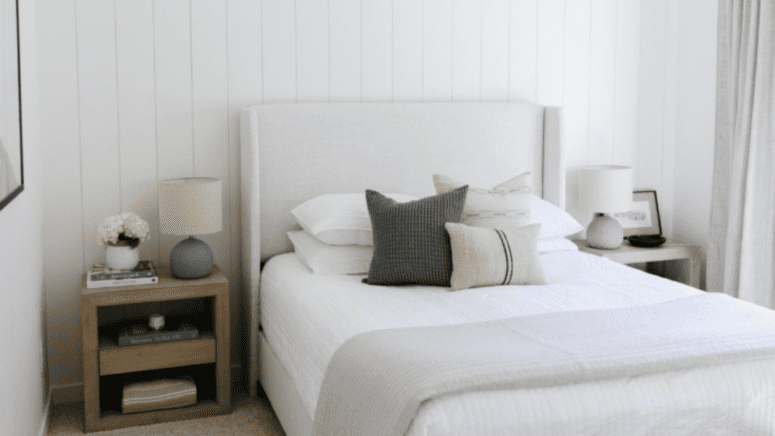
How to Stage a Bed When Selling a Home: 11 Expert Tips
- Published on
- 14 min read
-
 Kate Van Pelt, Contributing AuthorClose
Kate Van Pelt Contributing Author
Kate Van Pelt, Contributing AuthorClose
Kate Van Pelt Contributing AuthorKate Van Pelt is a writer and editor based in Oregon, with a background in home improvement, marketing, and finance. She has owned, remodeled, and rented properties and has developed a thorough understanding of effective home-buying tips and trends along the way.
-
Sam Dadofalza, Associate EditorClose
Sam Dadofalza Associate Editor
Sam Dadofalza is an associate editor at HomeLight, where she crafts insightful stories to guide homebuyers and sellers through the intricacies of real estate transactions. She has previously contributed to digital marketing firms and online business publications, honing her skills in creating engaging and informative content.
There’s something irresistible about a freshly made bed in a swanky hotel, the kind of clean, cozy perfection that makes you linger, even with the sound of ocean waves just beyond your window. Bringing that same polished look into your home can help it stand out when you’re ready to sell. A beautifully styled bed makes your bedroom look more inviting in photos and during showings. Learning how to stage a bed is all about layering the right linens, pillows, and finishing touches for a cozy, picture-perfect look.

Find an Agent Who Can Help You Stage Your Home
An experienced agent will understand the value of staging, provide DIY tips, and refer you to the best staging experts in your market. HomeLight can connect you with a top-performing agent near you.
In this article, we’ve gathered expert advice from real estate pros, interior designers, and hospitality insiders to share tips for staging your bed like a five-star suite.
“The primary bedroom is one of the biggest selling points when staging,” says Tony Mariotti, CEO of RubyHome in Beverly Hills. It’s the second most important room to stage (83%), right behind the living room (91%), according to the National Association of Realtors (NAR)’s 2025 Profile of Home Staging report. That’s why spending a few extra minutes making your bed look its best can go a long way with potential buyers.
With these tips below, your bed will beckon buyers (or you) to stay a little longer.

1. Declutter, depersonalize, and deep clean
Professional stagers each have their own method for styling a bed, but even the most perfectly made bed loses its magic when surrounded by clutter. If drying racks, stacks of mail, or piles of laundry crowd the space, unwinding becomes nearly impossible. A serene, clutter-free environment is key to turning your bedroom into a true retreat.
Before you buy new bedding or shop for a headboard, you have to set the stage. To begin tidying your room, turn to the Queen of Tidy herself: Marie Kondo. Author of “The Life-Changing Magic of Tidying Up: The Japanese Art of Decluttering And Organizing,” Kondo advises homeowners to walk through a room and pull out items like clothing, books, and more.
The key question: “Does this spark joy?” If the answer is “no,” let it go. Neatly store the items you keep in the closet, dresser, or even under the bed. The less clutter on display, the better.
This tip is essential for sellers, but Leslie Carver, a top Nevada real estate agent with 30 years of experience, suggests homeowners take decluttering a step further.
“The first thing I tell my sellers is when you walk into a room [is to] look at it like you’re looking through the eyes of a buyer and see where your eye falls. If it’s on all your personal property, that’s not good.”
 Leslie Carver Real Estate AgentCloseLeslie Carver Real Estate Agent at Berkshire Hathaway Homeservices NV5.0Currently accepting new clients

- Years of Experience 30
- Transactions 1946
- Average Price Point $400k
- Single Family Homes 1649


Buyers need to imagine themselves living in the space, so clear out personal items like laundry, family photos, and personal documents, before listing. According to the same NAR report, 83% of buyer’s agents say that staging makes it easier for buyers to imagine the home as their own.
Aside from decluttering and depersonalizing, a deep clean is essential when staging the bedroom. Lingering odors or visible dust can be deal-breakers, so don’t overlook any details. Follow our detailed deep-cleaning guide, or find top-rated cleaning services on sites like Molly Maid, Angi, or Yelp to ensure your space looks and smells inviting.
2. Choose the best position in the room
Your bed is the focal point of the room, so it should grab attention the moment you step in. Stagers often place the bed opposite the door, ideally along the longest wall, to create a strong visual impact.
However, the best spot may depend on your room’s layout. If you have french doors, positioning the bed directly across from them can create a stunning, grand entrance.
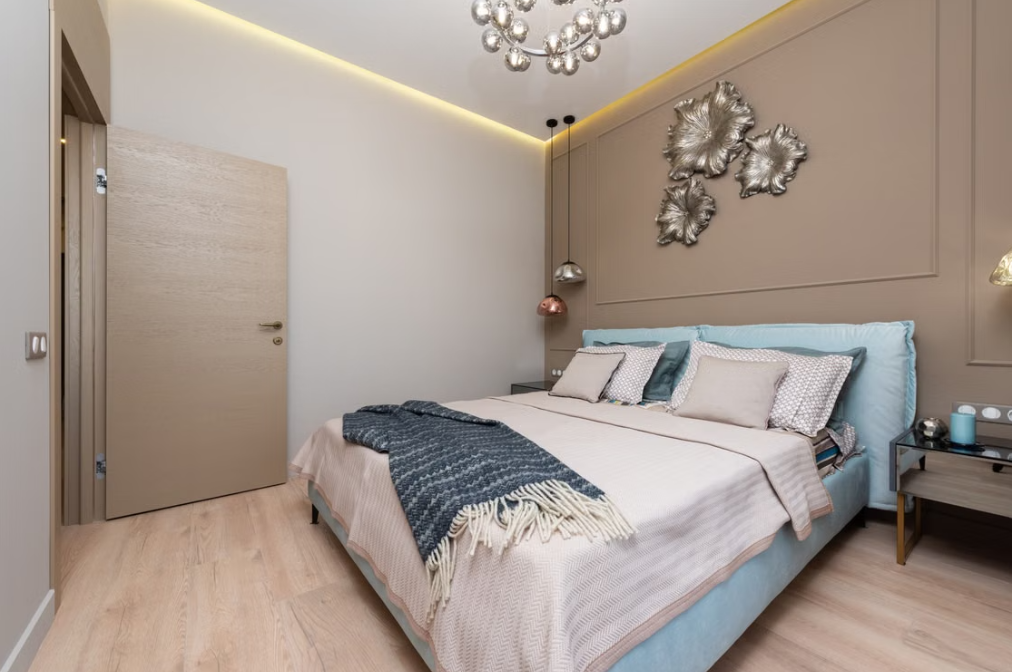
As you decide on where to put it, consider your bed’s size. King-size beds are popular for main bedrooms, but if they consume too much of the space, it’ll make the area feel cramped instead of comfortable.
To ensure your bed fits the room perfectly, consider the “traffic flow.” Think about the natural paths you take to move in and around the space, as well as door swings and window access. If your bed is crowding the room, swapping a king for a queen (or even a full) can make the space feel more open and inviting.
Use the following tips to select the best position for your bed:
- Make sure the foot of the bed is the first thing you see.
- Position your bed on the wall opposite the bedroom door.
- Center the bed along the longest wall.
- If your bedroom has a focal point like french doors, arrange your bed so it faces them.
- If every wall has windows, position your bed centered in front of a window.
- Aim for at least 1½ feet to 2½ feet of space on each side of the bed.
3. Hone in on a color palette
There’s one detail most hotel beds have in common: white bedding.
A white base for your bed feels clean and luxurious, allowing you to build on the look with whatever colors you like. “We find the bed best viewed as the ‘canvas,’” says Elise Nicpon, Director of Customer Experience at Room & Board. “[You can] bring the important layers of texture and color using pillows, throws, a rug, and artwork.”
Start with a white bed as your canvas, then add a pop of color with accent pillows and a textured throw for a playful touch. Small bursts of color can create a more inviting and positive atmosphere, helping keep both guests and potential buyers engaged and excited.
If you’re unsure of how to stage your bed to complement your interior, Kaari Sommer, an interior stylist with her own home decor blog, The Sommer Home, suggests choosing a piece in your room for inspiration. “I always find a jumping-off point,” Sommer says, like pulling colors from an art print or a rug.
You can also take inspiration from popular interior design styles when choosing your bedroom’s color palette. According to a study by Joybird that analyzed Google Trends data, bohemian, Victorian, and contemporary are among the top style trends in America. Here are some color combos for each:
- Bohemian: White, sage, and terracotta (eclectic and earthy)
- Victorian: Burgundy, forest green, and antique gold (rich and elegant)
- Contemporary: White, black, and tan (monochromatic and high-contrast)
Another easy approach is to follow today’s trending color palettes. According to BEHR’s 2025 Color Trends Palette, earthy neutrals, rich jewel tones, calming blues and greens, and cheerful yellow and orange accents are defining interiors this year. Even if you keep your bedroom mostly neutral, introducing subtle pops of color through bedding and décor can give it a fresh, updated feel.
4. Build a beautiful base
If you already have a decorative bed frame, you can skip this step and the next. If you have a metal mattress platform, then you’ll want to soften the look with some accessories. A bed skirt gives your bed a polished look and also can hide any storage you stow underneath. Alternatively, you can opt for a bed frame wrap for a more contemporary appearance.
5. Splurge on a stylish headboard
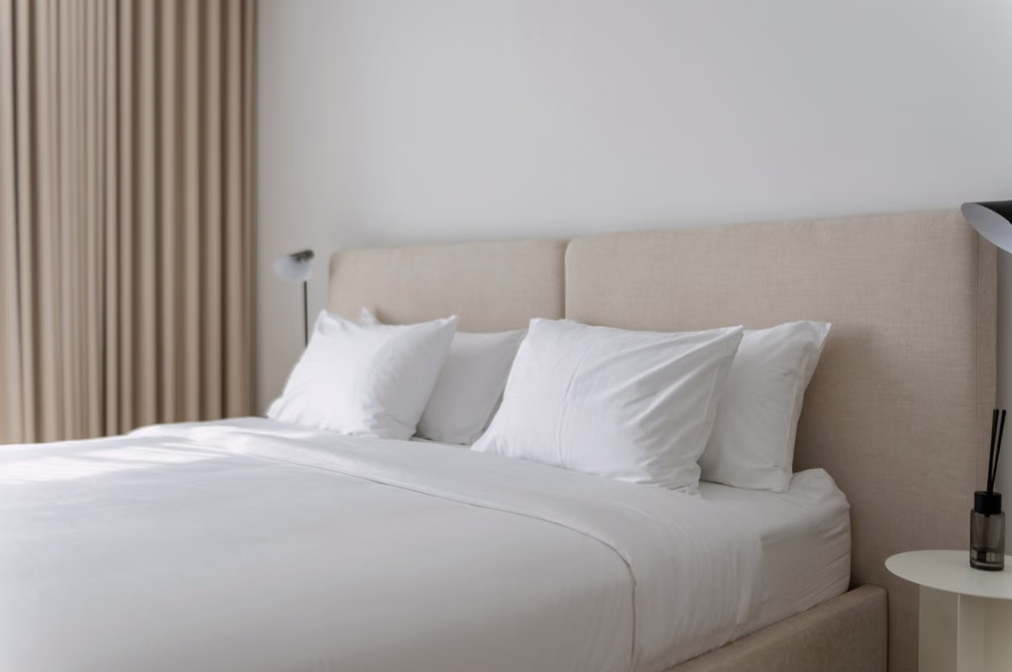
With your interior design style and color palette in mind, choose a stylish headboard as the backdrop for your layered look.
“I think the headboard is a must,” Carver says. The headboard gives your bed a stately look, transforming it from a casual cot to a classy throne. This addition will make your pillows pop, and your bed feel relaxed and ritzy all at once.
Consider the following ideas when selecting a headboard:
- Textured: Elegant and en vogue, textured headboards are a favorite among designers. Consider this Bohemian gold sun headboard or this plush furry headboard.
- Fabric: Upholstered headboards suit most bedrooms. For a retro feel, try this black velvet headboard. If you want something more modern, consider this Natusuko corduroy upholstered headboard.
- Cane or rattan: If you’re feeling the boho trend, opt for an organic material for your bed frame, such as this Dolores Cane bed frame or this fun rattan flower headboard.
- Canopy bed: If there’s space in your bedroom, a canopy bed frame is an excellent way to elevate your design, quite literally, drawing the eye up to visually enhance room height. Try a sleek mid-century modern frame, like this one from West Elm.
- Metal: For a vintage aesthetic, try a metal bed frame with detail. This look is perfect for industrial designs, as well as a modern farmhouse style.
If you’re selling your home, there’s no need to fork out the cash for a new headboard. Instead, pick an affordable alternative. You can shop secondhand on a site like Craigslist or Facebook Marketplace, build your own, or create the illusion of a headboard with artwork or shelving.
For other inexpensive alternatives to a headboard, consider these ideas:
- Wood trim headboard: Lends a minimalist and modern appearance, using door and window trim for a custom look
- Tapestry headboard: Adds a bold, artistic statement with colorful and textured fabrics
- Tufted headboard: Creates an elegant and luxurious feel when upholstered in velvet or linen with button detailing
- Wood block headboard: Displays a rustic, eco-friendly design made by arranging wood blocks in a unique pattern
- Cutout headboard: Features geometric or organic cutout patterns, often in wood or metal
- Reclaimed modern headboard: Uses repurposed barn wood or old timber for a stylish yet sustainable headboard
- Caned headboard: Offers a vintage, textured look, often found in coastal or boho-inspired bedrooms
- Wallpaper headboard: Creates a striking visual effect with bold wallpaper designs as a backdrop
- Industrial-style headboard: Features raw materials like metal or reclaimed wood for a rugged, urban look
- Framed picture headboard: Incorporates framed artwork or photos to create a unique, personalized headboard
6. Create a layered look with the comforter, pillows, and a throw
Staging professionals, interior designers, and even furniture brands use one, simple technique to elevate beds from bland to brilliant: layering.
Rows of pillows, a casual throw, and even a simple white sheet folded over the bedspread all add a level of sophistication to your bedroom design.
“What emotion do you want in your bedroom?” Carver asks. “That’s where the layering comes in.” You’re aiming for comfort, order, and cleanliness, and that’s where layering makes all the difference. It adds a touch of luxury to the space.
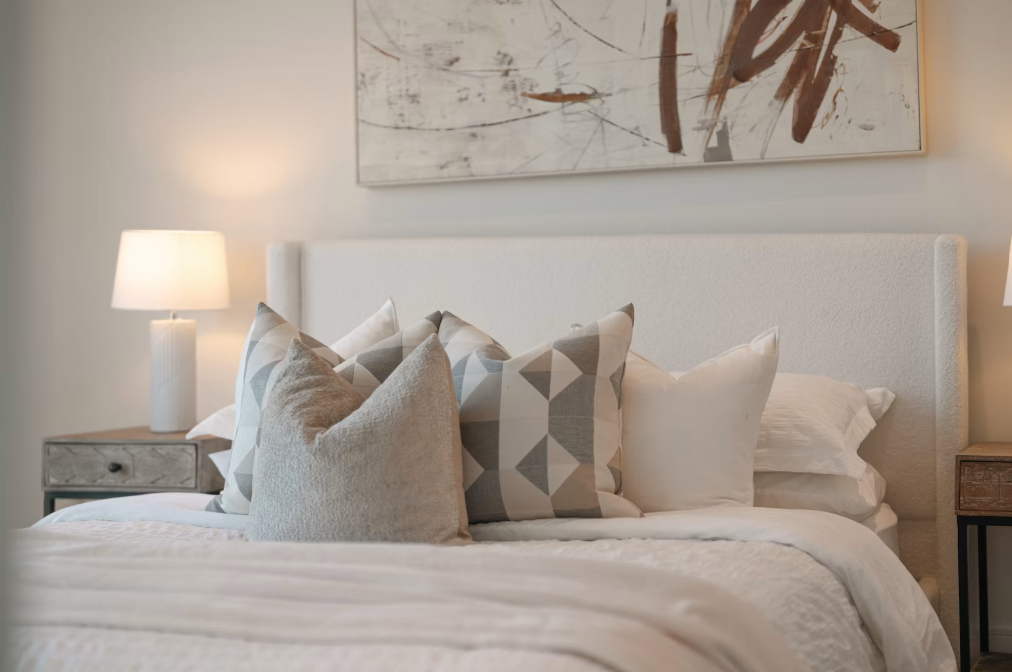
If you’re feeling a little overwhelmed by the many components of a comfy, classy bed, Carver has a simple solution: bed-in-a-bag. You can find these sets at a number of large retail stores, including Amazon, Target, and Bed Bath & Beyond. Typically, they come with a comforter, bed skirt, pillow shams, sheets, and sometimes, accessory pillows.


7. Add fitted and flat sheets
Start by laying the top sheet with the decorative side facing down, ensuring the smooth side is against the mattress. Tuck in the sides securely, but leave about one to two feet at the top untucked. This will allow you to fold the sheet back over the comforter, creating a neat, layered look.
To achieve the cleanest appearance, ensure your sheets are freshly washed, pressed, and pulled tight, eliminating any wrinkles or creases for that polished, hotel-like finish. “Neat and organized rooms are always attractive,” Mariotti says. “The same goes for your bed.”
8. Select a quality comforter and neutral duvet cover
Choose a synthetic comforter instead of down for a smoother look. If you want a little texture, choose an understated design like this honeycomb pattern from Pottery Barn. Lay your comforter on the bed, leaving a one foot gap between the comforter and the top of your mattress. Finally, fold your fitted sheet over the top of the comforter.
9. Pick your pillows and arrange them in rows
Your pillows are important in achieving the layered look, and professionals like Sommer follow a simple formula: three rows, arranged by size. Sommer styles her beds with matching Euro pillows and king-size pillows, then a row of smaller, decorative pillows, which she swaps out seasonally.
Here’s an overview of how to apply this method to different bed sizes:
- For a king: Three Euro pillows with shams in the back, then two king-size pillows (20 x 36 inches), followed by one to three decorative accent pillows
- For a queen: Two Euro pillows with shams in the back, then two standard-size pillows (20 x 26 inches), followed by one to three decorative accent pillows
- For a twin: One Euro pillow in the back, one standard 24-inch pillow, followed by one decorative pillow


10. Finish off the look with a blanket or throw
A blanket at the foot of the bed is a great way to incorporate some texture and soften the look. Consider a chunky knit blanket for a cozy look or a faux fur throw for a touch of glam. Sommer likes to lay a comforter folded in thirds across the end of a bed; she sometimes tops the folded comforter with an accent throw.
11. Border the bed with complementary furniture and decor
Wrap up your dazzling design with furniture and decor flanking the bed.
Nightstands are a great addition to any room, offering both functionality and style. They help keep essential items within easy reach while maintaining an organized, clutter-free environment.
If the room has enough space, incorporating nightstands can enhance both the practicality and aesthetic appeal of the space. “This too evokes a feeling of rest and relaxation,” Nicpon says.
Create a tiered visual with your nightstands that’ll make your bed look like it’s just won gold. Top your nightstands with a pair of table lamps, equipped with warm bulbs for soft, relaxing lighting. If your bedroom feels too crowded, flank the bed with a pair of pendants, sconces, or even curtains instead of nightstands.
If there’s space at the foot of your bed, Carver recommends adding a bench as well, so buyers can sit and get comfortable in the space.
Finally, finish the room with some decorative touches. If you’re preparing to sell, choose items that appeal to a wide audience. Steer clear of anything religious, political, risqué, or too gender-specific.
Here are a few suggestions for your bedroom decor:
- Lamps: Place table lamps on top of your nightstands or choose an alternative like sconces.
- Area rug: An area rug can be a great addition to wood or tile floors, adding warmth and style. However, if your bedroom is carpeted, you may want to skip it when staging your home for sale. Carver notes that while rugs initially may enhance the room’s look, they can quickly appear worn after just a few showings.
- A set of three decorative features for the nightstand: Consider two vintage books, topped with a bronze clock, or a vase with peonies or eucalyptus, a candle, and a picture frame.
- Greenery: A touch of green adds life to your bedroom retreat. Add a small potted plant on the nightstand and a larger fiddle leaf fig or monstera in the corner.
- Artwork: If your headboard is short, or you don’t have one, place some artwork over the bed. Choose one large piece that is just slightly smaller than the width of your bed, or a set of three.
- Mirrors: Decorating with mirrors is an excellent tip for smaller bedrooms, as they can make the space feel larger. Add a mirror over your bed, or lean a larger mirror against the wall.
»Learn more: The right staging choices start with understanding how much space you have to work with. Use HomeLight’s free Square Footage Calculator to measure your home’s layout and arrange furniture in a way that helps buyers see its value.
Common bed staging mistakes to avoid
When it comes to staging a bed, small details can make a big difference. Avoiding a few common missteps can help your bed look polished and help buyers imagine themselves settling into the space.
- Over-personalization and clutter: Leaving out personal items, excessive decorations, or too many belongings can make it harder for buyers to picture themselves living in the space, while also drawing attention away from the bedroom’s overall appeal.
- Busy patterns or bold, distracting colors: While some personality is great, overly loud bedding, colors, or prints can overwhelm the room and make it harder for buyers to focus on the space itself.
- Dirty, wrinkly beddings: Unwashed linens, messy bedding, and visible wrinkles can make the room feel less inviting and give buyers the impression that the space hasn’t been well cared for.
- Too many decorative pillows: While a few pillows can make the bed look cozy and styled, piling on too many can make the bed feel crowded and less functional.
- Awkward proportions: Oversized furniture or improperly sized bedding can throw off the balance of the space, making it feel cramped, awkward, or emptier than it actually is.
The goal of bed staging is to make the room feel like a place buyers can relax in, not a space that feels overly styled or impersonal. By avoiding these common mistakes, you can create a polished look that helps your bedroom stand out.

Discover Your Home’s Potential Worth
A staged home can turn heads, but the big question is: how much could it sell for? Get an estimated value with HomeLight’s Home Value Estimator and get a clearer picture of your home’s potential worth before you list.
Create a bedroom buyers love
Creating an inviting, well-styled bedroom is all about balancing comfort and visual appeal. By following these steps, from decluttering to choosing the right finishing touches, you’ll transform your space into a cozy, elegant retreat. With thoughtful choices in color, texture, and layout, your bed can become the true focal point, exuding warmth and style for potential buyers or personal enjoyment.
For more staging and curb appeal advice to make the most of your home sale, use HomeLight’s free Agent Match platform to connect with a top-rated agent in your market. Our data shows that the top 5% of agents sell homes for up to 10% more than average agents.
Header Image Source: (Kaari Sommer / The Sommer Home)
At HomeLight, our vision is a world where every real estate transaction is simple, certain, and satisfying. Therefore, we promote strict editorial integrity in each of our posts.