
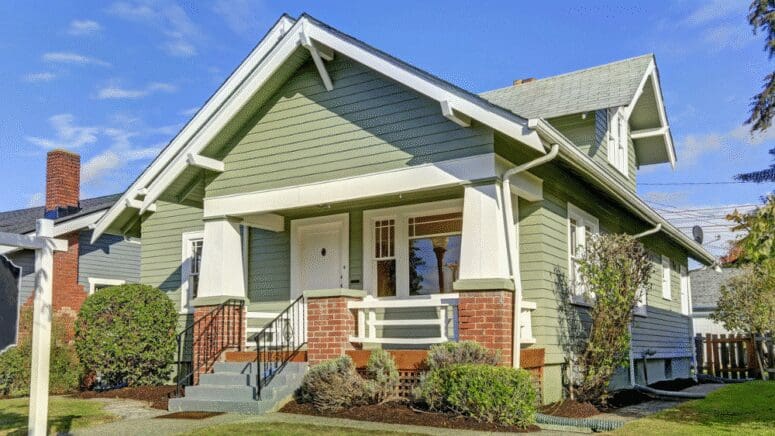
What Is the Average Starter Home Price in the US?
- Published on
- 6 min read
-
 Richard Haddad Executive EditorClose
Richard Haddad Executive Editor
Richard Haddad Executive EditorClose
Richard Haddad Executive EditorRichard Haddad is the executive editor of HomeLight.com. He works with an experienced content team that oversees the company’s blog featuring in-depth articles about the home buying and selling process, homeownership news, home care and design tips, and related real estate trends. Previously, he served as an editor and content producer for World Company, Gannett, and Western News & Info, where he also served as news director and director of internet operations.
If you’re looking to buy your first house, the phrase “starter home” can spark both excitement and apprehension. It can also feel somewhat ambiguous. What does a starter home actually look like in terms of price, size, and condition?
In this guide, we’ll help you get a better idea of what you can expect if you’re shopping for a starter home in your market. We’ll also share a list of affordable starter home cities and provide a home affordability calculator to help you plan your next move.

A Top Agent Can Help You Find A House You Can Afford
We analyze millions of home sales to find buyer’s agents who will show you the right home at the right price. Our service is 100% free, with no catch. Agents don’t pay us to be listed, so you get the best match.
What is a starter home?
A starter home represents a buyer’s first step into homeownership. These homes are generally more affordable than the broader housing market and are often smaller, older, less updated, or in need of repairs. They are also often located farther from major city centers.
Based on national averages taken from home listings, here’s a rough physical blueprint of what a typical starter home might look like:
- Structure: Single-family home, duplex, townhouse, or condo
- Size: 1,250 square feet
- Bedrooms: 3
- Bathrooms: 2
- Yard size: 6,591 square feet
While this list provides some common physical characteristics, what matters most to first-time home buyers isn’t usually the home’s size or style; it’s that the price and monthly payment are within reach.
Traditionally temporary: A starter home may be less about finding your “forever” house and more about getting a foothold. Many buyers plan to live in a starter home for a few years, build equity, and then move up when their finances or lifestyle change.
What is the average starter home price in the US?
Nationally, a typical starter home price is around $200,000, though that number can swing significantly depending on market conditions and location. When you compare this to the median U.S. home price of around $411,000, you can see why first-time buyers on a budget seek out starter homes.
However, in many markets, entry-level homes now cost far more than first-time buyers might expect, especially when competition is high and inventory is tight.
In addition, the list price is only part of the story. Interest rates, taxes, insurance, and maintenance all affect what a starter home truly costs from month to month.
How starter home prices vary by region
Where you’re buying has a huge impact on what a starter home might cost you. In high-cost coastal metros, starter homes can easily exceed $400,000, even for smaller or older properties.
Regional price differences are often driven by:
- The number and variety of available homes
- Average household incomes in the area
- Employment options and job growth
- Proximity to job centers, public transit, and well-rated schools
- Population demand and buyer competition
- Amount of land available for new construction
Areas with strong economies and tight housing supply tend to push entry-level prices higher, making it harder for first-time buyers to compete. For you, this means a starter home in one city may look completely different — and cost dramatically more — than a starter home in another.
According to Zillow, here are 20 affordable starter home cities you might consider:
| Metro area with relatively affordable homes | Value of a typical single-family starter home | Affordable home price for a median income household | % gap between an affordable home and a starter home |
|---|---|---|---|
| Birmingham, AL | $117,160 | $291,955 | -60% |
| Detroit, MI | $131,929 | $284,523 | -54% |
| Memphis, TN | $120,438 | $248,710 | -52% |
| Cleveland, OH | $143,220 | $251,588 | -43% |
| Indianapolis, IN | $182,635 | $317,552 | -42% |
| Baltimore, MD | $233,195 | $391,476 | -40% |
| Buffalo, NY | $189,743 | $304,979 | -38% |
| Kansas City, MO | $190,802 | $307,713 | -38% |
| Louisville, KY | $182,221 | $282,611 | -36% |
| Cincinnati, OH | $196,993 | $304,154 | -35% |
| Houston, TX | $212,160 | $303,558 | -30% |
| Chicago, IL | $235,531 | $331,008 | -29% |
| Columbus, OH | $212,746 | $300,135 | -29% |
| Charlotte, NC | $254,302 | $349,693 | -27% |
| Atlanta, GA | $262,631 | $353,133 | -26% |
| Jacksonville, FL | $230,560 | $302,762 | -24% |
| Milwaukee, WI | $243,319 | $320,009 | -24% |
| Dallas, TX | $250,683 | $327,163 | -23% |
| Austin, TX | $312,294 | $372,360 | -16% |
| Hartford, CT | $309,964 | $340,997 | -9% |
Source: Zillow (As of September 30, 2025. Affordable home prices based on a 20% down payment.)
Additional data from Zillow shows that 233 U.S. cities have starter homes that cost $1 million or more. More than half of these are in California. For example, a starter home in Malibu costs about $4.8 million. However, Realtor.com estimates that the average cost of a starter home statewide in California is around $500,000.
What buyers can afford today
Whether a home is affordable will depend on both the purchase price and the monthly payment. Your income, existing debt, down payment, and current interest rates all work together to determine what fits comfortably in your budget.
This is where HomeLight’s Home Affordability Calculator can be helpful. By plugging in a few details, you can see how different price points might translate into real monthly costs before you start shopping for your first home. Use the toggle at the top to calculate affordability by income or by monthly payment.
To refine your estimates, click the “Advanced Options” drop-down link. The calculator will expand so you can adjust and exclude costs depending on your situation.
Note: Your actual home loan terms and affordability will depend on your credit score, debt-to-income ratio, and your lender’s criteria. For a more personalized estimate, consult with a qualified mortgage specialist or financial advisor.
Is a starter home still worth it?
For many buyers today, the answer is still yes, but making it happen comes with more tradeoffs than in the past. You may need to accept a smaller space, a longer commute, or a home that needs updates over time. Some buyers also plan to stay longer than originally expected, especially if moving up becomes less affordable.
Making it happen also takes more patience. In a recent consumer housing trends report, Zillow found that the median age of a renter has risen to 42. About half of all renters (46%) are under 40.
But ultimately, homeownership is a prize worth fighting for. A starter home can help you build equity, lock in a monthly payment, and stop relying on rising rents. Even if the home isn’t perfect, it can move you closer to long-term ownership goals.
Tips for buying a starter home in today’s market
Buying a starter home in today’s housing market can be challenging, so preparation matters. Getting preapproved early helps you understand your limits and shows sellers you’re serious. Staying flexible on cosmetic details and location can also open the door to more affordable options.
It’s also smart to work with a local real estate agent who understands entry-level inventory in your area. A knowledgeable agent can help you spot true starter homes, flag pricing red flags, and move quickly when the right opportunity comes along.
If you’re not sure where to start, HomeLight’s free Agent Match platform can connect you with a top-rated local agent who fits your needs. We analyze over 27 million transactions and thousands of reviews to determine which agent is best for you based on your needs.
With the right guidance and a realistic plan, you can approach the starter home market with more confidence and a clearer sense of what’s possible for you.
To learn more, visit HomeLight’s Homebuyer Resource Center. There, you can search for answers to any homebuying question.
Header Image Source: (iriana88w/ Depositphotos)
At HomeLight, our vision is a world where every real estate transaction is simple, certain, and satisfying. Therefore, we promote strict editorial integrity in each of our posts.