
What Is Homeowner Liability Insurance (And Whether You Need More)
- Published on
- 4 min read
-
 Kim Dinan, Contributing AuthorClose
Kim Dinan Contributing Author
Kim Dinan, Contributing AuthorClose
Kim Dinan Contributing AuthorKim Dinan is a writer, journalist and author. She's the outdoor news editor at Blue Ridge Outdoors and writes regularly for her local paper in Asheville, NC, covering everything from the necessity of home inspections to trends in the local economy. Kim is also the author of "The Yellow Envelope," a memoir about the time she sold her house and traveled around the globe.
-
Jedda Fernandez, Associate EditorClose
Jedda Fernandez Associate Editor
Jedda Fernandez is an associate editor for HomeLight's Resource Centers with more than five years of editorial experience in the real estate industry.
Your home is one of your greatest assets — but are you protected if someone were to sustain an injury on your property?
If your dog bites someone in your home, there is an accident in your backyard pool, or a visitor trips and falls down your stairs, you could be sued. Sadly, if you lost a lawsuit where damages amount to millions of dollars, you could lose your savings and the equity in your home.

Find a top real estate agent near you
We analyze over 27 million transactions and thousands of reviews to determine which agent is best for you based on your needs. It takes just two minutes to match you with the best real estate agents, who will contact you and guide you through the process.
Liability insurance is wrapped into your homeowner’s insurance policy, but is that basic coverage enough to protect you? In this post, we’ll help you determine whether it makes sense to get supplemental liability coverage in addition to what’s included in your homeowner’s policy.
What is homeowner liability insurance?
Homeowner’s liability insurance helps protect you against lawsuits brought on by injury or property damage caused by you, your family members, or your pets.
The standard homeowner’s liability policy is designed to cover the cost of defending you in court — and any damages you must pay — should someone injure themselves at your home and sue you.
Medical coverage is also included in most homeowner policies; it reimburses basic medical bills resulting from a liability claim. The standard homeowner’s policy carries a medical coverage limit of $1,000 to $5,000. This coverage would, for example, pay the medical expenses for a visitor who was bitten by your dog or who sustained a minor injury on your property.
The basic liability limit for most homeowner’s policies is $100,000 for property damages or injuries. Higher coverage amounts are available, and it is recommended that homeowners purchase at least $300,000 to $500,000 in liability coverage.
Unlike the other types of coverage in your homeowner’s policy, liability insurance doesn’t have a deductible. That means there is no out-of-pocket cost you’re required to pay before the insurance company begins paying for losses.
Why do homeowners need liability insurance?
Unfortunately, we live in a litigious society. Homeowners need liability insurance to protect them against an event on their property that causes damages or injuries to someone else.
Now that you own a home, you have an asset that is worth a lot of money. If you accidentally hurt someone, your ownership of that home could suddenly be in danger. “The last thing you want is to have a birthday party for your child, and another kid comes over and gets bitten by your Chihuahua, and then you get sued,” says Michael Constantine, a real estate agent who works with 68% more single-family homes than the average agent in Pasco County, Florida. “It’s always better to be safe than sorry.”
Homeowner’s liability insurance ensures that if there is ever an accident at your home that leads to a lawsuit, you won’t be financially wiped out in the aftermath.


What does the liability insurance baked into a homeowner’s policy usually include?
According to insurance provider Allstate, your basic liability policy covers:
- Medical bills for visitors who have an accident in your home as a result of negligence (you failed to fix a guardrail, for example)
- Pain and suffering endured by the person injured in your home
- Lost wages if the person injured is unable to return to work
- Death benefits, should the unthinkable happen and the accident turn fatal
- Legal expenses if you are sued
Some policies may also cover damages from a covered loss that happens away from home — for example, if you accidentally cause damage to your hotel room.
Meanwhile, typical liability insurance exclusions are:
- Auto-related accidents
- Injuries or property damage intentionally caused by you or household members
- Injuries sustained by you or members of your immediate household
While homeowner liability insurance excludes bodily injuries suffered by you or your immediate household members, it does cover third-party claims if you or a household member accidentally injures someone else or damages another person’s property.
If you’re renting out rooms or have more extended family living in your home, check with your insurance agent to confirm the extent of your coverage for those living in the home.
How can you increase your liability coverage?
If you feel you want or need the added protection, there are a few ways to increase your liability coverage.
Option 1: Call your insurance agent to increase your coverage limit
Request to bump it from the standard $100,000 to an amount that makes the most sense for you. Options generally include $250,000, $500,000, or $1 million in coverage. The higher your limit, the higher your premium will likely be.
Option 2: Purchase an umbrella policy
An umbrella policy increases your coverage limit and can be applied across all your insurance policies. For example, if you have insurance on your house, car, and boat, your umbrella policy will cover them all.
Umbrella insurance policies are executed once you’ve reached your homeowners liability limits. In other words, if you have a $100,000 liability policy under your homeowner’s insurance, but you’re obligated to pay out $200,000 as the result of a lawsuit, your umbrella policy will kick in for the additional $100,000.
Bodily injury, personal injury, property damage, and landlord liability are all usually covered under an umbrella policy. The policy will typically cover you and the other family members in your household.
Angie Cole, a top-selling real estate agent in Raleigh, North Carolina, says that, personally, she and her husband carry an umbrella policy on their property. “Our insurance agent chatted with us and recommended an umbrella policy; then we talked to our closest friends and they all had one, too,” she says.
Terry Bunch, a real estate agent with 22 years of experience in Naperville, Illinois, says that he would recommend umbrella coverage to his clients if “they had a personal need for it, or if their home has attractive nuisances, like a pool.” Other insurance professionals advise homeowners to purchase an umbrella policy if you have teenage drivers in the household.
Umbrella policies are usually sold in $1 million increments and typically cost about $383 a year for $1 million of coverage.
When should you consider increasing your liability coverage?
“Additional liability insurance is one of those policies that is inexpensive, and there is a lot of value behind it,” says Cole.
Although liability insurance is wrapped up in your homeowners insurance policy already, you may want to consider purchasing supplemental liability insurance under these situations:
- You have a pool
- You have large dogs — or any dog, for that matter
- You own a trampoline
- You’re renting out part of your property on Airbnb or another home-sharing website
- You’ve accumulated or acquired many assets
“Any time you have a decent net worth, it is smart to put an additional liability policy in place,” says Cole. For example, if you own several nice cars, a boat, and a house, your policy limits should be high enough to collectively cover everything that you own. If that’s not the case, you should consider an umbrella policy that will stretch to cover your high-priced assets.
If you’re unsure whether you need additional homeowner’s liability insurance, Kiplinger has a calculator to help you determine how much umbrella insurance coverage you need.
And if you’re on the fence, Cole has this advice: “Extra coverage is a common thing to put in place,” she says. “And in the grand scheme of things, it is usually worth it, because the cost is minimal.”
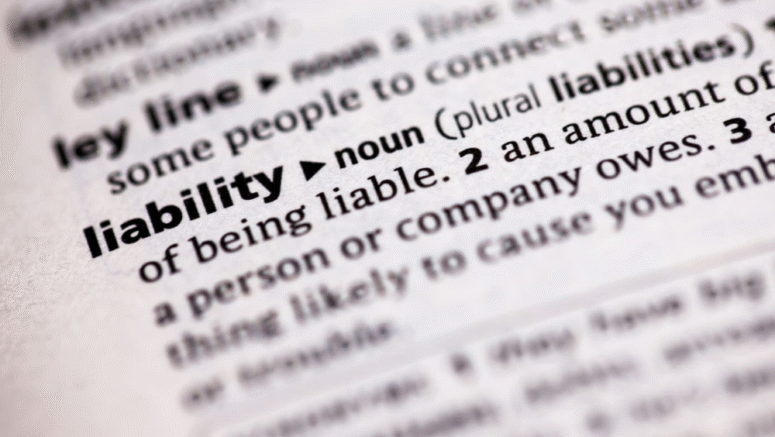
Header Image Source: (Shutterstock.com/Contimis Works)
- "What is liability coverage in a home insurance policy?," AllShores (September 2025)
- "What Is Medical Payments Coverage for Homeowners?," Nerdwallet (June 2026)
- "How An Umbrella Insurance Policy Works And What It Covers," Forbes (July 2026)
- "How Much Umbrella Insurance Do I Need?," Kiplinger (July 2026)
At HomeLight, our vision is a world where every real estate transaction is simple, certain, and satisfying. Therefore, we promote strict editorial integrity in each of our posts.