
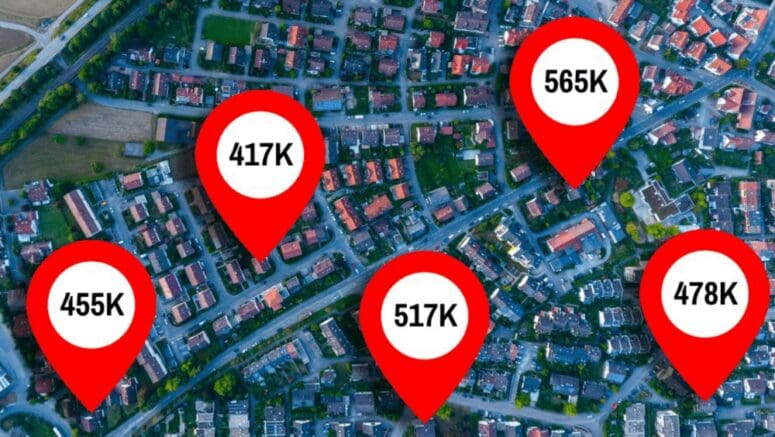
How to Find Out How Much a House Sold For
- Updated
- Originally published
- 7 min read
-
 Richard Haddad Executive EditorClose
Richard Haddad Executive Editor
Richard Haddad Executive EditorClose
Richard Haddad Executive EditorRichard Haddad is the executive editor of HomeLight.com. He works with an experienced content team that oversees the company’s blog featuring in-depth articles about the home buying and selling process, homeownership news, home care and design tips, and related real estate trends. Previously, he served as an editor and content producer for World Company, Gannett, and Western News & Info, where he also served as news director and director of internet operations.
You’re scrolling through listings on a homebuying app when you spot a house in your neighborhood that recently sold, and suddenly, you can’t help but wonder how much it went for. Maybe you’re thinking about selling your own home, sizing up a potential purchase, or simply wondering whether your neighbor got a great deal. Whatever the reason, a home’s sale price can reveal a lot about what buyers are willing to pay in your area.
Wondering what your home could fetch in today’s market? Plug your details into HomeLight’s Home Value Estimator and get an estimate in just a few clicks.
See What Your Home’s Worth
If you’ve ever found yourself wondering how to find out how much a house sold for, the good news is that there are several ways to track down that information. Let’s walk through where to look and what the sale price can tell you.
When is it helpful to know a home’s sale price?
Knowing what a home sold for can tell you more than just how much money changed hands. It can help you understand local market trends, compare similar properties, and make more informed decisions about your own home. Here are some situations when looking up a home’s sale price can be especially useful.
- Negotiating offers: Knowing what similar homes sold for can give you a better idea of what’s fair, so you’re not throwing out a number that’s way off from the market.
- Setting listing prices: If you’re selling, checking what nearby homes actually sold for can help you land on a competitive price without underselling your home.
- Figuring out what you can afford: If you’re buying, checking what homes in the area have recently sold for can help you figure out whether homes in your target neighborhood fit your budget.
- Learning how much your home has grown in value: Want to know how much your home has increased in value? Comparing it with what similar homes have sold for can give you a good idea of how much it’s appreciated over time.
- Satisfying curiosity: Sometimes, you just want to know what a particular house sold for. Maybe it’s a home you’ve always admired or one you’ve been keeping an eye on. Either way, there’s nothing wrong with being curious.


How can I find out how much a house sold for?
Finding out what a house actually sold for can be pretty useful, whether you’re buying, selling, or simply keeping tabs on the neighborhood. The good news is that you don’t have to be a real estate expert to track down this information. Here are a few simple ways to find a home’s sale price and make sense of what you find.
1. Search real estate websites
One of the easiest ways to find out how much a house sold for is to check online real estate sites. These platforms pull together sale prices, property details, and past transaction records, so you can quickly get a better idea of what a home actually sold for. Here’s how to use them:
- Step 1: Enter the address: Most real estate websites have a search function where you can enter the address of the property you’re interested in.
- Step 2: Filter results: Some sites allow you to filter results to show only recently sold properties. This can help narrow down your search to the most relevant listings.
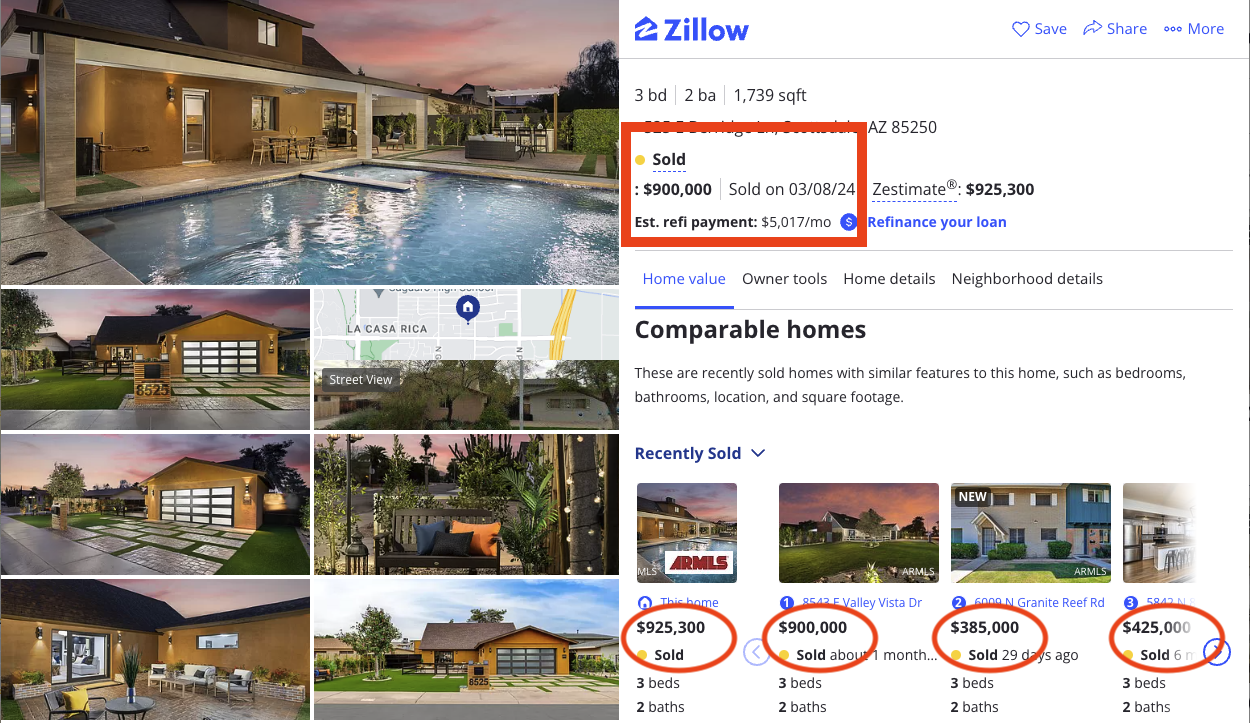
- Step 3: Review the property details: Once you find the property, these platforms will often provide a detailed history, including the sale price, date of sale, and sometimes even price comparisons with similar properties in the area.
Some platforms you can use in your research include Zillow, Trulia, Homes.com, and Realtor.com. Each one works a little differently and may show different details, so it’s worth checking a few sites to get a fuller picture of a property’s sale history.
Below is a screenshot illustrating how a Zillow property information page can show you the sold price and other nearby recently sold home prices.
Are online sold prices accurate?
They can be, but it depends on where the site gets its data and how often it updates. Sometimes recent sales take a while to show up, or you might spot data entry errors in the listing, so it’s a good idea to check a few different sites. If you need the most accurate number, double-check the sale price against public records or ask a real estate professional.
2. Put the home address in Google
Another effective method to find out how much a house sold for is by conducting a simple Google search. Type the full address of the property into the search bar to possibly uncover a wealth of information:
- Recent sales data: If the property has been sold recently, you’re likely to find the sale price listed on real estate websites, as well as possibly in news articles or real estate blog posts.
- Ownership history: Similar to researching property ownership, this search can reveal public records of past sale prices and ownership changes over time.
- Additional property details: Google can also help you find more than just a home’s sale price. You may also come across details like property taxes, square footage, the number of bedrooms and bathrooms, and other useful information about the property.


3. Check with the county tax assessor
Another reliable way to find a home’s sale price is through your county tax assessor’s office. Many counties now have their records online, so you can do a digital search for a property using its address or the owner’s name and find details like its assessed value, property taxes, and sometimes even its most recent sale price. If your county doesn’t offer online records, you may need to stop by the tax assessor’s office in person to look them up.
4. Title search at the county records office
A more detailed method to find out a house’s sale price is by conducting a title search at the county records office. This provides a comprehensive history of the property, including an “abstract of title,” which is a summary of the property’s ownership history, including sales prices and dates. To conduct a title search, visit the county records or county clerk’s office where property records are kept.
Public Records Online Directory
If you prefer online research, the Public Records Online Directory at publicrecords.netronline.com could be a helpful resource. This portal provides links to the websites of tax assessors, treasurers, and recorders’ offices across the U.S., where you can access public records over the Internet.
5. Ask a top local Realtor
One of the most effective and reliable methods to find out how much a house sold for is to ask a local Realtor. These professionals have access to the local Multiple Listing Service (MLS), a database where properties are listed for sale, including detailed transaction histories and the most accurate, up-to-date sale prices.
The MLS is a powerful tool with features that are exclusively available to real estate professionals.
Why consult a Realtor?
- Accurate insights: Realtors can provide the most accurate and comprehensive sale data directly from the MLS.
- Expert guidance: A seasoned agent can give you a better feel for the local market and help you make sense of the sale prices you’re seeing.
- Free consultation: Engaging with a Realtor for information on sale prices often comes without a charge, and there’s no obligation to proceed with any transactions.
»Learn more: Looking at recent sale prices can give you a good idea of what your home might sell for, but the final amount in your pocket can be very different. Try our Net Proceeds Calculator to see how much you could actually walk away with after closing costs and other selling expenses.
How to check recently sold homes nearby
To get a broader perspective on the real estate market in your immediate area, consider asking your Realtor for a comparative market analysis (CMA). A CMA is a detailed report that compares your home (or a home you’re interested in) to similar homes nearby that have recently sold.
This analysis looks at factors like location, size, condition, and features to determine how they affect your home’s value compared with similar properties. For example, a renovated kitchen, larger lot, or desirable location can increase the value, while an outdated interior, smaller size, or needed repairs can bring it down. Many real estate agents are willing to provide a CMA at no cost.
Benefits of a CMA include:
- Market insight: Get a clearer picture of current market conditions and see how your home (or a home you’re considering) stacks up against similar properties and their sale prices.
- Pricing strategy: If you’re selling, a CMA can help you set a competitive listing price. If you’re buying, it can guide you in making a fair offer.
- Informed decisions: With detailed information on recent sales, you can make more informed decisions in any real estate transaction.

Try our free Agent Match tool now to request a comparative market analysis on your home. We analyze over 27 million transactions and thousands of reviews to determine which agent is best for you based on your needs.
Request a CMA From a Top Agent Near You
Ready to find out how much homes in your area are selling for?
Finding out how much a house sold for doesn’t have to be a guessing game. Public records, real estate websites, and a local agent can all help you uncover recent sale prices and get a better feel for what homes are worth in your area.
Just keep in mind that sale prices are only one piece of the puzzle, since factors like location, condition, size, and features can all affect a home’s value. With a little research, you’ll have a much clearer idea of what similar homes are selling for and what that could mean for your own home.
HomeLight can connect you with a trusted top agent in your area who can provide expert insights into how much homes are selling for in your community. Our network of more than 28,000 experienced professionals is ready to provide you with the information and guidance you need, whether you’re considering a real estate transaction now or in the future.
Frequently asked questions (FAQs) about finding out how much a house sold for
In many states, home sale prices are part of the public record, so you can usually find them through county property records or other public sources. However, some states limit access to sale-price information, so you may not always find the exact amount a home sold for. If you’re having trouble finding it, a local real estate agent may be able to help.
In a non-disclosure state, the exact sale price generally isn’t made available through public records. You may still be able to get an estimate from a real estate agent, MLS data, or other property websites. Keep in mind that these sources may not show the exact amount the buyer paid.
It depends on where the property is located and how well the local records have been maintained. Some counties have online records going back decades, while others only show more recent sales. If you can’t find older sales online, try checking the county recorder or assessor’s office for archived records.
Usually, the reported sale price is the amount written into the purchase contract, but it doesn’t necessarily reflect the final amount the seller actually received. Seller concessions, such as credits toward closing costs, may reduce the seller’s net proceeds without changing the recorded sale price. So if you’re comparing sale prices, remember that the reported number may not tell the whole story.
Header Illustration Source: (Base photo by Max Bottinger/ Unsplash)
At HomeLight, our vision is a world where every real estate transaction is simple, certain, and satisfying. Therefore, we promote strict editorial integrity in each of our posts.
