
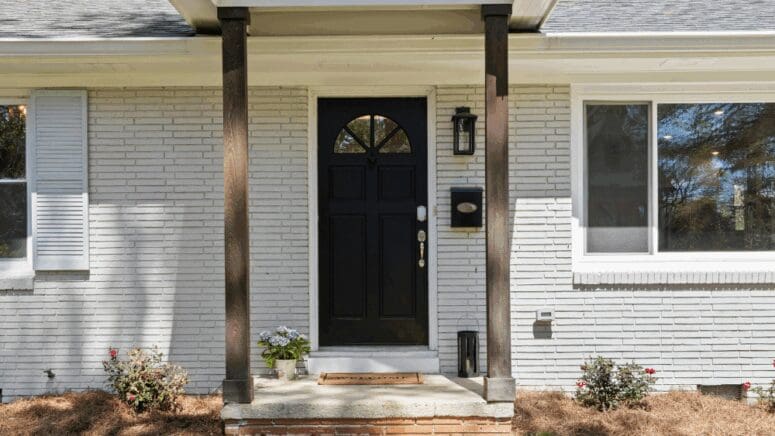
What Color to Paint Your Front Door When Selling a House
- Published on
- 7 min read
-
 Richard Haddad Executive EditorClose
Richard Haddad Executive Editor
Richard Haddad Executive EditorClose
Richard Haddad Executive EditorRichard Haddad is the executive editor of HomeLight.com. He works with an experienced content team that oversees the company’s blog featuring in-depth articles about the home buying and selling process, homeownership news, home care and design tips, and related real estate trends. Previously, he served as an editor and content producer for World Company, Gannett, and Western News & Info, where he also served as news director and director of internet operations.
Author Charles Dickens wrote, “A very little key will open a very heavy door.” The task of selling your home can feel heavy, but there’s a small key that can help swing things in your favor — painting your front door.
The front door is one of the first things buyers see, and one of the easiest places to make a strong first impression. So the question becomes, What color should I paint my front door when selling a house?
In this guide, we’ll share expert-backed color recommendations and explain how the right front door color can influence buyer perception as they approach your home.

How Much Is Your Home Worth Now?
Home values have rapidly increased in recent years. How much is your current home worth now? Get a ballpark estimate from HomeLight’s free Home Value Estimator.
What color should I paint my front door?
If you’re selling your home and want to appeal to the widest range of buyers, experts generally recommend classic, timeless colors that complement the home’s exterior without drawing too much attention. In most cases, this means darker, neutral-leaning shades that feel polished and intentional, rather than trendy or overly personal.
“Choosing the right front door color is not just about following trends, it’s about understanding the unique character of your home, such as its architectural style and color palette,” London marketing expert Terry Fisher told WalesOnline. “A well-thought-out front door color can elevate a [home’s] perceived value and attract potential buyers.”
Expert front door color picks
Below are the nine top front door colors recommended by the color experts at Sherwin-Williams:

Coral Clay: This welcoming shade is a soft yet sophisticated red, mellowed by warm orange undertones. It’s an excellent choice for creating an inviting entry that feels approachable and cozy.

Retreat: This understated green features cool blue-gray undertones that evoke the refreshing crispness of the great outdoors. While often used for interiors, it serves as a serene, “breath of fresh air” for a front door.

Antiquarian Brown: A deep, earthy orange-brown with warm terracotta undertones that creates an immediate sense of stability and charm. This grounded shade adds a classic, high-end feel to an entryway.

Urbane Bronze: Rooted in the organic beauty of nature, this brownish-gray delivers a sense of down-to-earth tranquility and subtle sophistication. It offers a look that feels both grounded and trendy.

Hunt Club: This luxurious, dark forest green is infused with a hint of blue, reminiscent of a quiet woodland escape. Using this shade on a front door can help transform the entryway into a peaceful retreat.

Iron Ore: This cool, deep charcoal offers a sense of mystery and modern sophistication. When applied to a front door, it creates a striking focal point that feels high-end and polished.

Sun Dried Tomato: This rich, earthy red is softened by warm brown undertones. It’s a cozy choice for sellers who want to add a touch of “passionate” color and personality to their entryway without being overwhelming.

Naval: This deep, authoritative navy is balanced by a cool gray-green undertone that brings a sense of meditative serenity to a home’s exterior. It acts as a “new neutral,” offering a calming first impression.

Tricorn Black: Upgrade your home’s curb appeal with this stylish, “never-boring” black that offers a sharp, modern edge. As a true black without distracting undertones, it is incredibly versatile for many exterior palettes.
These darker, neutral-leaning shades tend to photograph well, work across many architectural styles, and help buyers focus on the home itself rather than the seller’s taste.
“The goal is to make the front door a focal point that draws people in, encouraging them to envision the home as their own,” Fisher explained.
To see more options and learn how the color of your front door can affect your mood, see additional paint guides from Behr (Choosing a Front Door Color) and Benjamin Moore (17 Front Door Colors to Elevate Your Home’s Curb Appeal).
White front doors can also be a suitable choice for many homes. It’s classic and traditional, and doesn’t draw much attention. This could be a fitting option if your plan is to let the rest of the home take center stage.
How front door color can impact your home sale
Sandy Kantor, a real estate agent on the top-performing LaPeter-Kantor team in Arizona, explains that door color and the condition of the entryway can “help potential buyers have a connection to your home from the ‘first hello.’”
She says the front door sets the emotional tone for a showing. Before buyers notice layout, finishes, or square footage, they form an impression based on how the home feels as they walk up, and color plays a big role in that reaction.
If the door is unattractive, dented, scratched, or has mismatched paint, you can send a negative signal before the potential buyer even steps over the threshold.
“I’ve had buyers say ‘I don’t even want to see this house’ when approaching the front door,” Kantor recalls. “They’ll assume from the get-go that [the house] is poorly maintained. Don’t make buyers wonder what else is wrong because of a poorly maintained entrance.”
She adds, “You want them to fall in love the first time they see it.”
A well-chosen front door color can make a home feel:
- Cared for and move-in ready
- Welcoming rather than cold or dated
- Cohesive with the rest of the exterior
On the other hand, an overly bright or clashing door color can introduce doubt. But Kantor says that’s not always the case.
“Using a bright color on the front door is a big step, and it depends on the home,” she explains. “Spanish hacienda styles with an orange door (or sunset colors) can fit well in the desert. What’s important is that your front door looks clean and attractive.”
To see how some untraditional colors might — or might not — work, watch this short video from The Paint People channel: Front Door Colors That’ll Make Your Neighbors Hate You.
Don’t overlook your screen door: If your home has a storm or screen door, its condition matters just as much as the front door itself. A worn or mismatched frame can distract from an otherwise well-chosen paint color. Painting the screen door frame the same color as the front door helps everything blend together and creates a more cohesive look.
Front door colors to avoid when selling
While personal expression works when you’re living in a home, selling is about broad appeal. Some front door colors can unintentionally limit buyer interest or distract from the home itself. According to the experts at Zillow, here are some front door colors to avoid:
- Cement Gray: While deep grays are currently a hit for interior rooms, using a flat or “cement” gray on your front door can be a costly mistake. Zillow’s research indicates that prospective buyers may offer roughly $3,365 less for a home featuring this specific exterior shade.
- Bright Red: Bold, experimental reds often miss the mark. While a vibrant red might catch a buyer’s eye in a photo, it often decreases their actual interest in touring the property. These “wild” shades are difficult to coordinate with and can feel overwhelming, though more reserved, muted reds remain a safer alternative.
- Saturated Blue: Intense, highly saturated blues are among the colors least likely to motivate a buyer to schedule a walk-through. Choosing this shade for your entrance is associated with a potential drop in offer price of about $1,300, according to Zillow.
- Olive Green: Despite being a popular interior trend, olive green can backfire on an exterior. Because it is a neutral tone, it often fails to provide enough contrast against other neutral siding, resulting in a bland and uninspiring first impression that can also lead to lower offers.
In general, sellers should think twice about very bright or neon colors that feel niche, highly trendy or dated shades, and colors that clash with brick, siding, or stone rather than complement them.
That said, Kantor reiterates her rule of thumb: the door should look clean and attractive, and the paint color should complement the home’s exterior foundation and location. “A home in the city may work well with bright red.”
The goal isn’t to make the front door disappear; it’s to create a polished, inviting look that helps buyers picture themselves arriving home. Neutral, balanced colors tend to do that best.
When in doubt, hold paint samples next to the door at different times of day. Natural light can dramatically change how a color reads, and what looks subtle on a swatch may feel much bolder once it’s on the door.
Other front door mistakes to avoid
Paint color matters, but it isn’t the only thing buyers notice as they approach the front door. Common missteps that can undermine curb appeal include:
- Peeling paint or visible wear on the door, trim, or frame
- Outdated or mismatched hardware, such as a worn handle or tarnished lock
- Poor lighting, which can make the entry feel uninviting or unsafe
- Cluttered or neglected entry areas, including old mats, dead plants, or overcrowded décor
Looking to Get Top Dollar? Connect With a Top Agent
It takes just two minutes to match clients with the best real estate agents, who will contact you and guide you through the process. Our data shows the top 5% of agents across the U.S. help clients sell their home for as much as 10% more than the average real estate agent.
Get expert guidance before you list
Real estate professionals often view the front door as part of a home’s “handshake” — a subtle signal of what’s to come inside. For sellers, this means a relatively small update like painting your front door can help buyers feel more confident and positive from the very start of a showing.
When you pair that update with local expertise, it becomes part of a stronger overall selling strategy.
If you’re preparing to sell and want advice tailored to your market, HomeLight’s free Agent Match tool can connect you with a top local real estate agent who knows what buyers respond to in your market. With the right guidance, you can focus on the updates that matter most.
Find more helpful tips and guides in HomeLight’s Seller Resource Center.
Header Image Source: (Curtis Adams/ Pexels)
At HomeLight, our vision is a world where every real estate transaction is simple, certain, and satisfying. Therefore, we promote strict editorial integrity in each of our posts.