
How Much Value Does an Accessory Dwelling Unit Add?
- Published on
- 10 min read
-
 Richard Haddad Executive EditorClose
Richard Haddad Executive Editor
Richard Haddad Executive EditorClose
Richard Haddad Executive EditorRichard Haddad is the executive editor of HomeLight.com. He works with an experienced content team that oversees the company’s blog featuring in-depth articles about the home buying and selling process, homeownership news, home care and design tips, and related real estate trends. Previously, he served as an editor and content producer for World Company, Gannett, and Western News & Info, where he also served as news director and director of internet operations.
If you’ve added an accessory dwelling unit (ADU) to your property, you’ve likely invested tens of thousands of dollars — or in some cases, much more. Now that you’re preparing to sell, you may be wondering: How much of that investment will I get back?
The exact amount depends on a combination of factors, and whether you followed the rules when you built it.
In this guide, we’ll break down how ADUs affect resale value, what influences pricing, and how to estimate your home’s value with an ADU in place. We’ll also share expert tips and insights from two of the nation’s top-rated real estate agents.

How Much Is Your Home Worth Now?
Home values have rapidly increased in recent years. How much is your current home worth now? Get a ballpark estimate from HomeLight’s free Home Value Estimator.
What is an accessory dwelling unit?
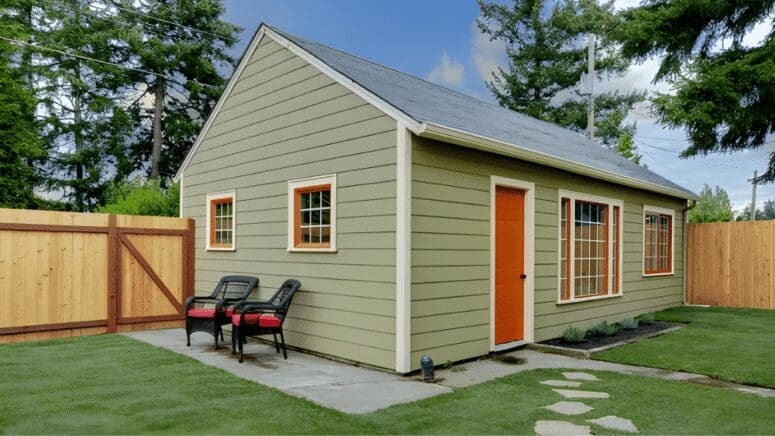
An accessory dwelling unit is a secondary residential unit located on the same lot as a primary home. It has its own living space and typically includes a kitchen, bathroom, and sleeping area. Many ADUs range in size from about 600 to 1,200 square feet.
Denise Madan, a HomeLight Elite agent in Florida with 27 years of experience, explains that an ADU can be known by many names. “We call it an in-law quarter, next-generation quarter, or efficiency studio.”
Other names for ADUs include granny flats, backyard cottages, casitas, garage apartments, carriage houses, and ohana units.
“There are certain areas in Florida where ADUs are popular because of the population,” says Madan. In fact, Florida is among the states with the highest number of ADUs, second only to California.
“In recent years, California actually passed laws to encourage homeowners to start building ADUs to accommodate more housing and make things a little more affordable for some buyers,” says Joel Freis, a top agent who is part of the Miami-based Madan & Freis Group.
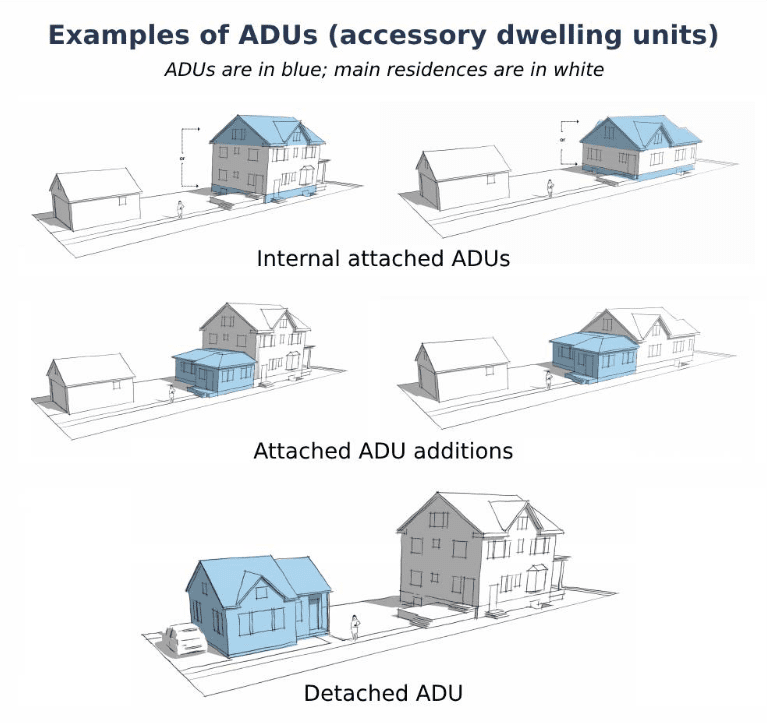
Common types of ADUs include:
- Detached backyard cottages
- Garage conversions
- Basement apartments
- Above-garage units (sometimes called a FROG)
- Attached additions with private entrances
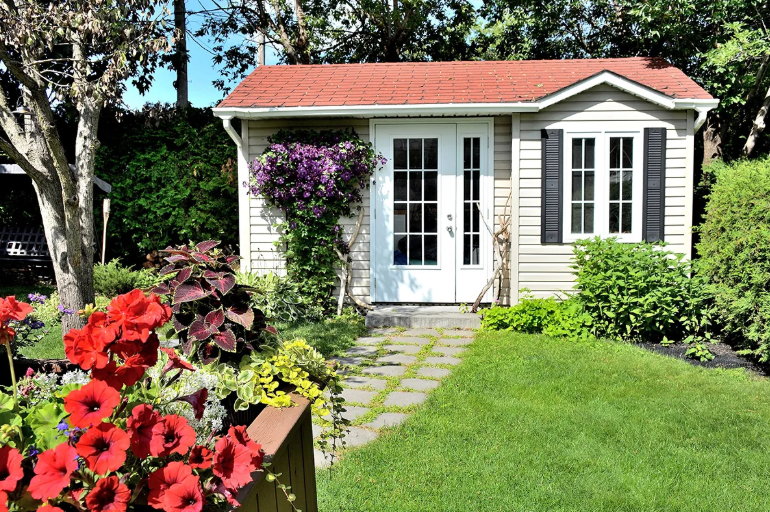
What is a JADU: A junior accessory dwelling unit (JADU) is a smaller version of a traditional ADU, usually no more than 500 square feet, or about 25×20 feet. JADUs are often created by converting existing space inside a house, such as a spare bedroom or attached garage.
How much value does an ADU typically add?
In many markets, a well-built, fully permitted accessory dwelling unit can increase a home’s value by 10% to 35%. A common industry estimate in locations where ADUs are considered desirable is 30%.
To get a quick, unofficial snapshot, multiply your home’s current value by 0.30. For example, a home worth $430,000 before adding an ADU might increase by roughly $129,000, bringing the total property value to $559,000.
In high-demand areas, especially where rental income is strong or multigenerational living is common, the premium may be even higher. However, the value of your ADU can also hinge on where it’s located and whether it was constructed with permission.
What determines how much value your ADU adds?
Let’s take a quick look at the factors that can shape how buyers (and appraisers) evaluate a property with an ADU.
Local demand for multigenerational living
In markets where adult children are living at home longer or aging parents are moving in, ADUs can command strong interest. Buyers see immediate practical use, which can translate into higher offers.
According to a study by Nifty50+, the states with the highest percentage of young adults living with parents include:
-
- New Jersey
- Connecticut
- California
- New York
- Maryland
- Rhode Island
- New Hampshire
- Florida
- Mississippi
- Delaware
Rental income potential
If your accessory dwelling unit has been rented legally, documented income can make your property more attractive. Buyers may factor projected rental income into what they’re willing to pay.
That said, short-term rental and ADU rules vary widely by city. In areas with strict regulations, the income upside may be limited.
Quality and design
A thoughtfully designed ADU with a separate entrance, full kitchen, good natural light, and privacy from the main home will typically command more value than a basic conversion.
The real-world value of your ADU is also influenced by parking availability, usable outdoor space, and even sound separation. If the unit feels like a true standalone residence, buyers are much more likely to pay a premium.
Permits and legal status
“This is one of the biggest mistakes people make: they convert a space or add an ADU without permits,” says Madan. “There are areas where you have to get a certificate of use from the county or the city before the sale.”
A certificate of use (CU) confirms that the ADU complies with local zoning, safety codes, and building regulations and can be legally occupied.
“If you have an ADU that was built without permits, it’s good to hire an experienced agent who knows how to set the property up so it will pass inspection — and make sure it won’t become an issue,” advises Freis. “Otherwise, [an inspector] may flag the property and cause the deal to fall through, or cause the seller to have greater expense by trying to correct the mistake of building it without permits.”
A fully permitted ADU that meets zoning and code requirements is far easier to finance, appraise, and sell. An unpermitted unit may still attract interest, but it can complicate the transaction, limit your buyer pool, and cut into your proceeds.
Lot size and layout
If the ADU significantly reduces yard space or privacy, that can offset some of the added value. On larger lots, where both units feel comfortable and separate, the value impact is often stronger.
If you are in the planning stages or looking to increase privacy, see this post: 8 Ways To Enhance the Privacy of Your ADU.
Maintain realistic ROI expectations
It’s also important to keep in mind that most ADUs do not return 100% of their construction cost at resale. For example, if you spent $150,000 building a detached unit, that does not automatically mean buyers will pay $150,000 more for your property.
Instead, buyers tend to value ADUs based on:
- Additional living flexibility
- Rental income potential
- Housing affordability solutions for family members
- Privacy and layout quality
Will an ADU help my home sell faster?
“Typically, a home with an ADU will sell faster,” says Madan, adding that, in her Florida market, “There are areas where two or three families live together. So when you have an ADU, it usually sells faster because extended family members can move in and have their own separate space.”
Whether your ADU adds value in the form of a higher list price or a faster home sale can depend on where you live.
Based on the number of permits being issued, California holds the highest demand for ADUs in the U.S., followed by Florida, Texas, Washington, North Carolina, Oregon, Virginia, Arizona, and Colorado, according to shovels.ai, which tracks permitting data.
According to DC Structures, some of the best cities to invest in an ADU rental include Los Angeles, Portland, Seattle, and Denver. In other areas of the country, the premium is more modest and depends heavily on execution.
Earn Top Proceeds for Your ADU Property
HomeLight data shows that the top 5% of real estate agents sell homes faster and for up to 10% more than average agents. Try HomeLight’s free Agent Match tool to consult with the highest-performing agents in your market who are familiar with ADU properties.
How appraisers evaluate homes with ADUs
Appraisers typically rely on comparable sales, referred to as “comps” in the industry. Ideally, they’ll look for recent homes in your area that also have accessory dwelling units. But in some neighborhoods, those comps are limited.
When comparable ADU sales are scarce, appraisers may:
- Compare against larger single-family homes
- Assign value to additional square footage
- Consider income potential (in certain cases)
This is one big reason working with an experienced local agent can make a difference. They can help you present rental documentation, highlight comparable sales in the area, and support the value case during the appraisal process.
If you’re curious about what kind of properties are selling in your area, and what buyers are paying, see our interactive Recently Sold Homes Map.
Can an ADU ever reduce your buyer pool?
While many buyers see flexibility and income opportunity, others may view an ADU as unnecessary or worry about tenant management or upkeep. In lower-priced neighborhoods, there’s also a risk of overimprovement, where the ADU pushes your property above what typical buyers in the area can afford.
HOA restrictions, local zoning rules, or short-term rental bans can also reduce perceived value.
Frieis says another buyer turnoff is when the ADU was built poorly or without considering its impact on the rest of the property.
“Be certain you have a separate entrance, and that there’s enough space for parking. People often forget that with an ADU you need additional parking spaces,” advises Freis.
How to price a home with an ADU
One common mistake sellers make is simply adding construction costs to their home’s previous estimated value. For example, according to Angi, most homeowners adding an accessory dwelling unit spend between $40,000 and $360,000 to build their ADU, with a national average of $180,000.
But if your home was worth $500,000 before you built an ADU, you can’t simply add $180,000 to its value and call it a $680,000 property. As noted above, an accepted value-boost estimate is 30%. Hence, your $500,000 home might now be worth $650,000.
For comparison, here is a look at typical ADU cost ranges:
| Accessory dwelling unit type | Average cost range |
|---|---|
| Basement conversion | $60,000–$150,000 |
| Garage conversion | $60,000–$150,000 |
| Attached new construction | $100,000–$216,000 |
| Above-garage construction | $128,000–$225,000 |
| Detached new construction | $110,000–$285,000 |
If you’ve added an ADU, your pricing decisions should be based on:
- Recent comparable sales (comps) with ADUs
- The size and quality of the unit
- Rental income documentation
- Overall neighborhood price trends
Some agents price slightly above similar homes without ADUs to test the premium. Others anchor pricing to the most relevant ADU comp available.
“We’ll look at comparable, recently sold homes in the neighborhood and total square footage,” says Freis. “If it’s an ADU that was built with permits, then we’ll [use the permit information] to look for a home with an ADU that’s built about the same.”
He adds that they can also consult with developers in other areas that build homes with ADUs.
Strategic marketing can also play a role in your list price. An experienced agent will know how to highlight your property’s flexibility, whether for rental income, guests, or multigenerational living.
Should you build an ADU right before selling?
If you’re considering adding an ADU solely to boost resale value, timing is important.
Construction can take months, and costs have risen in many markets. While ADUs can increase value, they are rarely a quick flip strategy.
In general, building an ADU makes the most financial sense if you:
- Plan to use it for several years
- Benefit from rental income
- Live in a high-demand ADU market
If you’re already preparing to list, it’s usually better to focus on pricing and presentation rather than taking on a major construction project.
An ADU can boost value, but it’s market-specific
An accessory dwelling unit can absolutely increase your home’s resale value. In the right market, it may be one of the most attractive features on your property.
But the payoff depends on local demand, build quality, permits, and pricing strategy. Before setting your list price, gather local comps, document rental income if applicable, and speak with an experienced agent who understands how ADUs are valued in your area.
HomeLight can connect you with a top-rated local agent familiar with what buyers are looking for in your market, whether that’s an ADU, an outdoor kitchen, a media room, or a home office. Our free Agent Match tool analyzes over 27 million transactions and thousands of reviews to determine which agent is best for you based on your needs.
Header Image Source: (iriana88w / Deposit Photos)
- "Choosing the Right Size ADU: Your Guide to Building," GreatBuildz (February 2026)
- "ADU vs. Ohana Unit," Tall Builders
- "America's ADU Boom: What 2.8 Million Permits Reveal About the Housing Solution," Shovels (October 2025)
- "Is an ADU a good investment?," RenoFi (September 2025)
- "Do ADUs Increase Property Values?," Abodu (August 2023)
At HomeLight, our vision is a world where every real estate transaction is simple, certain, and satisfying. Therefore, we promote strict editorial integrity in each of our posts.