
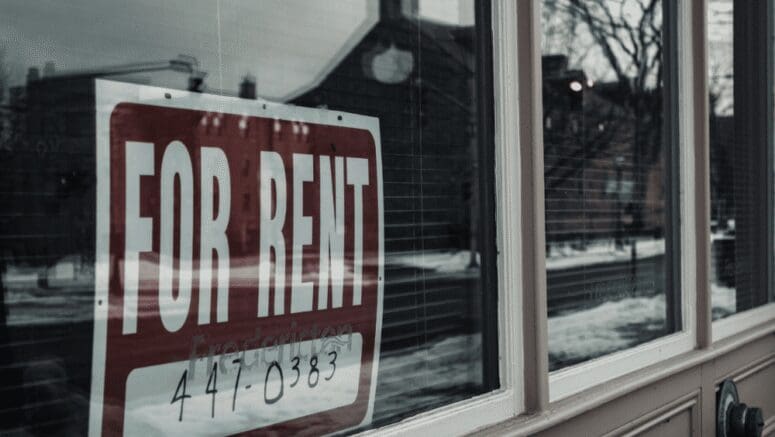
Is Rent To Own a Good Idea? What It Is and When It Makes Sense, Explained
- Published on
- 8 min read
-
 Amna Shamim, Contributing AuthorClose
Amna Shamim Contributing Author
Amna Shamim, Contributing AuthorClose
Amna Shamim Contributing AuthorAmna Shamim is a writer and digital marketing consultant who works with local and e-commerce businesses, ensuring they are easily findable online to and trusted by their clients. Her words have been featured in Glamour Magazine, Business Insider, Entrepreneur, Huff Post, Thrive Global, BUST, Paste, and other publications.
-
Richard Haddad, Executive EditorClose
Richard Haddad Executive Editor
Richard Haddad is the executive editor of HomeLight.com. He works with an experienced content team that oversees the company’s blog featuring in-depth articles about the home buying and selling process, homeownership news, home care and design tips, and related real estate trends. Previously, he served as an editor and content producer for World Company, Gannett, and Western News & Info, where he also served as news director and director of internet operations.
Saving for a home is often challenging, with rising prices, down payment requirements, and credit hurdles making the process feel daunting. That’s why some buyers start exploring alternatives that promise a little more flexibility. One approach that often comes up is a rent-to-own arrangement. But people often wonder: Is rent-to-own a good idea?
At first glance, the concept sounds appealing: rent a home now with the option to buy it later. But like most things in real estate, the details matter, and understanding how these agreements work can help you decide if this path actually moves you closer to owning a home.

Work With a Top Agent to Find a Rent-to-Own Home
When considering a rent-to-own home, working with a real estate agent experienced in these types of deals can help you navigate the process and find a great deal.


How does rent to own work?
In a rent-to-own arrangement, you rent a home for a set period with the option to buy it later, often applying a portion of your rent toward the purchase price. This gives you time to save for a down payment or improve your credit while locking in the chance to buy the home.
Rent-to-own contracts can be tricky and sometimes include unexpected terms. So if you’re planning to take this homebuying route, it’s important to understand how these agreements differ from a regular rental or a standard home purchase.
Term lengths
The term length for rent-to-own contracts can vary from one to five years, but is typically either one or two years. Check your contract so you’re clear on how long you’ll be paying rent before you (maybe) switch to paying a mortgage.
Predetermined purchase price
The price for a rent-to-own home is generally set when you start renting and is usually a bit higher than the current market rate to account for expected future price growth.
If the housing market is strong and prices keep going up beyond what’s anticipated, this could mean you start your homeownership journey with some equity stacked up. On the other hand, if the economy is wobbly, setting a price in advance could work against you.
You may be able to agree to set the purchase price when the lease expires, but not every landlord-seller will agree to that, and it could present some risk to you as a buyer if you’re priced out of the market during your lease term.


Lease option vs. lease purchase
Not all rent-to-own agreements are the same, and the type of contract you sign can make a big difference. Understanding the distinction between a lease option and a lease purchase helps you know your rights, obligations, and what to expect if you decide to buy the home.
- A lease option agreement allows you to buy the house you’re renting before the lease is up, but you can choose not to do so, though you may forfeit some fees by backing out.
- A lease purchase agreement means you are obligated to buy the house you’re renting.
Thus, if you’re not 100% sure you want to buy the house, make sure your contract is a lease option agreement, not a lease purchase.
Option fee
Also called “option money” or “option consideration,” this fee is the amount of money you pay when you sign the contract to reserve the first option to buy the house when the contract term ends. This amount is typically non-refundable if you decide to walk away from the purchase, but it will be credited toward your down payment if you purchase the house.
The amount of the option fee is negotiable. There is no standard rate, but an option fee usually ranges from between 1% and 7% of the agreed-upon purchase price. You will be expected to pay the option fee when you sign the rent-to-own contract.
Forced down payment savings through ‘extra’ rent
In a rent-to-own agreement, you’ll most likely be paying more than the market rental cost on the home. This is what’s called a rent premium. The landlord-seller will apply that extra money toward your down payment when you buy the house. You’ll know upfront when you sign the contract exactly how much extra you’re paying every month that will be credited towards your down payment.
For example, if you’re paying $1,400 per month, and 25% of that ($350) goes toward your down payment, then in two years, you’ll have put aside $8,400 in rent credit.
Keep in mind that this money may also be forfeited if you choose not to buy the home. Double-check the terms of your contract so you’re clear on what happens to that extra money if you decide to walk away from the deal.


The party responsible for maintenance
You want to have a clear understanding of who is in charge of maintenance during your lease period. Often, it’s you as the buyer.
However, sometimes landlords choose to retain the responsibility of paying for any necessary repairs and maintenance, as they’re still responsible for things like the homeowner association (HOA) fees, insurance, and taxes during the lease period.
Even if your landlord is covering maintenance of the property, make sure you have your own renter’s insurance policy to cover your belongings. You might also want to have a conversation with your landlord-seller about their liability coverage for the home in case someone is injured in the house to ensure that your financial investment is protected.
Late payment consequences
In some cases, a single late payment can violate the contract and negate your ability to purchase the house. You may not lose your rental contract over a single late payment, but you don’t want to lose your chance to buy the home you’re already living in and love. Be very clear about any penalties associated with late payments, whether they’re late fees or losing the ability to buy the house.
Renting-to-own may be a good idea when…
Renting-to-own is a growing real estate trend, and there are several reasons why. Many center around making homeownership more accessible to younger people who are starting out in life or those who have hit a few hiccups and need a little time to get things in order.
Rent-to-own can be a great idea when:
You know and trust the seller already
Rent-to-own deals have the potential to be scammy if you’re not careful, but if you have an existing relationship with the seller, then you can tweak the contract to benefit everyone. This is especially true when the seller’s circumstances make a rent-to-own agreement more practical than a traditional sale.
That relationship and foundation of trust should translate to better communication and the ability to reach a deal that you’re all happy with. Neither of you will need to worry that the other one is taking advantage.
You need time to repair your credit
If you’ve had some financial hiccups and your credit score reflects that, taking the time to improve your credit score with timely payments or decreasing your outstanding credit balance could help you get a better deal on your mortgage loan.
A better mortgage loan will translate to long-term savings. Plus, your improved credit could go on to positively impact your finances by lowering interest rates on credit cards.


You need time to reduce your debt
Just like your credit score, your debt-to-income (DTI) ratio will determine what your mortgage buying power looks like and if you’re even able to qualify for one. Most lenders want to see ratios below 45%, including the new mortgage payment, though some buyers can qualify for a mortgage loan with a DTI as high as 50%.
But if your DTI is too high, then you may not qualify for a mortgage right now. If your DTI is between 36% and 45%, you may want to take steps to lower it to qualify for a larger mortgage, especially if your down payment savings are on the smaller side.
You could use help saving for a down payment
If saving up for a down payment is hard for you, then having someone else effectively help you save up could be a great strategy. Because a rent-to-own agreement has your landlord putting aside some down payment money out of your rent, you don’t have to think about it or have the option to spend the money elsewhere — like on new toys or a trip. By default, you’ll have earmarked and saved the down payment.
Because you’ll be living in the house for a year or two before you buy it, this will also give you time to explore down payment assistance programs in your area and see whether you qualify for a grant or a loan to help boost your savings.
That said, most rent-to-own buyers will want to save additional funds beyond these forced monthly rent savings to get the best deal on their mortgage. You’ll probably want to think about doing the same thing.
You know you love the house
If you love the house, it may be worth committing to it in a smaller way before committing to a 30-year mortgage. Think of it as taking a trial period. You get to live in the home, experience the neighborhood, and see if it truly fits your lifestyle. If it does, you have the option to make a long-term commitment with confidence.
You live in an area where there’s fierce buyer competition
Buyer competition can be one of the hardest things about trying to buy a house. Every time you find a great house, another buyer swoops in faster than you or offers more money.
In a rent-to-own situation, you won’t have to jockey against other buyers for this house. You already have the first claim on it! Not every buyer wants to delay their home purchase, but if you’re willing to do so, you can nab a great home without the buyer competition.


You need to move in immediately
Closing on a home can be a slow, tedious, and exhausting process. It can take weeks or even months. When you’re trying to move in immediately, you can’t afford delays. By renting the house now with the understanding that you intend to buy it, you can make the process less stressful for yourself. You’ll immediately have housing, and you’ll be able to buy the home in a more relaxed way when you’re not in a time crunch.
You’re confident you’d be able to get a loan when the rental period is over
If whatever is holding you back from qualifying for a loan now is definitely going to be resolved in the next year or two, then committing to a home now can be a great idea, especially if your dream home is on the market and the owner is willing to enter a rent-to-own agreement with you.
Rent-to-own can be a great stopgap solution when your finances are temporarily wobbly, like if you’re going through a divorce or returning from a stint abroad and in the process of shifting your assets back to the United States.
Discover How Much Home You Can Afford
Understand the costs associated with buying a home and find out what safe budgeting looks like.
Rent-to-own is probably a bad idea when …
While rent-to-own can be a great option for many potential homebuyers, there are circumstances where it just doesn’t make sense.
You’ll enter into a lease purchase agreement
A lease purchase agreement legally obligates you to buy the home, so you’re stuck with the commitment and the cost of rent during your lease. If something changes in your circumstances, you’re still legally on the hook for buying the house, which can be a very expensive headache.
You’ll definitely lose your option and monthly fees if you decide not to buy
Will you get your down payment money back if you don’t buy the house? If the landlord-seller is going to keep it all, that’s likely not a great deal for you.
If this is in the rent-to-own contract, see if you can negotiate these details.
Even if you’re sure you’re going to buy the house based on your circumstances and plans right now, both circumstances and plans can change, and you don’t want to be out thousands of dollars if they do.
You can’t afford to pay higher-than-average rent in the market
Part of this amount is going toward your down payment, but that’s moot if the total amount is out of your budget. You may be better off saving money toward a down payment in another way, even by just stashing what you can afford to put aside in a high-yield savings account of your own.
You won’t be able to afford higher mortgage interest rates
Mortgage rates can go up or down, and if they rise, it could make homes less affordable in some areas. If your mortgage plans rely on interest rates remaining at current or lower levels, and you won’t be able to afford the mortgage if they rise, think twice before you sign on the dotted line.
The economy fluctuates, and rates change. You may be unpleasantly surprised when it comes time to get your mortgage.
Curious about where to find rent-to-own opportunities? Check out our guide on how to find rent-to-own homes to discover tips, resources, and strategies for spotting the right deals.
What are some alternatives to a traditional rent-to-own agreement?
If you need a little help buying a house, but the traditional rent-to-own agreement isn’t right for you, you still have some options to get you to homeownership.
Use online platforms that offer wider options
Rent-to-own platforms like Divvy Homes can make it easier for aspiring homebuyers by prequalifying them for a mortgage loan and giving them a set budget. Choose your home and pay between 1% and 2% of the home’s value as a down payment or option fee. Divvy buys the house in cash and covers all necessary fees, closing costs, taxes, and insurance, and then rents it to the client.
Other online rent-to-own platforms include:
Explore first-time buyer programs
First-time home buyer programs offer grants or loans to make it easier for those who are going through this process for the first time and might need a little help.
William Frohriep, an agent in Macomb County, Michigan, with over 30 years of real estate experience, often advises clients to look at local programs:
“If you’re a first-time homebuyer in Michigan, we have [several] programs where buyers can get a certain amount of money, and they can use those funds toward a down payment on the house, so they don’t need a lot of cash of their own.”
Most states have their own first-time homebuyer programs, usually geared to help with the down payment or closing costs (or both), in order to encourage property ownership.

Consider paying for mortgage insurance
If what you’re missing is the ability to collect 20% down, then a loan with mortgage insurance may be a smart option for you. Private mortgage insurance is required on conventional loans where buyers are putting less than 20% down on the house.
It is insurance for your mortgage payments, not for the house itself. How much your mortgage insurance costs will depend on several factors, which include your credit score and the loan-to-value (LTV) ratio, which is the amount owed on the home relative to its stated value. Usually, you’ll pay between 0.5% and 1% of the loan amount annually.
These insurance payments are wrapped into your mortgage payments. You typically only need to pay for mortgage insurance until you’ve paid off 20% of your home’s value, at which point you can cancel it (though there are some exceptions with FHA loans).
Mortgage insurance payments don’t have to be a long-term expense. They just give you a little breathing room around how much you need to have saved up for your down payment.
Talk to a loan originator about an FHA or USDA (or VA) loan
Having an FHA, USDA, or VA loan may allow you to put less money down with a lower credit score and still get your foot in the homeownership door today. If you’re eligible, they’re incredibly helpful, so it’s worth spending the extra bit of time to find out if you are. Your loan originator will be able to tell you, so be sure to ask.
Jeffrey Zhou, Co-Founder & CEO of FigLoans, encourages his clients to consider FHA loans because “while it’s often difficult for many people to save enough money for a down payment,” FHA loans can offer a quicker path to homeownership and building equity.

Let an Expert Guide Your Rent-to-Own Journey
Rent-to-own deals can be tricky, but an experienced agent can break down the terms and help you negotiate favorable conditions. Avoid costly mistakes by leaning on their expertise throughout the process.
Is rent-to-own the right move for you?
Rent-to-own can be a useful option for buyers who need time to save for a down payment or improve their credit. It gives you a chance to live in a home while working toward ownership, but it’s not without risks. Understanding the terms of the contract, including price, timeline, and penalties, is key to making it work in your favor.
Rent-to-own isn’t right for everyone, but with careful planning, it can be a stepping stone to homeownership. Ultimately, weighing the pros and cons will help you decide if this path makes sense for your situation.
Partner with a top-performing agent through HomeLight to make the decision-making journey easier. They can help you understand your options, negotiate terms, and find the right home that fits your goals.
Header Image Source: (Aaron Sousa / Unsplash)
At HomeLight, our vision is a world where every real estate transaction is simple, certain, and satisfying. Therefore, we promote strict editorial integrity in each of our posts.