
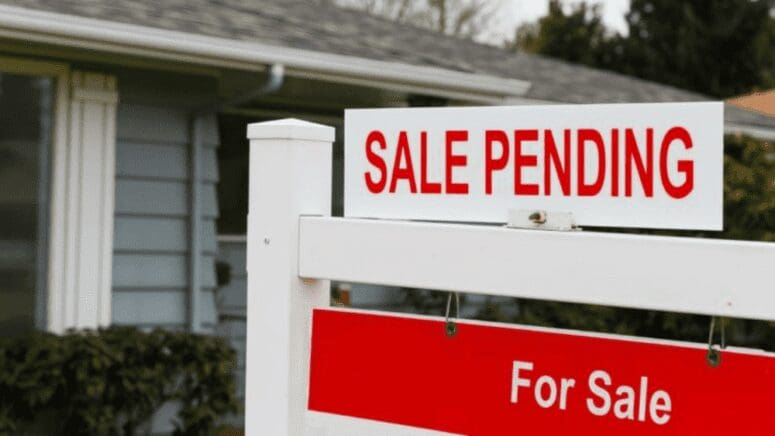
How Is the Housing Market Right Now? 2026 Trends to Watch
- Published on
- 15 min read
-
 Joseph Gordon EditorClose
Joseph Gordon Editor
Joseph Gordon EditorClose
Joseph Gordon EditorJoseph Gordon is an Editor with HomeLight. He has several years of experience reporting on the commercial real estate and insurance industries.
In 2025, the U.S. housing market experienced a dramatic slowdown, with economic uncertainties and record-high home prices driving historically low home sales. The year was also marked by a slight increase in housing inventory and longer days on market as buyers waited for market conditions to improve.
However, signs of recovery were seen before the year ended, with December sales seeing their strongest in three years. Experts believe there will be more inventory on the market starting in February and that housing activity will pick up once interest rates are more favorable.
The question remains for buyers and sellers who spent the past year on the sidelines: “How is the housing market right now?” We’ve put together a comprehensive guide to help you understand the current housing market and what the future may hold.

How Much Is Your Home Worth Now?
Home values have rapidly increased in recent years. How much is your current home worth now? Get a ballpark estimate from HomeLight’s free Home Value Estimator.
What to expect in 2026: Predicted real estate trends
From fluctuating home prices to a rebound in inventory and improving interest rates, these are the trends we predict could shape the housing market for the rest of 2026.
A recession is unlikely
According to HomeLight’s Top Agent Insights for 2026, although recovery will likely remain slow, the year will mark recalibration rather than a recession. 68% believe there will be an increase in inventory that will stimulate more market activity.
“We are navigating a period of recalibration — not collapse,” says Kent Rodahaver, a top agent who serves West Central Florida. “For buyers, this means opportunity with leverage; for sellers, it means strategy, pricing precision, and professional guidance matter more than ever.”
“I’m excited to leave housing hyperbole in 2025 and spread facts, much like homeowners in 1971 facing 7.33% interest rates wouldn’t have bought until 1993 — had they waited for rates to lower,” says Candace Carew, a top-rated agent in Dallas, Texas. “They would’ve rented for 22 years while real estate value quadrupled.”
“We have weathered a storm caused by high interest rates (relative to recent years) and economic uncertainty,” says Brian Bellairs, a top agent in Beaverton, Oregon, who has seen 34 years of market ups and downs. “Declining interest rates in 2026 should jump-start the market, and a balanced real estate market should return in 2026.”
Midwest and Pacific regions are rebalancing
Nationally, top agents surveyed by HomeLight consider the current market as a buyer’s market (42%). Regionally, the Midwest is seeing the power shift from a seller’s market midway in 2025, entering 2026 with opinions split (36% say balanced; 36% say seller’s market). The opposite is happening in the Pacific region, from a buyer’s market in 2025 to a split opinion (40% buyer’s market; 40% balanced).
Meanwhile, the Northeast continues to lean towards a seller’s market, while the South Atlantic, South Central, and Mountain regions remain buyer’s markets, according to agent insights.
Mortgage rate improvements will signal more home purchases
By the end of 2025, mortgage rates had settled into the 6.15%-6.20% range and continued a downward trajectory at the beginning of 2026. In HomeLight’s Lender Insights & Predictions for 2026, 87% of loan officers surveyed believe that there will be an increase in mortgage originations this year, with 44% predicting a gain of more than 10%.
Lenders mention a significant drop or stabilization in mortgage rates as the main driver of market activity in 2026. At the start of 2025, a 30-year fixed-rate mortgage averaged 6.91%, while a 15-year fixed-rate mortgage averaged 6.13%. As of January 2026, following three mortgage cuts to close the previous year, rates have dipped to 6.15% and 5.44%, respectively.
Expert predictions are mixed on whether the Fed will cut rates further in the first half of the year. “We should rely on forecasts that are informed by a broad set of indicators and by ongoing engagement with businesses and communities across the country,” Federal Reserve Vice Chair for Supervision Michelle Bowman said.
While prospective homeowners may be looking for a more favorable rate around 5.75% or lower, 2025 marked a year of adjustment and acceptance of persistently high interest rates.


Home prices will continue to rise
41% of agents surveyed by HomeLight believe home prices will increase moderately (under 5%) in 2026. A separate survey of lenders agrees. “We won’t see the dramatic crashes or runaway booms of past cycles. Instead, we’ll enter a phase of quiet acceleration, where home prices nationally rise by just 1%-3%, while markets with true supply bottlenecks continue to appreciate closer to 5%-6%. Inventory will inch higher, giving buyers better options, yet affordability will still keep many on the sidelines,” Colorado loan officer Brittney Hansen told HomeLight.
Buyers consider different strategies to afford a home
With mortgage rates remaining high, buyers are considering different financing options to afford a home. HomeLight’s Q3 2025 Top Agent Insights revealed that closing cost credits, price reduction after pre-inspection findings, and seller-paid interest buydowns are the top three concessions that helped seal the deal in 2025. Sellers who are considering a new home purchase also consider bridge loans, extending the closing timeline, sale-leaseback agreements, buy-before-you-sell programs, and home equity loans.
Struggling first-time buyers might also use a 50-year mortgage — an option that might open doors for affordable homeownership upfront if a buyer can refinance to a better rate down the road or pay the loan ahead of time.
Los Angeles agent Anthony Guetzoian, who has been helping homebuyers for nearly 30 years, shares, “For most people, the reality is they move every eight to 10 years. In that context, a 50-year mortgage isn’t about staying in debt forever; it’s about opening doors for people who have been priced out of homeownership for far too long.”
Downsizing, coupled with paying in cash, is another workaround to prevailing high interest rates. 24% of agents say that about half of their downsizing clients are choosing this option.




What does all this mean for home sellers?
Here are a few ways home sellers could benefit from the 2026 housing market:
Pricing slightly below market value drives urgency
In an uncertain market with early signs of rebalancing, pricing your home strategically could help close a sale. According to top agents, a price slightly below the market could be the winning strategy in 2026, and an openness to negotiate could be a good move.
“Just setting a price and hoping it sells with multiple offers doesn’t work anymore,” warns Allan Konnagan, a top agent in Dayton, Ohio. “Seller-paid concessions are also being used more than before.”
“Sellers need to take an honest look at the condition of their home and choose a list price based on recently sold comps (comparable nearby homes) of similar condition,” advises Cameron Walker, a top-rated agent serving Huntsville, Alabama. “You can have the lowest-priced home on the market and still be overpriced.”
Prep your home to present a turnkey property
With the majority of buyers looking for turnkey properties, doing a pre-listing inspection, conducting minor fixes, and documenting everything could be the make-or-break move in selling your home in 2026. Agents also suggest addressing deferred maintenance, decluttering, and handling high-impact cosmetic fixes.
While you’re making these fixes, create early demand for your property. “Shift from simply listing to pre-marketing. Sellers who build demand before going live — through coming-soon campaigns, Private Exclusive exposure, targeted buyer matching, and polished presentations — enter the market with momentum, stronger showings, and better offers. In 2026, demand creation will beat passive listing every time,” shares Florida agent Philip DeCarlo.
Ease homebuyer fears by offering concessions
The top homebuyer fears in 2026 are affordability or high monthly payments (55%) and overpaying (18%) for a property. With strategic pricing and offering price incentives, sellers can entice buyers to push through with the home sale.
Rich Dolph, an agent serving Colorado’s buyer’s market, suggests proactively offering rate buydowns or closing cost assistance. “Offer buyers a 2/1 rate buydown from day one. Don’t wait for buyers to ask — lead with ‘Move in today at 4% instead of 6%.’”
What does all this mean for homebuyers?
Many prospective buyers who sat out the 2024 and 2025 housing markets are eager to make the attempt. However, affordability will still be a major concern, especially for first-time homebuyers. To get a better deal, it may be beneficial to consider the following strategies:
- Compromising on some wants: You may not get the exact home size, amenities, or upgrades that you want, especially as home prices remain high. Working with a top-performing real estate agent can also increase the likelihood of your offer being accepted. Use HomeLight’s agent matching service to get referred to two or three top agents in your area who best suit your home-buying needs.
- Broadening your search area: This works incredibly well if you can work remotely. If you consider alternate locations and neighborhoods, you may find an affordable home more successfully.
- Exploring first-time home buyer assistance programs: We’ve put together a handy guide to first-time home buyer programs to help you get a foot on the property ladder. While several of these programs are available to homeowners across the country, you can learn more about state or city-specific programs by consulting a mortgage professional.
- Getting pre-approved for a mortgage: Before you begin your home search, you should get pre-approved for a mortgage to figure out how much house you can afford. (Hint: HomeLight’s Affordability Calculator can give you a general idea.) A mortgage preapproval is based on your finances and a credit check. Homebuyers with preapprovals are more attractive to sellers as it’s less likely that their financing will fall through once they submit an offer on a home.
Growing trend of digital real estate services
Digital real estate services, particularly AI, are changing how the industry operates. 80% of agents surveyed in our recent AI report, said that they use AI tools to generate listing descriptions or marketing copy.
“My AI Assistant helps make phone calls to all of my leads (buyers and sellers) and to showing agents to get feedback,” says Chattanooga, Tennessee, agent Paul Avratin.
“It’s also taking incoming texts and calls for info on my listings from my riders on my signs. I love how I can make the remarks about a home sound so much better than when I try to write them myself.”
More and more, consumers are taking advantage of fast, simple, and convenient online services, like those that HomeLight offers:
- Home Value Estimator: Get a ballpark idea of what your home is worth by answering a few simple questions.
- Affordability Calculator: Figure out how much home you can afford based on your income, savings, debts, credit score, and more.
- Net Proceeds Calculator: Estimate the cost of selling your home and how much you could earn from the sale.
- Agent Match: Connect with two to three top-performing agents in your desired market who fit your home buying — or selling — needs.
- Simple Sale: Get a competitive, all-cash offer for your home and close in as few as 7 days, with no repairs or prep work required. To get started, answer a few questions and you’ll receive a no-obligation offer in about a week.
- Buy Before You Sell: Unlock your home’s equity to purchase a new home with all cash and no contingencies. Sell your current home vacant with less hassle. Program available throughout the U.S. Visit our site or ask your agent about HomeLight Buy Before You Sell.
- Closing Costs Calculator: Get an idea of what your total closing costs will be when purchasing your dream home.
Another digital real estate service that continues to impact the industry is iBuying. iBuyers (the “i” stands for instant) have been around since the 2010s and are a solid option for home sellers seeking fast cash offers.
Unlike We Buy Houses for Cash companies, which tend to purchase homes as-is and pay around 70% of market value, iBuyers like Opendoor and Offerpad look for homes in good condition and pay around 85%-95% of market value while charging fees for their services.


What else should you know about the 2026 housing market?
If I can’t find or afford a home, will it be wise to enter a rent-to-own agreement in 2026?
If you are struggling to come up with a down payment, have less-than-perfect credit, or don’t want to rent traditionally, a rent-to-own program might be a good fit for you. Always consult with an attorney before going this route, as many rent-to-own contracts strongly favor sellers.
If you’re home shopping while trying to figure out how to leverage your existing equity, consider HomeLight’s Buy Before You Sell program, which allows you to unlock part of your home’s equity to submit an all-cash offer on your dream home without a home sale contingency. You’ll be able to sell your home vacant (no need to worry about dipping out for showings!) and avoid the hassle of moving twice.
Get ahead of market trends: partner with an experienced top agent
There will be several competing forces that dictate how the market moves, including:
- Mortgage rates
- Home prices
- Housing inventory
- Inflation
- Labor market
Our Agent Match tool can help you find the perfect real estate agent. It analyzes millions of transactions, thousands of reviews, and other data points to find the best local agents for your needs. Whatever your needs are, HomeLight can connect you with a trusted professional today to give you peace of mind on your home-selling journey, ensuring that it is simple, certain, and satisfying.
Writer Dwayne Vega contributed to this article.
Header Image Source: (Joshua Rainey Photography / Shutterstock)
- "Will the Fed Cut Interest Rates in 2026? Don't Get Your Hopes Up, Some Experts Say", Investopedia (January 2026)
- "Divided Fed lowers rates, signals pause and one cut next year as growth rebounds", Reuters (December 2025)
- "NAR Existing-Home Sales Report Shows 5.1% Increase in December", National Association of REALTORS® (January 2026)
At HomeLight, our vision is a world where every real estate transaction is simple, certain, and satisfying. Therefore, we promote strict editorial integrity in each of our posts.