
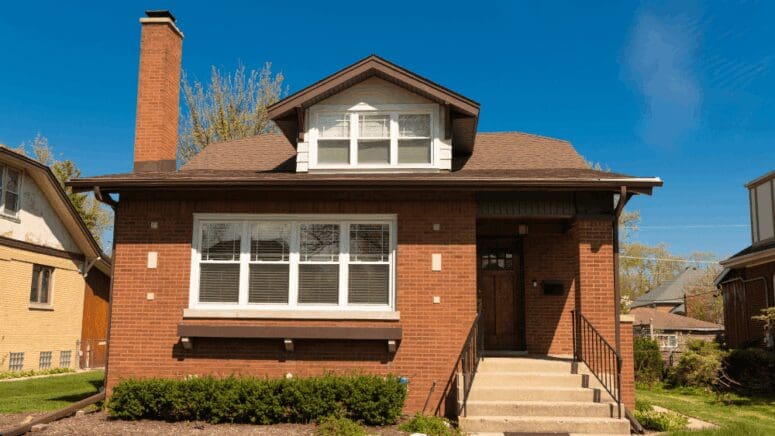
Selling a House ‘As Is’ in Chicago
- Published on
- 13 min read
-
 Alexandra Lee Associate EditorClose
Alexandra Lee Associate Editor
Alexandra Lee Associate EditorClose
Alexandra Lee Associate EditorAlexandra is an associate editor of HomeLight.com. Previously, she served as a writer and social media manager at Santa Barbara Life & Style Magazine, in addition to interning at the nonprofit honors society Phi Beta Kappa. Alexandra holds a bachelor's degree in communication and global studies from UC Santa Barbara, and she has three years of experience reporting on topics including international travel, luxury properties, celebrity interviews, fine dining, and more.
Looking to sell a house “as is” in Chicago? Whether you’ve got a fixer-upper in Portage Park or recently inherited a relative’s home in Lincoln Square, sometimes the goal is to skip repairs, get a fair offer, and move on quickly.
“Most of the homes I see as-is either are places that need a lot of work, where tenants have been living in for a long, long time, or places where the roof needs to be replaced, the plumbing doesn’t work — things like that,” says Santiago Valdez, a top-performing Chicago real estate agent with over 24 years of experience.
However, selling a house “as is” usually means accepting a lower offer, and it doesn’t always prevent buyers from trying to negotiate savings. In this article, we’ll break down how to sell a house as-is in Chicago, your options for getting an offer, and what to expect from the process.
Fast facts about selling a house ‘as is’ in Chicago
| Median sales price in Chicago | $360,000 (November 2025) |
| Average days on market (DOM) for Chicago | 31 days (November 2025) |
| Disclosures | Illinois law requires sellers to disclose material facts about the property through the Residential Real Property Disclosure Report |
| MLS has a field to mark a listing “as is”? | No |
| Is a real estate attorney required? | Real estate attorneys are not considered essential for closing in Chicago |
| Real estate transfer taxes? | $5.25 for every $500 |
What is ‘as is’ condition in real estate?
“As is” is a type of home sale in which it’s understood by all parties that no improvements will be made to the property. When selling a house “as is,” the seller chooses not to entertain buyers’ requests to complete specific repairs or provide a credit for fixes.
An as-is sale may also indicate that the functionality and longevity of certain components of the home are not guaranteed, such as a leaky roof or a stove that’s on its last legs.
When selling a house “as is,” the general condition of the property and its amenities should already be accounted for in the purchase price of the home to the best of the seller’s knowledge.
Which types of homes are sold ‘as is’?
Homes that are sold “as is” often need a fair amount of work or may be cosmetically outdated. It’s not a label you’re likely to put on a listing in pristine, move-in-ready condition.
“As is” sales often attract investors searching for their next flip or buyers seeking a good bargain, perhaps on a home that’s in a great location with lots of potential for improvement.
What problems do you have to disclose in Illinois?
If you choose to sell a house “as is” in Chicago, it doesn’t mean just sweeping any known problems with the property under the rug.
All Illinois sellers are required to complete the Residential Real Property Disclosure Report. A good time to do so is prior to listing your home or requesting an offer, so that you know it’s taken care of.
According to the document, “The seller shall disclose material defects of which the seller has actual knowledge,” meaning you are legally required to provide information about conditions that could substantially affect the property’s value or safety.
The form will walk you through documenting what you know about the property’s overall condition, including the presence of any lead paint, structural damage from past termite infestations, and any known material defects.
“If it’s a residential property, you have to disclose anything that you think would be a material defect. A material defect is something that would affect the value, the health, or the safety of the next owner,” says Valdez. “In Chicago, we have a lot of very old properties. So, for a 1920 house, it’s not unusual for it to have cracks in the foundation here and there, or maybe peeling areas of paint, or just different things that older houses have.”
You’ll also be prompted to fill out information about:
- Flooding or recurring leakage problems in the crawlspace or basement
- Electrical, plumbing, heating, ventilation, and air conditioning systems
- Unsafe conditions related to drinking water, radon, or asbestos
- Structural issues or earth stability defects
- Past or current infestations of termites or other wood-boring insects
- Boundary disputes, underground fuel storage tanks, or legal violations
No matter how you choose to sell your home, you’re required to make these disclosures to the best of your ability. However, Illinois does allow certain exceptions for sellers who haven’t lived in the home. For example, exemptions apply if the property is being transferred pursuant to a court order, between co-owners, or by certain fiduciaries such as trustees or executors. These exemptions mean that someone selling an inherited property or who is otherwise unfamiliar with the home may not be required to complete the disclosure report.
Review your options to sell ‘as is’ in Chicago
The main options to sell a house ‘as is’ include:
List ‘as is’ with the help of a real estate agent
A seasoned Chicago real estate agent will provide assistance throughout the process of listing and selling a home “as is.” An agent can share simple presentation tips to improve marketing, help set an appropriate price that reflects the home’s true condition, and work to find a buyer who’s willing and eager to buy your home in its current state.
“Either you do it yourself, or you have an agent who knows how to reach various types of people and what the value of the place is. You can actually get much better results,” Valdez says.
Sell directly to a cash buyer
Someone who needs to sell their home “as is” can also work directly with a property investor or house-buying company rather than list on the open market, where it might be difficult to get an offer from a limited buyer pool.
We Buy Houses companies typically buy “as is” at a discounted rate and generally seek out homes in need of significant repairs. These companies can help sellers cash out quickly, and many will also cover a seller’s closing costs.
Steps to list ‘as is’ with the help of a real estate agent
Find an agent willing to list the home ‘as is’
Choosing the right real estate agent to work with is always important, but even more so when selling a property “as is.” You’re looking for someone who doesn’t shy away from listings that need a little TLC and also potentially has a strong network of investor connections.
Your agent should also be willing to go the extra mile on marketing. Considering that more than half of Americans say they would prefer to buy a home that’s move-in ready, an “as is” sale likely has a reduced buyer pool from the start.
Consider a pre-listing inspection
A pre-listing home inspection is the same as a standard home inspection, except the seller pays for it prior to listing their home on the market. It may sound like a counterintuitive step for an as-is sale, but getting the inspection results upfront can illuminate any issues that might impact the value of the home and inform a more accurate pricing strategy. If a buyer requests further price deductions after conducting their own inspection, you may be able to point to how the estimated cost of certain repairs was already baked into the list price.
Valdez clarifies that while a pre-listing inspection may be beneficial in identifying everything that’s wrong with the property, sellers have no obligation to complete one in Chicago’s market.
“Although the seller has to disclose anything that they know about, the seller has no duty to inspect,” he says. “They really don’t have an obligation if they’re selling a property as-is to disclose anything that’s not visually evident to them.”
However, he points out that selling as-is can expose you to significant liability in general.
“If you’re really considering selling the property as-is, you may be exposing yourself to a lot of liability, because the buyer may come and, if you price it right, they may not even do an inspection as part of their purchase process,” says Valdez. “I think it just opens you up for a lot more liability than not doing it.”
Price to reflect ‘as is’ condition
The median sale price for homes in Chicago hit $360,000 in November 2025, a 3.2% increase over the year prior.
According to Valdez, homes sold ‘as is’ in Chicago could sell for up to 30% less than regular listings, depending on who the buyer is, how strong local demand is, and how well the property is marketed. Selling directly to an investor while marketing the home as a “fixer-upper,” for example, could result in a price discounted up to 30%. However, if you’re able to make the property look and sound appealing to buyers, you can bring your price much closer to market value.
“As a buyer, when you’re purchasing something as-is, and you’re looking to do work on it, you’re not expecting to do all this work and come out exactly where you would have if you had bought it fixed. You’re going to want some discount for your effort unless the property is just very, very desirable. So there is a range anywhere between 3% and 20% plus of what that buyer’s effort is worth to make the property basically a normal condition again,” explains Valdez.
If you’re curious what your Chicago home might be worth in today’s market, you can start with a free estimate from HomeLight’s Home Value Estimator (HVE).
Our HVE analyzes public data, including tax records and assessments, and pulls recent sales records for other properties in your neighborhood. Using a short questionnaire, we also factor in specifics about your home, such as the property type and its described condition. Input your address, and we’ll provide you with a preliminary home value estimate in less than two minutes.

What is Your Chicago Home Worth?
Enter your address and get a preliminary estimate of home value in under two minutes.
Do ever-so-light preparations
Even for as-is listings in Chicago, Valdez typically recommends that sellers make the property as marketable as possible to as many people as possible.
Here are some useful tips to help you get started:
- Focus on the marketing presentation
- Include floor plans in the listing
- Enhance curb appeal
- Deep clean and declutter the interior
- Repaint the front door or exterior walls
- Plant seasonal flowers out front
- Depersonalize by removing family photos
Photograph to show potential
Your home listing warrants professional photography, regardless of its condition. A professional photographer will take steps to shoot each room from the best angle, ensure optimal interior and natural lighting, and edit for brightness and exposure.
A high-quality camera with a wide-angle lens is essential to showcasing entire rooms rather than half or three-quarters of what’s there. For these reasons and more, professionally photographed homes can help homeowners earn up to a 47% higher asking price per square foot compared to houses without professional photos.
Your real estate agent will almost always arrange for professional photos as part of the listing process.
Highlight the surrounding area
A home’s location will be important to buyers seeking out a home with potential. Mention in your as-is listing if your home is close to any of the following:
- Downtown areas
- Major employers
- Parks and green spaces
- Sports venues and entertainment districts
- Waterfront views or access (ocean or a lake)
- Highly rated schools
- Access to outdoor activities
- Public transportation
Include ‘as is’ in the listing
Unless you explicitly mention that your home is being sold “as is,” buyers will have no idea of your intentions with the listing. Other common descriptors mentioned in as-is listings in Chicago include priced to sell, fixer-upper, handyman special, or a “call for investors.”
To balance the focus on as-is condition, work with your agent to create a property description that showcases the best features of the home. Since the Chicago MLS has no designated place to mark a listing “as is,” it is often included in the property description.
Understand buyers may still negotiate
Listing “as is” provides no guarantee that buyers won’t try to negotiate savings on their purchase, even on an asking price you felt was fairly reduced to reflect the home’s current condition. One of the best defenses you can have is an agent who takes a hard stance to prevent a deal from going south for the seller.
Be aware of minimum property standards for certain loans
When you place your home on the market, it’s hard to predict whether your top offer will come from a cash buyer or a buyer who’s pre-qualified for a home loan.
But if you do end up working with a financed buyer, be aware that different mortgage types (such as conventional loans or government-backed FHA, USDA, or VA loans) have different minimum property standards. These are standards related to the overall condition of a property, which will play a role in the willingness and/or ability of a lender to finance a buyer’s loan.
Before properties can be financed, their value and condition are typically examined by a state-licensed, independent appraiser contracted by the buyer’s mortgage company.
If you’re not sure whether your home will meet appraisal requirements, you can start by taking a look at the FHA minimum property standards. If your house complies with FHA, then it will also comply with most other lenders’ requirements.
Prioritize a cash offer if you receive one
On occasion, conventional lenders may even finance a fixer-upper property sold “as is,” and it’s not impossible to finance a fixer-upper with an FHA loan. However, if you’re selling a house “as is” — especially one that needs extensive repairs — you may want to consider taking a cash offer if you receive one. Cash eliminates the lender-ordered appraisal, plus the time it takes to close on the buyer’s loan, creating a faster and more direct path to settlement.
Pros of listing a home ‘as is’:
- Save time and money on prepwork
- Potentially reduce negotiations from the inspection
- Solution for out-of-state owners and inherited homes
Cons of listing a home ‘as is’:
- Limited buyer pool
- Expect lower offers
- Negotiations and repairs aren’t always off the table
Steps to sell directly to a cash buyer
Now that we’ve covered the general process of listing a home “as is,” let’s break down the alternative of working with an investor. While the process can vary from business to business, the steps of selling your home to a house-buying company typically look something like this:
- Decision: A homeowner decides a traditional listing isn’t for them. Perhaps their home needs significant repairs, or they want to avoid hosting any showings or open houses. They’re concerned about finding a buyer who’s willing to purchase their home in its current condition.
- Contact: The seller contacts a company that buys properties in their area and provides some basic information about their home.
- Preliminary offer: At this stage, some house-buying companies will provide a preliminary offer that is subject to change after an in-person house assessment.
- Assessment: The company schedules a walkthrough of the property to evaluate its condition, usually within 24 to 48 hours of initial contact.
- Firm offer: The company extends a firm offer (usually within 24 hours, sometimes on-site after the walkthrough), which you can either accept or decline. Most of these companies will not negotiate on price, so the offer is typically a take-it-or-leave-it scenario.
- Closing: If you accept the offer, you and the company will both sign the contract, and closing will begin. Some companies offer a large deposit or moving cost assistance, and a few may even pay for the home upfront.
- Payment: The seller receives payment quickly, typically within seven days to a few weeks, though this can vary by company. Sellers who work with a house-buying company are typically allowed flexibility in choosing a move-out date that works for them.
If you aren’t sure where to get a cash offer, consider Simple Sale, a solution from HomeLight. With Simple Sale, you’ll share some basic information about your home, such as whether it’s a single-family or condo and how much work it needs. From there, we’ll provide you with an all-cash offer to buy your home in as little as one week.
Skip repairs
There’s no need to call the roof inspector or drain your savings to replace the HVAC. HomeLight will provide an offer for homes in almost any condition.
Sell when it’s convenient
Want to move right away? Or need a little more time to get packed? Either way, we’re flexible. Select a move date that works for your schedule within 30 days of closing.
Close with certainty
Cash buyers don’t need a lender’s involvement to purchase a home, meaning they can move quickly and efficiently compared to someone who needs financing. With Simple Sale, you can close in as little as 7 days, compared to the 30-60 days or longer it typically takes to close with a financed buyer.
Curious to know more about the Simple Sale experience? Hear it firsthand from one of our valued clients in the video below.
Additional We Buy Houses companies in Chicago
Below, we’ve compiled a list of some of the leading house-buying companies that purchase homes “as is” for cash in Chicago and information about each.
Sell My House Fast Chicagoland
Sell My House Fast Chicagoland bills itself as a 100% free and easy way to sell your house quickly. The company promises a competitive, no‑obligation offer within 24 hours of submitting basic information online. Sellers can choose their closing day and don’t have to worry about making repairs or cleaning before the sale. Once prospective sellers fill out an online form or call the company, a representative will visit the house and typically make an offer on the spot, making the process fast and convenient.
Locations: Chicago metropolitan area
Closing costs: Sellers pay no closing costs; Sell My House Fast Chicagoland covers them.
Sell My House Fast Chicagoland has been BBB accredited since 2022 with an A+ rating and holds a 4.8-star Google rating based on over 40 reviews.
Website: sellmyhousefastchicagoland.com
Phone number: 312-869-2289
Direct Property Aid
Direct Property Aid makes selling your Chicago home for cash fast and hassle-free. They buy houses in any condition, without requiring any repairs or cleaning, and can deliver cash in as little as seven days. Homeowners avoid ongoing payments for utilities, taxes, insurance, or mortgage while skipping lengthy listing processes. The company even covers moving costs with insured professionals and eliminates mortgage or inspection contingencies, ensuring a smooth, guaranteed closing. With a quick and friendly process, Direct Property Aid helps sellers move on with peace of mind.
Locations: Chicago and the nearby areas
Closing costs: Sellers pay no closing costs; Direct Property Aid covers them.
Direct Property Aid has been BBB accredited since 2023 with an A+ rating and maintains a perfect 5-star Google rating based on over 70 reviews.
Website: directpropertyaid.com
Phone number: 773-694-4230
Festival Properties
Festival Properties is a Chicago-area home-buying company that makes fast, no-obligation all-cash offers to sellers, often within 24 hours of contact. They aim to help homeowners in a variety of situations, from relocation to inherited properties, by purchasing homes directly, without the need for agent fees or repairs. Because they pay cash, Festival Properties can close quickly, sometimes in as few as seven days or on a timeline that works for the seller. They buy properties in any condition, letting sellers avoid cleanup or renovation work and move on with certainty.
Locations: Chicago metropolitan area
Closing costs: Sellers pay no closing costs; Festival Properties covers them.
Festival Properties is not BBB-accredited, but it holds a 4.6-star average rating from over 90 Google reviews. Former customers praise the company for its fair, reasonable offers and noted that the team was professional and easy to work with.
Website: chicagowebuyhouses.com
Phone number: 847-306-3449
Jeff Buys Your House
Jeff Buys Your House, founded in 2007, is a veteran‑owned, family‑run cash home buyer serving Chicago and the surrounding areas. They offer no‑obligation cash offers in as little as 24 hours and allow sellers to choose their closing date, with the option to close in as little as one week. They buy houses “as-is,” regardless of condition or needed repairs, making the process quick and hassle‑free.
Locations: Chicago and surrounding areas
Closing costs: Sellers pay no closing costs; Jeff Buys Your House covers them.
Jeff Buys Your House has been BBB-accredited since 2022 and holds an A+ rating. The company maintains a 4.7-star Google rating based on 15 reviews. Testimonials highlight a quick, easy process and a friendly, respectful team.
Website: jeffbuysyourhouse.com
Phone number: 630-576-9468
Pros of selling ‘as is’ to an investor:
- Save money on home preparations.
- Sell fast — get an offer within days and close as quickly as one to two weeks later.
- Skip repairs. Most house-buying companies purchase properties in “as is” condition, even those that need major repairs.
- Skip the staging, repeated showings, and open houses.
- Arrange for a flexible move-out date that suits your schedule.
Cons of selling ‘as is’ to an investor:
- Offers are likely to be much lower. Investors and house-buying groups typically pay around 70% of what they estimate to be the home’s after-repair value.
- Sellers will have little room to negotiate. Most cash buyer offers are going to be “take it or leave it.”
- Although many home-buying companies are legitimate, some are not. It’s always a good idea to be vigilant about potential scams.
How much will you make from an as-is home sale?
There is no simple equation for calculating how much you’ll net from an “as is” sale. If you list on the market with the help of an agent, you’ll need to account for the cost of Realtor fees. However, this approach can often lead to higher offers and more competition for the home. You’ll also need to account for closing costs, such as title fees and taxes.
Different types of investors and house-buying companies also offer varying amounts for homes, largely dependent on their exit strategy. While fix ‘n’ flip investors usually offer around 70% of the home’s after-repair value, buy-and-hold investors who plan to rent out your property may be able to pay more. In addition, investors are often willing to cover a seller’s closing costs, which can total around 1%-3% of the sale price.
HomeLight’s net proceeds calculator can be helpful for running through some possible selling scenarios and estimating your take-home pay.
Ready to sell your house in Chicago?
While every home sale is different, you should now be familiar with the general process of how to sell a house “as is” in Chicago. Now, you can begin to weigh which approach is right for you.
Whether you choose to list “as is” with a real estate agent or work directly with a house-buying company, your home doesn’t need to be in perfect condition to sell — as long as you provide the necessary disclosures, set an appropriate list price, and know what to expect going into the process. Whenever you’re ready to take the next step, HomeLight is happy to assist with your real estate needs. Consider connecting with a top agent near you or requesting a cash offer from Simple Sale.
Header Image Source: (stetsik / Deposit Photos)
At HomeLight, our vision is a world where every real estate transaction is simple, certain, and satisfying. Therefore, we promote strict editorial integrity in each of our posts.