
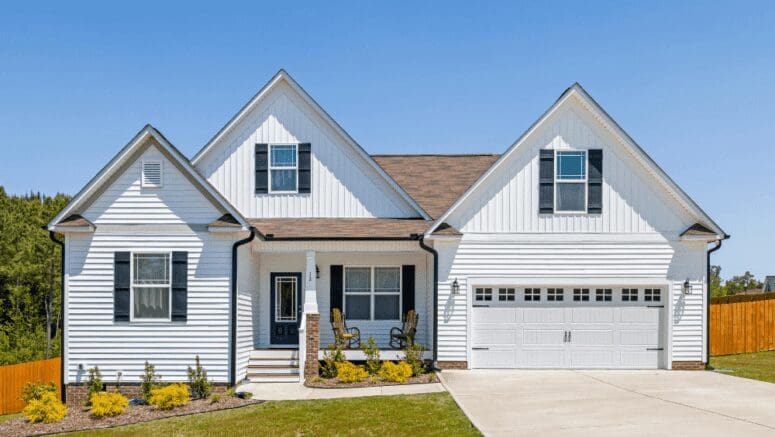
Selling a House ‘As Is’ in Virginia
- Updated
- Originally published
- 14 min read
-
 Sam Dadofalza Associate EditorClose
Sam Dadofalza Associate Editor
Sam Dadofalza Associate EditorClose
Sam Dadofalza Associate EditorSam Dadofalza is an associate editor at HomeLight, where she crafts insightful stories to guide homebuyers and sellers through the intricacies of real estate transactions. She has previously contributed to digital marketing firms and online business publications, honing her skills in creating engaging and informative content.
Maybe your Virginia home has a leaky roof, dated kitchen, or floors that have seen better days, and the thought of fixing everything before selling feels like a project you never asked for. This can be especially true with older homes in places like Richmond or Norfolk, where years of wear and tear can show up in unexpected ways. Instead of pouring more money and time into repairs, you’re exploring the idea of selling a house as-is in Virginia.
Matt Megel, managing partner with CAZA Group, which sells homes 69% faster than the average Reston, Virginia agent, says unlocking the home’s equity on a budget is one of the main reasons homeowners want to sell their property as is.
HomeLight’s Simple Sale platform will provide a no-obligation, all-cash offer for Virginia homes in almost any condition. Skip repairs and close in as few as 7 days.
Sell 'As Is' With a Cash Offer in Virginia
“One of the biggest reasons [for selling as is] is that people have money in equity in their home, but they don’t have much money in regards to savings to be able to renovate the property,” says Megel.
“So, there are a lot of sellers in Virginia thinking, ‘Hey, if I can just sell it as-is, I’ll be able to get access to my equity without having to put more money into renovating the property.’ [It’s the] same as, accounts are low but equity is high, and they want to just sell it as-is to get access to their equity,” he adds.


“The second reason we come across is speed and convenience. This oftentimes will have to do with unique circumstances that don’t really lend themselves to renovating a property for sale. Like a property that was inherited through an estate or probate,” Megel says.
However, selling a house as is usually means accepting a lower offer, and it doesn’t always prevent buyers from trying to negotiate savings. Let’s look closer at how to sell a house in Virginia, your options for getting an offer, and what to expect from the process.
Fast facts about selling a house ‘as is’ in Virginia
| What’s the median sales price in Virginia? | $448,000 (July 2026) |
| What’s the average days on market (DOM) for Virginia? | 15 days (July 2026) |
| Are disclosures required in Virginia? | Virginia follows a “buyer beware” rule, meaning sellers don’t have to disclose the home’s condition or make any guarantees. Instead, buyers are responsible for inspecting the property and identifying any issues themselves. |
| Does the MLS have a field for marking a listing “as-is”? | Yes |
| Does Virginia require a real estate attorney for home sales? | Real estate attorneys are not considered essential for closing in the state of Virginia |
| How much are the real estate transfer taxes? | $0.25 per $100 of the portion price or fair market value of the property |
What is ‘as is’ condition in real estate?
“As is” is a type of home sale where it’s understood that no improvements will be made to the property. The seller chooses not to entertain buyer requests to complete repairs or provide a credit for fixes.
This type of transaction also indicates that the functionality and longevity of certain home components, such as a stove on its last legs or an older roof, aren’t guaranteed.
When selling a house “as is” in Virginia, the general condition of the property should already be accounted for in the home’s purchase price to the best of the seller’s knowledge.
Which types of homes are sold ‘as is’?
Homes sold “as is” often need work or might be cosmetically outdated. It’s not a label you’ll likely put on a listing in pristine, turnkey condition.
“As is” sales often attract Virginia investors searching for their next flip or buyers seeking a bargain, perhaps on a home in a great location with lots of potential. However, selling a home as is doesn’t mean you can skip over legal responsibilities.
What problems do you have to disclose in Virginia?
In Virginia, real estate transactions follow a “buyer beware” principle, also known as caveat emptor. This means sellers are generally not required to disclose detailed information about a property’s condition.
Instead, buyers are expected to conduct their own inspections and due diligence. That said, sellers aren’t completely off the hook. There are still a few things the law requires them to disclose. These are the problems you must inform buyers about:
- Known building code or zoning violations
- Presence of a military air installation
- History of manufacturing methamphetamine
- Presence of a privately-owned stormwater management system
- Pending legal actions (lis pendens)
- Mining activity (specific areas like Planning District 15)
No matter what method you choose to sell your home, you must make these disclosures to the best of your ability.


Review your options to sell ‘as is’ in Virginia
The main options to sell a house ‘as is’ include:
List ‘as is’ with the help of a real estate agent
A great Virginia real estate agent assists in the process of listing and selling a home “as is.” They would offer simple presentation tips to improve marketing, help set an appropriate price that reflects the home’s condition, and work to find a buyer willing and eager to buy your home in its current state.
“There are certain real estate teams like ours that offer what we refer to as a ‘Renovate Now, Pay Later’ program. There are plenty of people [who] contact us wanting to sell as-is because they don’t have the money in savings to do any improvements on the property,” Megel says.
“A team like ours will actually fund the renovation costs on behalf of the seller during the pre-market phase, only to recover that investment at settlement out of the proceeds. In doing so, we’re oftentimes able to make our clients tens of thousands of dollars more in their pocket at the end of the day,” Megel adds.
Sell directly to a cash buyer
Someone needing to sell their home “as is” can also work directly with a Virginia property investor or house-buying company rather than list, where it may be difficult to get an offer from a limited buyer pool. We Buy Houses operations buy “as is” at a discounted rate and generally seek out homes in poor condition and in need of significant repairs. These firms can help sellers cash out quickly, and many will cover a seller’s closing costs in Virginia.
Steps to list ‘as is’ with the help of a real estate agent
Listing a home ‘as is’ can be simple when you team up with a knowledgeable Virginia agent. They know how to showcase your property and attract serious buyers quickly. Follow these steps when selling ‘as is’ with a real estate professional:
Find an agent willing to list the home ‘as is’
Your choice of real estate agent always matters, especially when selling a property “as is.” It’s important to find the right match. You’re looking for an agent who doesn’t shy away from listings that need a little TLC, say, an older home in Alexandria or a fixer-upper in Reston. They must also have a strong network of investor connections.
Your agent should also be willing to go the extra mile on marketing. Considering that most homebuyers prefer to buy a move-in-ready home, where they won’t make repairs anymore, an “as is” sale likely has a reduced buyer pool from the start.
Consider a pre-listing inspection
A pre-listing home inspection is the same as a standard one, except that the seller pays for it before listing their home on the market. It may sound like a counterintuitive step for an as-is sale, but getting the inspection results upfront can illuminate any issues that could impact the home’s value and inform an accurate pricing strategy.
If a buyer requests further price deductions based on their inspection, you may be able to point out that the estimated cost of certain repairs was already baked into the list price.
However, even with its advantages, a pre-listing inspection’s value depends on the seller’s goals and the nature of the sale.
“If the property is truly gonna be sold as-is, and there’s no chance of that changing later, then there’s no benefit in doing a pre-market home inspection,” Megel says.


Price to reflect ‘as is’ condition
The median sales price in Virginia in July 2026 was $448,000. If you’re selling as-is, expect to list a little lower to reflect needed repairs and keep buyers interested. It’s important to take into account your property’s condition.
Megel says, “Every house is a little bit different. You can have somebody committed to selling as-is, but their asset is in pretty good shape, and they’re unwilling to do anything. Others are selling as-is, and the houses are in poor shape. And that would be a different expected outcome in sales percentage off of market price.”
To price your Virginia home right, start with a free estimate from HomeLight’s Home Value Estimator (HVE). Our HVE combs public data, including tax records and assessments, and pulls recent sales records for other properties in your neighborhood.
Using a short questionnaire, we factor in specifics about your home, such as the property type and its described condition. Input your address, and we’ll provide you with a preliminary home value estimate in under two minutes.
Enter your address and get a preliminary estimate of home value in under two minutes.
What is Your Virginia Home Worth?
Do ever-so-light preparations
Even for as-is home listings in Virginia, Megel typically recommends that sellers complete the following:
“If [the property] is totally empty and cleaned up, that’s a minimal investment that will often greatly improve the return on the sale of your home. There are things you can do above that, but we’d be kind of getting out of the as-is condition. We’re talking about some light paint or things like that. If we’re staying truly as-is, just empty it and clean it up is the best thing you can do,” Megel suggests.
Photograph to show potential
Your Virginia home listing warrants professional photography, regardless of its condition. A professional photographer will take steps to shoot each room from the best angle, ensure optimal interior and natural lighting, and edit for the ideal brightness and exposure.
A high-quality camera with a wide-angle lens is also essential to showcasing entire rooms rather than half or three-quarters of what’s there. Because high-quality photos emphasize a home’s best features and create a strong first impression, professionally photographed homes often sell for significantly more than those marketed with standard or amateur photos.
Your Virginia real estate agent will almost always arrange for professional photos as part of the listing process.
Highlight the surrounding area
A home’s location will be important to buyers seeking out a home with potential, so be sure to highlight nearby amenities and conveniences. Mention in your as-is listing if your Virginia home is close to any of the following:
- Downtown areas
- Major employers
- Parks and green spaces
- Sports venues and entertainment districts
- Waterfront views or access (ocean or a lake)
- Highly rated schools
- Access to outdoor activities
- Public transportation
Include ‘as is’ in the listing
Unless you explicitly mention that your house is being sold “as is,” buyers will have no idea of your intentions with the listing. Other common descriptors mentioned in as-is listings in Virginia include priced to sell, fixer-upper, handyman special, or a “call for investors.”
To balance the focus on the as-is condition, work with your agent to craft a property description that highlights the home’s best features.


Understand that buyers may still negotiate
Listing “as is” provides no guarantee that buyers won’t try to negotiate savings on their purchase, even on an asking price you felt was already reduced to reflect the home’s condition. One of the best defenses you can have is a Virginia agent who takes a hard stance to prevent a deal from going south for the seller.
“I would simply say, you can always expect a discount. You’re selling as-is, so people assume they will find problems with the property. In which case, they’re gonna want to have some reduction off of market value. But how much has to do with the perceived condition of the property,” Megel says.
Be aware of the minimum property standards for certain loans
When you place your home on the market, it’s hard to predict if your top offer will come from a Virginia cash buyer or a buyer pre-qualified for a home loan.
But if you do end up working with a financed buyer, be aware that different mortgage types (such as conventional loans or government-backed FHA, USDA, or VA loans) have different minimum property standards. These are standards related to the overall property condition, which play a role in a lender’s willingness and ability to finance a buyer’s loan.
Before Virginia properties can be financed, they’re typically examined by a state-licensed, independent appraiser contracted by the buyer’s mortgage company.
If you’re unsure whether your home will meet appraisal requirements, you can start by looking at the FHA minimum property standards. If your Virginia house complies with FHA, it complies with most other lenders’ requirements.
Prioritize a cash offer if you receive one
On occasion, conventional lenders may finance a Virginia fixer-upper property sold “as is,” and it’s not impossible to finance a fixer-upper with an FHA loan. However, if you’re selling a house “as is,” especially one that needs heftier repairs, you may want to consider accepting a cash offer if you receive one.
Cash eliminates the lender-ordered appraisal and the time it takes to close on the buyer’s loan, creating a faster and clearer path to settlement.
Pros of listing a home ‘as is’:
- Save time and money on prep work
- Reduce negotiations from the inspection
- Sell inherited homes with less hassle, even when you’re out of state
Cons of listing a home ‘as is’:
- Attract fewer buyers
- Expect lower offers
- Handle buyers who still request repairs
Steps to sell directly to a cash buyer
Now that we’ve covered the general process of listing a home “as is” in Virginia, let’s discuss the alternative of working with an investor. While the transaction varies from business to business, the process of selling your home to a house-buying company typically goes something like this:
- Decision: A homeowner decides a traditional listing isn’t for them. Perhaps their Virginia property needs a lot of work, or they do not want to host any showings or open houses. They’re concerned about finding a buyer willing to purchase their home “as is” in its current state.
- Contact: A seller contacts a Virginia company that buys homes in their area and provides some basic information about their home.
- Initial offer: At this stage, some Virginia house-buying businesses will provide a preliminary offer that is subject to change after a house assessment.
- Property evaluation: The cash buyer schedules a walkthrough of the property to evaluate its condition, usually within 24 to 48 hours.
- Firm offer: The Virginia company makes a firm offer, usually within 24 hours or sometimes on-site after the walkthrough, which you can accept or decline. Most of them will not negotiate on price, so the offer is a take-it-or-leave-it scenario.
- Closing: If you accept the offer, you and the company will each sign the contract, and closing will begin. Some businesses offer a large deposit or moving cost assistance, and a few may even pay for the home upfront.
- Payment: The seller receives payment quickly, typically within seven days to a few weeks. This can vary by company, and sellers who work with a cash-for-homes firm often enjoy flexibility in choosing a move-out date that works for them.
If you aren’t sure where to get a cash offer, consider Simple Sale, a solution from HomeLight. Using this questionnaire, tell us a bit about your home, including whether it’s a single-family home or a condo, and how much work it needs. From there, we’ll provide you with a full cash offer to buy your Virginia home in as little as a week. Here are some benefits you get when you sell with Simple Sale:
- Skip repairs: There’s no need to call the roof inspector or drain your savings to replace the HVAC. HomeLight will provide an offer for homes in almost any condition.
- Sell when it’s convenient: Want to get out right away? Or need a little more time to pack? Either way, we’re flexible. Pick a move date that works for your schedule within 30 days of closing.
- Close with certainty: Cash buyers don’t need a lender’s involvement to purchase a home, meaning they can move nimbly and quickly compared to someone who needs financing. With Simple Sale, you can close in as little as 7 days, compared to the 30 to 60 days or longer it typically takes to close with a financed buyer.
Curious to know more about the Simple Sale experience? Hear it firsthand from one of our valued clients in the video below.
Additional “We Buy Houses” companies in Virginia
Below, we’ve compiled a list of some of the leading companies that purchase homes “as is” for cash in Virginia and information about each.
4 Brothers Buy Houses
Based in Arlington, 4 Brothers Buy Houses has built a reputation for making the home-selling process simpler for homeowners across Virginia. The company buys a wide range of properties, from single-family homes and condos to duplexes, land, and inherited houses, offering all-cash purchases designed to close with minimal delays.
Virginia homeowners receive a cash offer within 24 hours of submitting property information, providing immediate clarity and certainty. With the ability to close in as little as seven days, 4 Brothers Buy Houses facilitates a more efficient selling process compared to traditional methods.
Locations: Throughout Virginia, including Alexandria, Arlington, Falls Church, Fredericksburg, and Haymarket
Closing costs: Sellers pay no closing costs; 4 Brothers Buy Houses covers them.
4 Brothers Buy Houses has been accredited by the Better Business Bureau (BBB) since 2016 and has earned an A+ rating. Earning positive comments on Google Reviews, the company has received a high average review score of 4.8 out of 5 stars. Many commend the company’s clear, consistent communication, while others praise the fast closing and fair offers.
Some specifically mention Sales Associate Tripp Tart for providing helpful guidance on handling an estate sale and Acquisitions Associate Ryan Horseman for taking the time to explain the process in detail. They found the staff and title company courteous, professional, and committed to keeping everything on schedule.
Website: 4brothersbuyhouses.com
Phone: 202-601-4928
We Buy Houses RVA
We Buy Houses RVA is a Richmond, Virginia-based home-buying company that has been purchasing properties in various conditions across the state since 2020. Its process starts with a scheduled phone call to discuss the seller’s situation and options, with no obligation to accept a cash offer.
Homeowners who choose to move forward can receive a cash offer within 24 hours and payment within 14 days of accepting it. Whether a property needs extensive repairs or the seller simply wants to avoid the hassle of a traditional listing, We Buy Houses RVA aims to make the sale smooth and worry-free.
Locations: Throughout Virginia, including Richmond
Closing costs: Sellers pay no closing costs; We Buy Houses RVA covers them.
Respected for its ethical business conduct, We Buy Houses RVA has received an A+ grade from the BBB. Customer reviews attest to the company’s friendly, professional nature and the ease and speed of closings. Similarly, the company has received glowing reviews from previous clients on its Google Business Profile, earning a perfect 5-star rating.
One client shared that selling their family home was a difficult experience, but Alex Martin, the Owner and CEO of We Buy Houses RVA, made the process much easier. They appreciated his professionalism, reasonable offer, and willingness to work within their tight timeline, from the initial property visit through closing.
Website: webuyhousesrva.com
Phone: 804-250-6436
Advantage HomeBuyers of VA
Advantage HomeBuyers of VA, located in Norfolk, has been helping homeowners across the state sell their properties for years. The company specializes in distressed homes and offers a cash-buying option for sellers who want to avoid the delays and hassle of a traditional sale.
After evaluating a property, it can provide a cash offer within 24 hours and work with the seller to choose a closing date that fits their schedule. This flexible approach gives Virginia homeowners a straightforward way to sell, even when a property needs significant repairs.
Locations: Norfolk, Chesapeake, Richmond, Suffolk, and Petersburg
Closing costs: Sellers pay no closing costs; Advantage HomeBuyers of VA covers them.
Advantage HomeBuyers of VA, accredited by the BBB since 2022, holds an A+ rating. On Google, it received a perfect 5 out of 5 stars. Many sellers share that selling their homes with the company was a straightforward experience.
They appreciate how the business owner, John Laudenslager, drew on his decades of experience in the mortgage industry to provide fair offers on the spot, accommodate schedules for the home walkthrough, and avoid unnecessary meetings or complicated steps. Many were thoroughly satisfied with how John handled the sale, noting that the closing at a local Norfolk law office took less than an hour.
Website: advantagehomebuyersofva.com
Phone: 757-324-0443
Pros of selling ‘as is’ to an investor:
- Save money on home preparations.
- Sell fast. You can receive an offer in as little as a few days and close as quickly as one to two weeks later.
- Skip repairs. Most house-buying companies purchase properties in “as is” condition, even those that need major repairs.
- Worry no more about staging, repeated showings, and open houses.
- Arrange for a flexible move-out date.
Cons of selling ‘as is’ to an investor:
- Receive a potentially lower offer. Investors and house-buying groups typically pay around 70% of what they estimate to be the home’s after-repair value (ARV), then deduct their repair costs.
- Expect limited room for negotiation, as most cash buyers tend to present “take it or leave it” offers.
- Risk engaging with dishonest companies that operate house-buying scams. Although many home-buying businesses are legitimate, some are not. It’s always a good idea to be vigilant about possible fraudulent operations.
How much will you make from an as-is home sale?
There’s no simple equation for calculating how much you’ll net from an “as is” sale. If you sell with an agent, you’ll need to account for the cost of agent commissions (around 3 to 6% of the home’s sale price) and other closing costs, such as title fees and taxes. However, you’re more likely to field higher offers from buyers and see more competition for the home.
Different types of investors and house-buying companies also offer varying amounts for homes, largely dependent on their exit strategy. While fix-and-flip investors usually pay around 70% of the home’s after-repair value, buy-and-hold investors who plan to rent out your property may be able to pay more.
In addition, investors are often willing to cover a seller’s closing costs, which can add up to around 1% to 3% of the sale price. HomeLight’s Net Proceeds Calculator can help run through some possible selling scenarios and estimate your take-home pay.
Beyond comparing offers from multiple house-buying companies, it’s worth exploring whether improvements could boost your bottom line. Some agents provide programs that allow you to make repairs or upgrades without paying upfront, as the costs are reimbursed at closing.
“It’s not something that all real estate agents are in a financial position to be able to do. If you feel like you have to sell as-is because you can’t renovate [but] you have substantial equity, you might be really best off finding a team that can front the renovation costs and get repaid at closing, so [you] can end up walking away with the most money possible, even more than [you] would have just selling it as-is and saving the renovation cost,” Megel says.
»Learn more: Don’t guess which selling strategy pays off most. Use the Home Cash Offer Comparison Calculator to compare selling as-is versus making repairs and see which option could put more money in your pocket.
Ready to sell your house in Virginia?
While every home sale is different, you should now be familiar with the general process of selling a house “as is” in Virginia. Now, you can weigh which method will work best for you.
Whether you choose to list “as is” with a real estate agent or work with a direct home buyer, a home doesn’t have to be in perfect condition to sell. As long as you provide the necessary disclosures, set the right price, and know what to expect, the process can move forward smoothly.
Whenever you’re ready to take the next step, HomeLight would be happy to assist with your real estate needs. Connect with a top agent near you or get started with a cash offer from Simple Sale.
Header Image Source: (Curtis Adams / Pexels)
At HomeLight, our vision is a world where every real estate transaction is simple, certain, and satisfying. Therefore, we promote strict editorial integrity in each of our posts.
