
Can You Sell a House in Foreclosure in North Carolina?
- Published
- 13 min read
-
 Cheyenne Wiseman EditorClose
Cheyenne Wiseman Editor
Cheyenne Wiseman EditorClose
Cheyenne Wiseman EditorCheyenne Wiseman is an Editor at HomeLight. Previously, she worked as a writer for Static Media (Mashed.com and Chowhound.com) and as an editor for CBR.com. Cheyenne holds a bachelor’s degree in English from UC Davis. She has more than five years of experience writing and editing on topics including real estate, financial advising, and pharmaceuticals.
If you’re a North Carolina homeowner facing foreclosure, the situation can feel stressful and uncertain, especially when important deadlines are approaching. You may be wondering, “Can you sell a house in foreclosure in North Carolina?” The good news is that, in many cases, the answer is yes.
Many North Carolina homeowners can sell their property before the foreclosure process is complete. The key is understanding how foreclosure works in North Carolina, how much time you may have, and which selling strategy best fits your circumstances.
Below, we’ll explain the foreclosure process in North Carolina, discuss typical timelines, and explore whether selling before the foreclosure sale could help you avoid lasting financial consequences.

Get a Cash Offer For Your North Carolina Home in 24 Hours
With Simple Sale, you can receive a no-obligation all-cash offer in 24 hours and close in as few as 7 days. No showings. No repairs. You’ll also get an estimate of what your home might sell for using a top-rated North Carolina agent.
According to data from ATTOM, approximately 300,000 foreclosures occur in the U.S. each year, and that number is rising. Based on an end-of-year report, the statewide foreclosure rate in North Carolina is 1 in every 2,419 housing units, a 22% increase from February 2025.
Can you sell a house in foreclosure in North Carolina?
In most cases, you can sell your North Carolina home while it’s in foreclosure, provided the foreclosure sale has not yet occurred.
Many homeowners don’t realize that they usually remain the legal owner of the property throughout much of the foreclosure process. That means you can generally sell the home, use the proceeds to pay off the mortgage, and stop the foreclosure before the final sale takes place.
“Foreclosure can be avoided in almost every situation,” says Kelly Walters, a top-performing local agent. “In North Carolina, you can sell your home right up until the foreclosure sale is finalized.”
The sooner you begin exploring your options, the more flexibility you’ll typically have when it comes to pricing, buyer interest, and potential outcomes.
How foreclosure works in North Carolina
North Carolina is primarily a non-judicial foreclosure state, which means lenders usually don’t file a traditional foreclosure lawsuit. Instead, most foreclosures go through a court-supervised hearing process before a home can be sold.
“In North Carolina, foreclosure is a legal process that takes time and involves formal notices and a hearing. That process can take several months, giving homeowners time to seek alternatives,” says Walters.
In North Carolina, foreclosure generally follows these steps:
- The homeowner falls behind on mortgage payments.
- The lender sends required notices about the default and foreclosure process.
- The lender files a notice of hearing with the clerk of superior court.
- The homeowner receives notice of the hearing and has an opportunity to respond.
- If the clerk authorizes the foreclosure, the sale can move forward.
- The home is advertised and scheduled for a public auction.
- After the auction, a 10-day upset bid period allows higher bids before the sale becomes final.
In most cases, federal law prevents lenders from starting foreclosure until a homeowner is more than 120 days behind on mortgage payments. This waiting period gives borrowers time to explore options such as loan modifications, repayment plans, or selling the home.
Because each case is different, foreclosure timelines can vary depending on the lender, court schedules, and whether the homeowner takes steps to delay or resolve the foreclosure.
How long does foreclosure take in North Carolina?
Foreclosure timelines in North Carolina can vary, but once a lender files a notice of sale, the process typically takes about 90 to 120 days to move from foreclosure proceedings to a completed sale. Delays can occur if a homeowner pursues loss-mitigation options, mediation, or legal challenges.
While that may sound like plenty of time, key deadlines, including the foreclosure hearing and auction date, can approach faster than many homeowners expect once the process is underway.
“If a homeowner contacts me after just one or two missed payments, we may have several months to work with. Once a Notice of Hearing or sale date has been issued, the timeline becomes shorter. However, extensions are often granted to homeowners who are actively seeking their options,” Walters explains.
If you’re already behind on payments or have received foreclosure notices, speaking with a local expert as soon as possible can help you understand your timeline and identify options that may still be available, including selling the home before the foreclosure is finalized.
What happens if you sell before foreclosure is finalized?
Selling your North Carolina home before the foreclosure sale can stop the foreclosure process and help you avoid some of the long-term financial consequences. When the sale closes, the proceeds are used to pay off your remaining mortgage balance, along with any accrued interest, fees, and foreclosure-related costs. Once the debt is paid, the foreclosure action is generally dismissed.
“Selling before foreclosure is almost always less damaging and allows the homeowner some control over the outcome,” says Walters.
A completed foreclosure can remain on your credit report for years. If your home sells for more than you owe, you may be able to keep the remaining equity to help fund your next move.
If the expected sale price won’t cover the full loan balance, a lender-approved short sale may still be an option. That’s one reason it’s important to explore your choices as early as possible.

Option 1: Selling with a top North Carolina real estate agent
In many cases, working with an experienced North Carolina real estate agent is the best path for homeowners who still have time before foreclosure. This option gives you the best chance to maximize your sale price.
A skilled local agent can:
- Set a competitive price based on current North Carolina market conditions
- Market the property widely to attract qualified buyers
- Negotiate with buyers and, if needed, coordinate with the lender on a short sale
- Keep the transaction on track to meet foreclosure-related deadlines
“In foreclosure situations, there’s no room for guesswork or delays. Hiring the wrong agent can cost the homeowner valuable time and ultimately force them into foreclosure,” Walters says.
Because foreclosure timelines can move quickly, connecting with an experienced agent as soon as possible can make a significant difference. HomeLight’s free Agent Match platform analyzes over 27 million transactions and thousands of reviews to determine which North Carolina area agent is best for your situation. To get started, enter a few details about your home and selling timeline.
The right North Carolina agent can help you understand your options, avoid unnecessary delays, and make informed decisions throughout the process.
How fast can you sell with an agent in North Carolina?
The timeline for an agent-assisted sale depends on factors such as pricing, condition, location, and buyer demand. In North Carolina, homes spend about 50 days on market on average from listing to signed contract. However, a well-priced home in a desirable area may attract offers much sooner.
An experienced agent can often help streamline the process and move the sale forward as quickly as market conditions allow.
“Unrealistic pricing is the biggest delay I see. When foreclosure is involved, pricing correctly from day one is critical,” says Walters.
If you’re facing a particularly tight deadline, it may also be worth comparing a traditional listing with faster alternatives, such as selling directly to a cash buyer.
Consult With a Top-Performing North Carolina Agent
Homelight’s free Agent Match platform can connect you with top-performing, trusted real estate agents in your North Carolina market. Our data shows that the top 5% of agents sell homes more quickly and for up to 10% more than the average agent.
Option 2: Selling for cash to avoid foreclosure in North Carolina
If time is running short, selling your North Carolina home for cash may offer a faster and more predictable solution. Cash buyers, including investors and local house-buying companies, typically purchase homes as-is and can often close in days or weeks rather than months.
The biggest advantages are speed and certainty. Because there’s no mortgage financing involved, inspections may be limited, and there are usually fewer contingencies. This can make it easier to complete the sale before a foreclosure auction takes place. The trade-off is that cash offers are often lower than what you might receive through a traditional market sale.
“A homeowner in foreclosure should be open to all types of offers,” says Walters. “The key is having an experienced agent involved who will not allow the homeowner to be taken advantage of due to their situation.”
How much will a North Carolina house-buying company pay?
Use the Cash Offer Comparison Calculator below to estimate how a cash offer in North Carolina might compare with an agent-assisted sale, based on your selling method and whether you work with a top-performing agent.
As you can see, your cash offer amount will generally be higher if your North Carolina home is in good condition. However, homeowners facing foreclosure often don’t have the time or resources to take on major repairs. When avoiding a foreclosure sale is the priority, the speed and simplicity of a cash offer can be especially appealing.
Examples of cash home buyers in North Carolina
Homeowners looking for a quick sale will often come across local or regional “We Buy Houses” companies. These buyers typically purchase homes as-is and focus on fast closings with minimal seller preparation. A few examples serving North Carolina include:
- NC HomeBuyers (see customer reviews)
- John Buys Your House (see customer reviews)
- Easy Sale Home Buyers (see customer reviews)
- Asheville Cash Buyers (see customer reviews)
- Green Street Home Buyers (see customer reviews)
- QC Home Buyers (see customer reviews)
Because every cash-buying company uses its own pricing approach, timeline, and contract terms, it’s a good idea to compare multiple offers before deciding. You’ll also want to verify that any company you consider has a solid reputation, transparent communication, and a proven track record. Fortunately, there is a way to simplify the process while working with established buyers.
Selling your house through HomeLight Simple Sale
HomeLight’s Simple Sale platform connects you with the largest network of vetted cash buyers in the country, including trusted buyers in North Carolina. With Simple Sale, you can receive a no-obligation cash offer in 24 hours and close in days, not months.
Through Simple Sale, North Carolina homeowners can:
- Request a no-obligation all-cash offer
- Sell the home in its current condition, without repairs or showings
- Choose a flexible closing timeline that fits their needs
Here’s the four-step Simple Sale process:
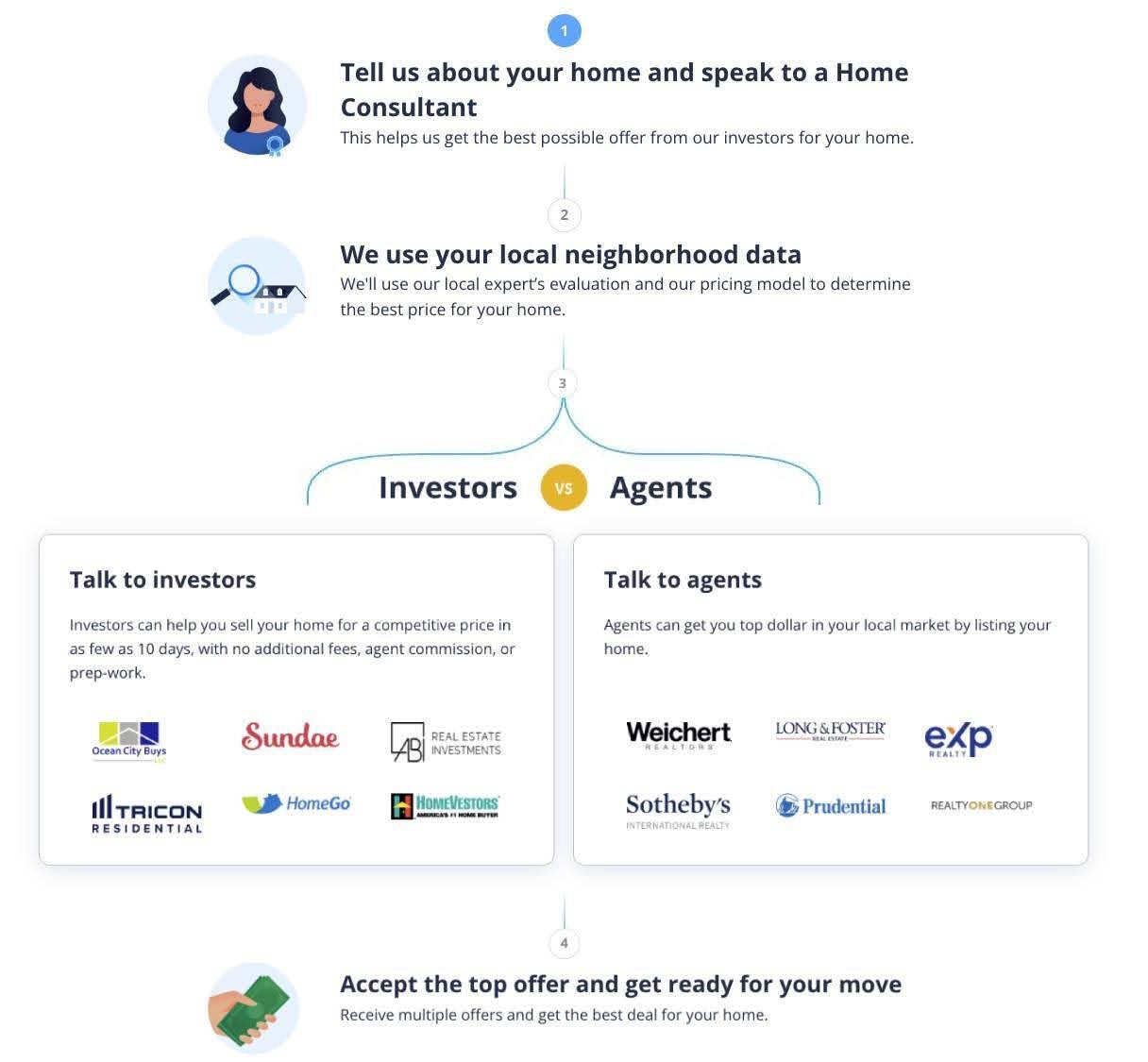
HomeLight’s Simple Sale can provide cash offers for North Carolina homes in almost any condition. To get started, fill out this brief questionnaire.
Here are a few examples of what HomeLight customers are saying about Simple Sale:
Baohan Wu needed to sell his home quickly. After requesting a cash offer through HomeLight’s Simple Sale platform, he completed the sale in about 24 days from start to finish.
Learn about Wu’s Simple Sale journey below:
A fast cash sale isn’t the right solution for every homeowner, but if you’re facing foreclosure in North Carolina and need to move quickly, Simple Sale can help you explore your options with no obligation. You’ll also receive an estimate of what a top North Carolina agent might be able to achieve for your home, making it easier to compare both paths.
HomeLight maintains an A+ rating with the Better Business Bureau and has a 4.8-star customer review ranking on Google. You can read these and other HomeLight customer reviews at homelight.com/testimonials.
Which selling option is right for your situation in North Carolina?
“Can you sell a house in foreclosure in North Carolina?” If you’re asking this question, the right path depends on your needs and priorities.
In general:
- Working with a North Carolina agent may make sense if you still have time before foreclosure and want the strongest chance at a higher sale price.
- Pursuing a cash sale may be the better fit if speed, certainty, and avoiding the foreclosure auction are your top concerns.
“Consult with an experienced real estate agent. The agent should provide sound and unbiased advice about which strategy makes the most sense for their situation. Don’t trust an investor who doesn’t want a Realtor involved, and get a second opinion if the agent only wants to steer you toward putting the home on the market,” says Walters.
Comparing both options can help you make a thoughtful decision based on your circumstances rather than the pressure of looming deadlines.
Talk to a North Carolina expert before the foreclosure clock runs out
If you’re facing foreclosure in North Carolina, exploring your options early can open the door to more solutions and potentially better outcomes. Even a brief conversation with a knowledgeable local professional can help you understand your timeline, estimate your home’s value, and identify practical next steps.
HomeLight can connect you with a trusted North Carolina agent through Agent Match or help you request a fast cash offer through Simple Sale. You’ll also receive an estimate of what a top agent may be able to get for your home, allowing you to compare both options side by side and choose the path that best fits your needs.
“The right choice depends on the timeline, equity position, property condition, and the homeowner’s stress level. My role is to lay out both options transparently so the homeowner can make an informed decision that protects their long-term financial well-being,” Walters says.
Foreclosure can feel overwhelming, but many North Carolina homeowners can sell before the process is complete. With the right guidance and timely action, you may be able to protect your finances and move forward with greater confidence.
Header Image Source: (zimmytws/ Depositphotos)
At HomeLight, our vision is a world where every real estate transaction is simple, certain, and satisfying. Therefore, we promote strict editorial integrity in each of our posts.
