

What Is Foreclosure? Can You Still Sell the House?
- Updated
- 8 min read
-
 Richard Haddad Executive EditorClose
Richard Haddad Executive Editor
Richard Haddad is the executive editor of HomeLight.com. He works with an experienced content team that oversees the company’s blog featuring in-depth articles about the home buying and selling process, homeownership news, home care and design tips, and related real estate trends. Previously, he served as an editor and content producer for World Company, Gannett, and Western News & Info, where he also served as news director and director of internet operations.
The very word “foreclosure” can be unsettling, especially when you’re a homeowner trying to avoid it. You may have done everything you can to keep it from happening, but sometimes things don’t go as planned. If foreclosure is now a real possibility, you’re probably wondering: What is foreclosure, exactly? What happens next? And can you still sell your house?
Whether you work with an experienced real estate agent or explore cash buyer options, acting quickly can help you regain some control of the situation. In this guide, we’ll walk through what foreclosure is, how it works, and which options are available to homeowners looking to sell before losing their home to the bank.

Sell Your House Fast With an All-Cash Offer
Get an all-cash, no-obligation offer in 24 hours through HomeLight’s Simple Sale platform and close in as few as 7 days. You can also compare the offer with an estimate from a top agent.


What is foreclosure?
Foreclosure is the legal process that allows a mortgage lender or another lienholder to take ownership of a property when a homeowner defaults on the loan by failing to keep up with their payments. It doesn’t usually happen after just one missed payment. Under federal rules, mortgage servicers generally must wait until a loan is more than 120 days delinquent before taking the first formal step toward foreclosure. However, the exact timeline and process depend on state law and the type of foreclosure.
While foreclosure laws vary by state, most lenders must follow a structured process that includes notifying the homeowner, providing opportunities to catch up on payments, and eventually repossessing the property if the debt remains unpaid.
If you’re facing foreclosure, it’s important to understand that this process doesn’t happen overnight. You may have options to avoid losing your home, including negotiating with your lender, selling the home, or exploring alternatives like a short sale or a deed in lieu of foreclosure.
Before moving forward with a sale, it’s best to consult an attorney. They can help you understand your state’s foreclosure laws, review any agreements with your lender, and explain how the sale could affect your remaining mortgage debt.
Are there different types of foreclosure?
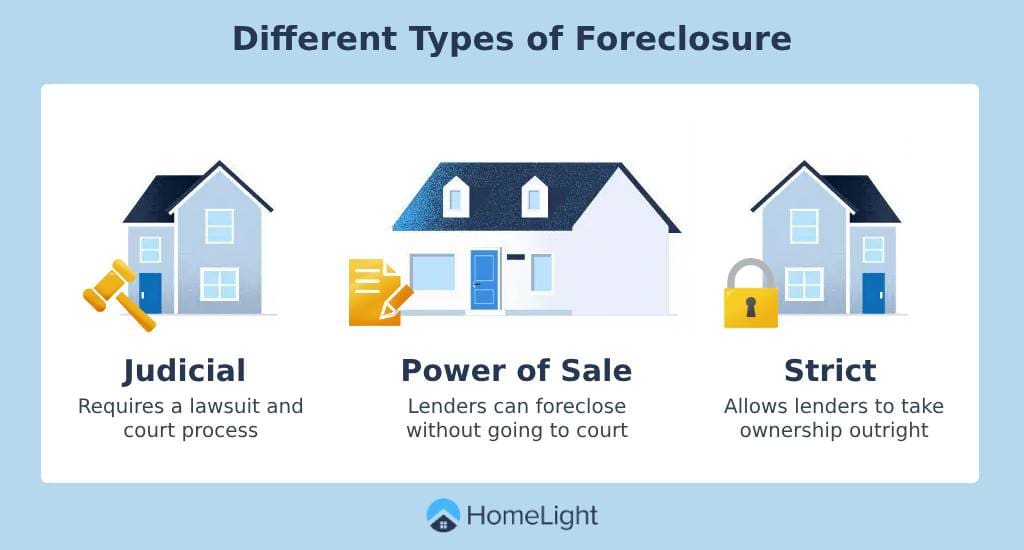
Foreclosure isn’t a one-size-fits-all process. The rules and procedures vary by state, but foreclosures generally fall into three categories and, depending on the type you’re facing, can affect how the lender handles the loan default, eviction, and repossession. They are:
Judicial foreclosure: This type requires a court process. The lender must file a lawsuit against the homeowner, and the case goes through the legal system before the home can be sold at auction. Judicial foreclosure is required in many states and provides homeowners with more opportunities to challenge the foreclosure. Even if not required, all states allow this type of foreclosure.
Power of Sale (non-judicial) foreclosure: Some states allow lenders to foreclose without going to court. Instead, the lender follows a process outlined in the mortgage contract, which typically includes issuing a notice of default and notice of sale before the home can be auctioned.
Because there’s no court involvement, Power of Sale foreclosures tend to move faster, giving homeowners less time to stop the process. There are around 30 states that allow this type of foreclosure, and the mandatory waiting periods can vary.
Strict foreclosure: Only two states, Connecticut and Vermont, allow strict foreclosure. There’s a reason this is a rare proceeding because it allows the lender to take ownership of the property outright without an auction if the borrower doesn’t pay within a court-appointed time frame.
The title to the home transfers directly to the lender. This type of foreclosure typically happens when the amount of outstanding mortgage debt exceeds the value of the house.
Judicial vs. nonjudicial foreclosure: The most common type is judicial foreclosure, particularly in states that require court approval before a lender can repossess and sell the home. However, in states like Alabama, Arizona, California, Colorado, and Texas, where it’s allowed, Power of Sale (non-judicial) foreclosures are more common since they move faster and involve fewer legal hurdles.
How does foreclosure work?
In most cases, a foreclosure proceeding isn’t a sudden surprise. It’s a multi-step process that begins when a homeowner falls behind on mortgage payments. Throughout the process, you may still have options to stop the foreclosure, whether by catching up on payments, negotiating a short sale, or selling quickly to a cash buyer.
Here’s a general timeline of what to expect:
- Missed payments: Once you miss a payment, your lender may charge late fees and send a notice reminding you to pay.
- Notice of default: If you continue missing payments, your lender may eventually send a formal notice of default. The timing and requirements vary by state, but federal rules generally prevent mortgage servicers from starting formal foreclosure proceedings until your loan is more than 120 days delinquent.
- Pre-foreclosure period: This is the window where you may have options to catch up on payments, negotiate with your lender, or sell the home to avoid foreclosure.
- Foreclosure filing: In judicial foreclosure states, the lender files a lawsuit. In nonjudicial foreclosure states, the lender posts a notice of trustee sale.
- Auction or repossession: If the foreclosure proceeds, the home is either auctioned off to the highest bidder or taken back by the lender.


Can you sell a house in foreclosure?
Yes, you can generally sell your home while it’s in foreclosure, as long as you complete the sale before the foreclosure auction. You’ll need to pay off your outstanding mortgage balance and any other liens from the sale proceeds. Here are your main selling options:
- Traditional sale: Listing with a real estate agent experienced in foreclosure sales can help you get the best possible price. However, this option may take longer, and time is limited.
- Short sale: If your home is worth less than the remaining mortgage balance, your lender might approve a short sale, allowing you to sell for less than you owe. This requires lender approval and can be a complex process.
- Cash buyer sale: If you need to sell fast, a vetted cash buyer can close quickly, sometimes in as little as a week, helping you avoid foreclosure and move on to your next life chapter without lengthy delays.
Which option is best for you? If you’re unsure about the best path forward, consulting with a foreclosure-experienced agent can help you explore all available options. There are also innovative platforms that allow you to get an agent’s expert opinion and an all-cash offer so you can compare your choices. (More on this after the next section.)
»Learn more: If you’re facing foreclosure, understanding how much money you could walk away with from selling your home can help you explore your options before it’s too late. Use our Home Sale Net Proceeds Calculator to estimate what you’ll have left after paying off your mortgage and covering selling costs, so you can make a more informed decision about your next steps.
What happens after foreclosure?
Once the home has been sold at auction, you typically lose the right to sell it yourself. However, some states offer a redemption period, giving you a limited time to buy back the home.
If your state does not have Right of Redemption laws, and the foreclosure process is completed, what happens next depends on whether your home was sold at auction or taken back by the lender.
- If the home is sold at auction: The highest bidder at the auction becomes the new owner, and you’ll need to vacate the property. Depending on state laws, you may receive an eviction notice or have time to leave voluntarily.
- If the lender takes ownership: If the home doesn’t sell at auction, the lender takes possession, and it becomes a real estate-owned (REO) property. Lenders typically sell REO properties through agents or auction sites.
- Potential deficiency judgment: If the foreclosure sale price doesn’t cover your remaining mortgage balance, your lender may pursue a deficiency judgment, requiring you to pay the difference. Some states have laws that limit or prohibit deficiency judgments, particularly for primary residences or certain loan types.
How can you sell a house fast to avoid foreclosure?
If time is running out, selling quickly may be your best option to avoid foreclosure. While some top real estate agents can sell a house fast for higher proceeds, and a short sale may also be an option, the fastest way to sell is through an all-cash offer from an investor or a house-buying company.
The proceeds will be less than an agent-assisted sale, but a cash-offer deal may be the solution you need, allowing you to close in as few as seven to 10 days. Below are examples of companies that provide cash offers for homes. Some operate nationwide, while others focus on specific regions.
- Simple Sale by HomeLight
- We Buy Houses
- We Buy Ugly Houses
- Clever Offers
- HomeGo
- Sundae
- Homeward
- Mark Spain Real Estate
- Offerpad
- Opendoor
How does HomeLight Simple Sale work?
HomeLight’s Simple Sale platform connects you to one of the largest networks of trusted cash buyers in the country. With Simple Sale, you can receive a no-obligation cash offer in 24 hours and can close in days rather than months.
Here is the four-step Simple Sale process:

HomeLight’s Simple Sale can provide cash offers for homes in almost any condition nationwide. To get started, fill out this short questionnaire.
Moving forward from foreclosure
Going through foreclosure can be stressful and overwhelming, but it doesn’t mean your financial future or dream of homeownership is over. If you act early, you may still have options to sell your home, pay off your mortgage, and move forward with a fresh start.
If you’re looking for the fastest way to sell and avoid foreclosure, consider a cash offer through Simple Sale. Or, if you’d rather list with a foreclosure-experienced agent, HomeLight’s Agent Match can connect you with the right professional to guide you through the process.
Time is key in foreclosure situations, so exploring your options today can help you avoid long-term financial consequences and move on with confidence.
Frequently asked questions (FAQs) about foreclosure
A foreclosure can take anywhere from a few months to several years, depending on your state and whether the process goes through the courts. Judicial foreclosures generally take longer because they involve court proceedings, while nonjudicial foreclosures can move faster. You may also be able to delay or stop the process by working with your lender or exploring foreclosure prevention options.
A foreclosure can seriously hurt your credit score, often causing it to drop by 100 points or more, depending on your starting score. It can also stay on your credit report for up to seven years from the date of the first missed payment that led to the foreclosure. The good news is that you can start rebuilding your credit by paying bills on time and keeping other debts under control.
Don’t ignore it, even if you’re worried about losing your home. Contact your mortgage servicer right away to ask about repayment plans, loan modifications, or other ways to avoid foreclosure. You can also reach out to a HUD-approved housing counselor for free or low-cost guidance on your options.
Yes, several federal programs and protections may help you catch up on payments or avoid foreclosure. Depending on your situation, you may qualify for mortgage assistance through the Federal Housing Administration (FHA), the Department of Veterans Affairs (VA), or the U.S. Department of Agriculture (USDA). You can also contact a HUD-approved housing counselor to find out which options apply to your loan.
These scams target homeowners who are behind on their mortgage payments or worried about losing their homes. Scammers may promise to stop foreclosure, lower your monthly payments, or negotiate with your lender in exchange for upfront fees. Be cautious of anyone who guarantees results, asks you to stop contacting your lender, or tells you to sign over your home’s title.
Header Image Source: (Roger Starnes Sr / Unsplash)
The first version of this post was originally published on
At HomeLight, our vision is a world where every real estate transaction is simple, certain, and satisfying. Therefore, we promote strict editorial integrity in each of our posts.
