

Can You Sell a House in Foreclosure in California?
- Published on
- 12 min read
-
 Cheyenne Wiseman Associate EditorClose
Cheyenne Wiseman Associate Editor
Cheyenne Wiseman Associate EditorClose
Cheyenne Wiseman Associate EditorCheyenne Wiseman is an Associate Editor at HomeLight.com. Previously, she worked as a writer for Static Media (Mashed.com and Chowhound.com) and as an editor for CBR.com. Cheyenne holds a bachelor’s degree in English from UC Davis, where she also founded and led a literary magazine called Open Ceilings. She has four years of experience writing and editing on topics including real estate, financial advising, and pharmaceuticals.
If you’re a California homeowner facing foreclosure, it can feel stressful and overwhelming, especially with tight deadlines approaching. You might be wondering, “Can you sell a house in foreclosure in California?” In many cases, the answer is yes.
Homeowners can often sell their property before the foreclosure is finalized. The key is understanding how California’s foreclosure process works, how much time you may have, and which selling option makes the most sense for your situation.
Below, we’ll walk through what foreclosure looks like in California, how long it usually takes, and whether selling before the auction date could help you limit long-term financial impact.

Sell Your House Fast in California With a Cash Offer
Get an all-cash, no-obligation offer through HomeLight’s Simple Sale platform whenever you’re ready. Receive your offer in 24 hours and close in as few as 10 days. No showings, no repairs, no open houses. Available to sellers throughout California.
According to data from ATTOM, approximately 300,000 foreclosures occur in the U.S. each year, and that number is on the rise. Based on an end-of-year report, the statewide foreclosure rate in California is 1 in every 3,612 housing units. This represents a 11.59% year-over-year increase, driven by slowing job growth, rising consumer debt, and the ongoing impact of inflation on household budgets.
Can you sell a house in foreclosure in California?
In many cases, you can sell your California home while it’s in foreclosure, as long as the foreclosure sale hasn’t happened yet.
Many homeowners are surprised to learn they still own the property through most of the foreclosure process. This means you can often sell the home, pay off the loan, and stop the foreclosure before the final auction.
“Most homeowners think once the foreclosure process starts, that it’s over. In California, that’s almost never true. There’s usually still time to sell and protect equity as long as they act fast,” says the Fresno-based Jason Farris, a HomeLight Elite Agent with 22 years of experience.
The sooner you consider selling, the more options you’ll typically have when it comes to pricing, buyers, and overall outcomes.
How foreclosure works in California
California is primarily a non-judicial foreclosure state, meaning most lenders can foreclose on a home without going through the court system. Instead, the process is handled outside of court through a series of required notices, which can make it faster than in states that require judicial foreclosures. In some cases, however, lenders may choose to pursue a judicial foreclosure through the courts, though this is less common.
“Probably the biggest misconception is that homeowners don’t know that they can continue to sell their home right up until the trustee sale date. So the key really is moving quickly and working with an agent who understands the timeline and communicates directly with the lender,” says Farris.
In California, foreclosure generally follows these steps:
- The homeowner falls behind on mortgage payments.
- After required outreach, the lender records a Notice of Default (NOD), which officially starts the foreclosure process.
- The homeowner typically has about 90 days to catch up on missed payments and stop the process.
- If the default is not resolved, the lender records a Notice of Sale, setting the auction date.
- After a minimum notice period, the property is sold at a public foreclosure auction.
In California, a lender typically cannot start the formal foreclosure process until a homeowner is more than 120 days delinquent on their mortgage payments. This 120-day requirement is a federal rule that gives borrowers time to explore options like loan modifications or repayment plans before foreclosure begins.
Because most foreclosures in California are nonjudicial, the process does not go through the courts. Instead, it follows a set timeline based on recorded notices, so the pace can vary depending on the lender and whether the homeowner takes action to resolve the default.
How long does foreclosure take in California?
Foreclosure timelines in California can vary, but the process often takes several months to more than a year from the first missed payment to the foreclosure sale. On average, a nonjudicial foreclosure in California takes about 120 to 200 days, depending on the timeline between required notices and the lender’s pace.
While this may seem like a long window, key milestones, such as the auction date, can approach quickly once the process advances.
“The best thing a homeowner can do when they’re falling behind on their payments is to open the mail from their lender and call an experienced agent,” Farris advises.
If you’re already behind on payments or have received legal notices, speaking with a local expert as soon as possible can help clarify how much time you realistically have and what steps could still help you avoid foreclosure, including initiating a home sale.
What happens if you sell before foreclosure is finalized?
Selling your California home before the foreclosure sale can stop the process and help you move forward with fewer long-term financial consequences. When you sell, the proceeds go first toward paying off your remaining mortgage balance, along with any interest, fees, or legal costs tied to the foreclosure. Once you pay off the loan, the lender typically cancels the foreclosure action.
If you act early, you can also limit the impact on your credit compared with a completed foreclosure, which can stay on your credit report for years. If your home sells for more than you owe, you can keep the remaining equity to help fund your next move.
“If you act quickly, you can protect whatever equity you might still have in your home. The bank will often try to modify your loan instead of foreclosing, and that’s why it’s important to communicate with the lender and not hide from it,” says Farris.
If the expected sale price won’t fully cover the loan balance, a short sale may still be possible with lender approval, which is another reason to explore your options as soon as possible.


Option 1: Selling with a top California real estate agent
In many cases, working with an experienced California real estate agent is the right path for homeowners who still have enough time before foreclosure. This option gives you the best chance to maximize your sale price.
A skilled local agent can:
- Set a competitive price based on current California market conditions
- Market the property widely to attract qualified buyers
- Negotiate with buyers and, if needed, coordinate with the lender on a short sale
- Keep the transaction moving to meet foreclosure-related deadlines
“An experienced agent will be able to evaluate the market, look at other homes that are like your property nearby and what they’ve sold for recently, and then work with your lender,” says Farris.
Because timing is so important, connecting with a trusted agent quickly can make all the difference. HomeLight’s free Agent Match platform analyzes over 27 million transactions and thousands of reviews to determine which California area agent is best for your situation. To get started, enter a few details about your home and selling timeline.
A top California agent will help you make informed decisions and avoid unnecessary delays.
How fast can you sell with an agent in California?
The timeline for an agent-guided sale in California depends on pricing, property condition, location, and buyer demand. In California, the average days on market (DOM) — from listing to signed contract — is about 29 days. However, an appropriately priced, well-marketed home may attract strong interest within days.
In urgent situations, an experienced agent can often streamline the process and help sellers move as fast as the market allows.
If your timeline is especially tight, you may also want to compare this traditional path with faster alternatives, such as selling for cash to a house-buying company or investor.
Consult With a Top-Performing California Agent
Homelight’s free Agent Match platform can connect you with top-performing, trusted real estate agents in your California market. Our data shows that the top 5% of agents sell homes more quickly and for up to 10% more than the average agent.
Option 2: Selling for cash to avoid foreclosure in California
If your foreclosure timeline is tight, selling your California home for cash can offer a faster, more predictable way forward. Cash buyers, including individual investors and California-based house-buying companies, usually purchase homes “as is” and can often close in days or weeks instead of months.
The main benefit of a cash sale is speed and certainty. Without buyer financing and with fewer inspections or contingencies, the process can move quickly enough to stop a foreclosure before the auction date. The trade-off is that cash offers are typically lower than what you might get through a traditional listing.
“The best way for a homeowner to get the most amount of money for their home is to sell it with an experienced agent who has a marketing plan. The more people who know about your home, the more likely it is that you’re going to receive an offer of the highest caliber,” says Farris.
How much will a California house-buying company pay?
Use the Cash Offer Comparison Calculator below to get a rough idea of how a cash offer in California might compare with an agent-assisted sale, depending on your approach and the type of agent you choose.
As you can see, your cash offer will likely be higher if your California home is in good condition. However, if you’re facing foreclosure, you may not have the time or resources to make major repairs. In urgent situations, the speed and simplicity of a near-instant cash offer can be especially valuable.
Examples of cash home buyers in California
If you’re searching “Can you sell a house in foreclosure in California?” you might come across “We Buy Houses”-style companies. These buyers generally focus on quick closings and minimal seller prep. A few examples in California include:
- Premier Property Buyers (see customer reviews)
- SoCal Home Buyers (see customer reviews)
- Tarek Buys Houses (see customer reviews)
- John Medina Buys Houses (see customer reviews)
Because each cash homebuyer company in California uses its own pricing model, timelines, and contract terms, it’s a good idea to review multiple options and compare offers carefully before making a decision.
You’ll also want to carefully vet cash-buying companies before committing. However, there is a way to move forward quickly and know you’re working with a legitimate and established cash buyer.
Selling your house through HomeLight Simple Sale
HomeLight’s Simple Sale platform connects you with the largest network of vetted cash buyers in the U.S, including trusted buyers in California. With Simple Sale, you can receive a no-pressure cash offer in 24 hours and close in days, not months.
Through Simple Sale, California homeowners can:
- Request a no-obligation all-cash offer
- Sell the home in its current condition, without repairs or showings
- Choose a flexible closing timeline that fits their schedule
Here’s the four-step Simple Sale process:
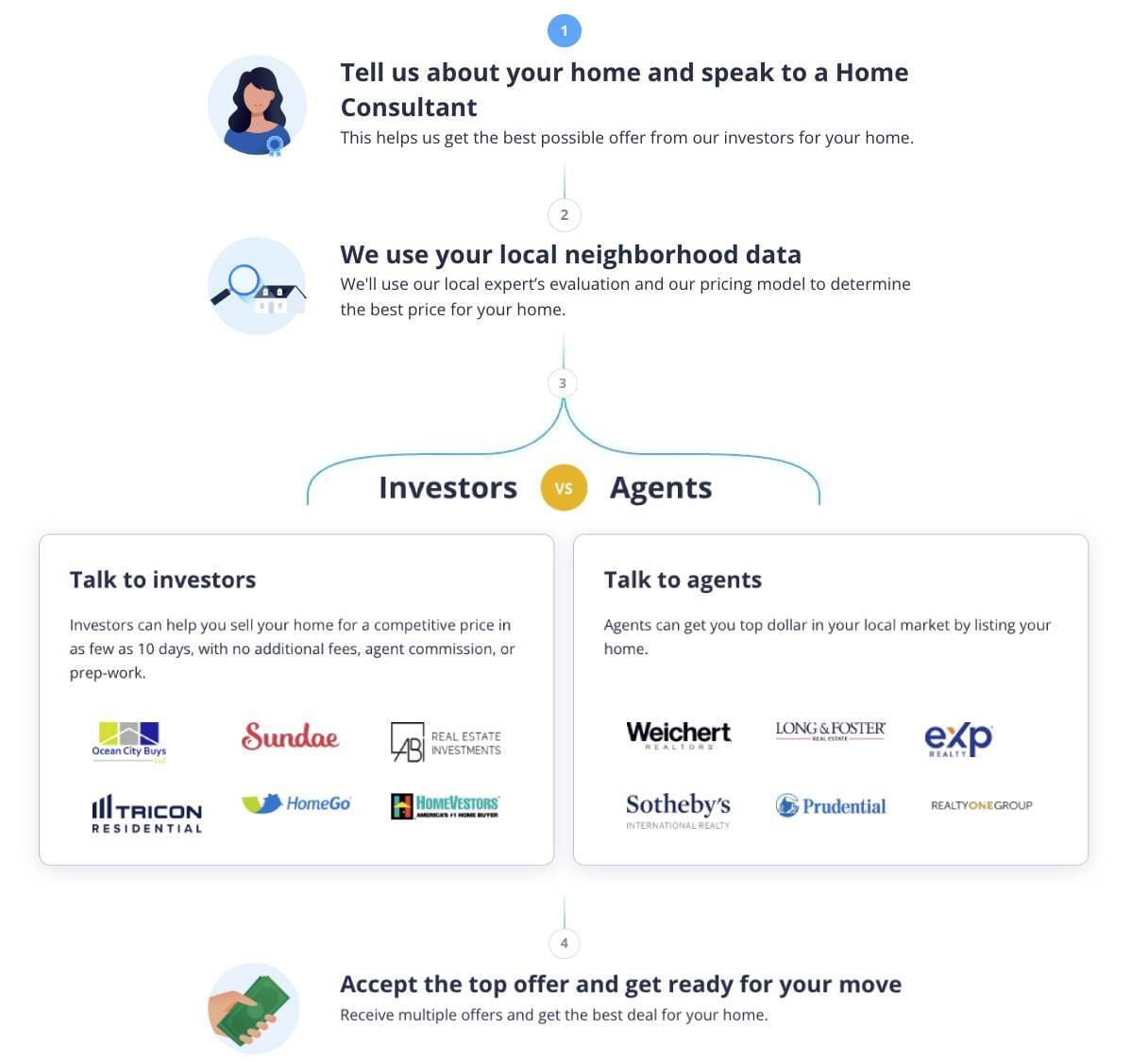
HomeLight’s Simple Sale can provide cash offers for California homes in almost any condition. To get started, fill out this short questionnaire.
Here are a few examples of what HomeLight customers are saying about Simple Sale:
Baohan Wu needed to sell his home quickly. With HomeLight’s Simple Sale platform, Wu requested an all-cash offer and sold his home in about 24 days from start to finish.
Hear about Wu’s journey with Simple Sale below:
Of course, a fast cash offer isn’t right for everyone or every situation. However, if you’re facing foreclosure in California and would like a no-obligation cash offer, consider Simple Sale. You’ll also learn what a top California agent might be able to get for your home.
HomeLight maintains an A+ rating with the Better Business Bureau and has a 4.8-star customer review ranking on Google. You can read these and other HomeLight customer reviews at homelight.com/testimonials.
Which selling option is right for your situation in California?
The best way to sell a California home in foreclosure depends on your timeline, equity position, and financial priorities.
In general:
- Working with a California agent may make sense if you still have time before foreclosure and want the best chance at a higher sale price.
- Pursuing a cash sale may be the right fit if speed, certainty, and avoiding the foreclosure auction are your top concerns.
“An agent’s responsibility is to replace fear with a plan. When there’s a clear strategy, a defined timeline, and direct communication with the lender, what feels like a catastrophic situation becomes very manageable,” Farris says.
Comparing both approaches can help you move forward with clarity rather than urgency alone.
Talk to a California expert before the foreclosure clock runs out
If you’re asking, “Can you sell a house in foreclosure in California?” the good news is that you likely still have options. The sooner you explore what’s possible, the clearer your situation becomes. Even a quick conversation with a knowledgeable local expert can help you understand your timeline, potential sale price, and next steps.
HomeLight can connect you with a trusted California agent through Agent Match or help you explore a fast cash offer through Simple Sale. With Simple Sale, you’ll also learn what a leading agent might be able to get for your home, so you can compare both options and decide the best path for you.
Foreclosure is a challenging situation, but with the right guidance and timely action, many California homeowners can still sell, protect their financial future, and move forward with confidence.
Header Image Source: (disorderly/DepositPhotos)
At HomeLight, our vision is a world where every real estate transaction is simple, certain, and satisfying. Therefore, we promote strict editorial integrity in each of our posts.