
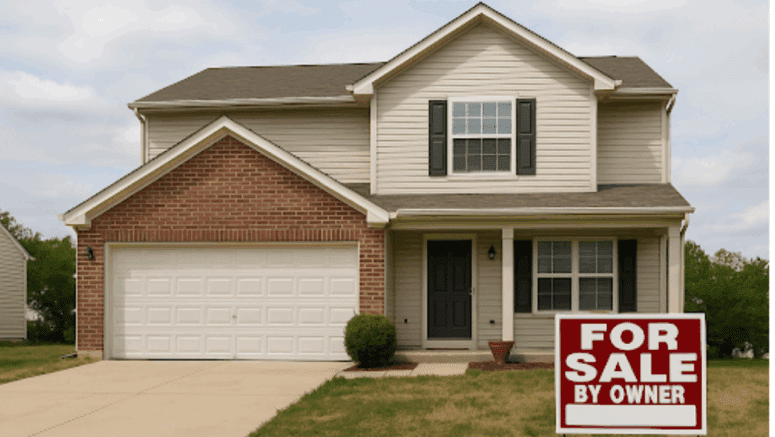
Can I Sell My Home Myself? (And Should I?)
- Published on
- 10 min read
-
 Richard Haddad Executive EditorClose
Richard Haddad Executive Editor
Richard Haddad Executive EditorClose
Richard Haddad Executive EditorRichard Haddad is the executive editor of HomeLight.com. He works with an experienced content team that oversees the company’s blog featuring in-depth articles about the home buying and selling process, homeownership news, home care and design tips, and related real estate trends. Previously, he served as an editor and content producer for World Company, Gannett, and Western News & Info, where he also served as news director and director of internet operations.
You’ve invested a lot in your home, not just money for repairs and maintenance but also countless hours and muscle. When it’s time to sell, it’s natural to want to keep as much of the proceeds as possible. You might ask, “Can I sell my home myself?”
But what does it really take to sell your home yourself, and is it the best move for your situation?
To provide a real-world look at what to expect, we gathered expert insights from some of the country’s top-rated real estate agents. We’ll share when it might make sense to take the For Sale By Owner (FSBO) route and when you may want to consider alternatives that could save time and stress while still protecting your bottom line.

How Much Is Your Home Worth Now?
Home values have rapidly increased in recent years. How much is your current home worth now? Get a ballpark estimate from HomeLight’s free Home Value Estimator.
Can I sell my home myself?
Yes, you can legally sell your home without a Realtor. In fact, many sellers try FSBO each year. But “can I” is just the first question, often followed by “how do I.” Selling on your own means taking on all of the responsibilities an agent would normally handle, such as:
- Setting the right price: You’ll need to research comparable sales (called comps) and local trends to avoid underpricing or scaring buyers away.
- Marketing the home: This includes professional photos, online listings, open houses, yard signs, and social media promotion.
- Handling showings and inquiries: You’ll coordinate showings, field phone calls and emails, and follow up with interested parties.
- Managing negotiations: Be prepared to review offers, counter, and negotiate terms such as contingencies, closing costs, and repairs.
- Overseeing paperwork and legal steps: From the purchase agreement to disclosure forms, you’ll be responsible for making sure documents are accurate and compliant with state and federal laws.
“Sellers must go beyond simply listing their property and take the time to prepare it properly for the market,” says Brenda Sukenik, part of the top-performing Damon Williamson’s Team in Dallas, Texas.
“However, even the best preparation and marketing can be undermined by pricing missteps. Overpricing a home, no matter how much work has been invested, is one of the fastest ways to stall a sale.”
In short, you can sell your home yourself, but it takes a lot of time and effort. You’ll need to research your local market, handle all the transaction details, and feel comfortable navigating the real estate process.
»Learn more: How to Sell a House By Owner: Your FSBO Guide


Should I sell my home myself?
That depends on your goals, timeline, and comfort level. For many homeowners, the appeal of FSBO comes down to wanting to save money on agent commissions. However, according to transaction data collected by the National Association of Realtors (NAR), FSBO homes sold at a median of $360,000, while agent-assisted homes sold at a median of $425,000. So while you might save on commission, you could lose even more in your final sale price.
In addition, Many FSBO sellers still pay the buyer’s agent commission to attract more offers or speed up a home sale. This is typically 2.5%-3% of the home’s selling price.
For these and other reasons, NAR reports that only about 5% of sellers take the FSBO route. In total, 91% of home sellers sell with the assistance of a real estate agent.
Some of the challenges you might face when selling by owner include:
- Limited buyer reach: FSBO listings don’t always get the same exposure on the multiple listing service (MLS) or through agent networks.
- Pricing mistakes: This could cause homes to linger on the market or sell for less than they could have.
- Heavy time commitment: Selling FSBO can eat up a lot of your time since you’re responsible for marketing, showings, and negotiations.
- Legal or paperwork errors: These are costly mistakes that could delay or derail the sale.
This is where asking not just “Can I?” but “Should I?” becomes important. For some sellers with real estate experience, a hot market, or a ready buyer already lined up, FSBO can work, and they may relish the challenge. For many others, the risks outweigh the savings.
To make the most of your home sale, Sukenik recommends you consult with a top agent first.
“This is a true partnership. An experienced professional knows how to position your home in the market and reach qualified buyers,” she explains. “For sellers who want results, the formula is clear: prepare thoroughly, partner with the right expert, and price intelligently. Do those three things, and even in an uncertain market, success will follow.”
»Learn more: The Pros and Cons of Selling Your House Without A Realtor


Why some sellers choose FSBO
While selling without an agent isn’t for everyone, some homeowners see advantages in taking the FSBO path. According to NAR, 30% of FSBO sellers pick this route because they already have a buyer lined up, often a relative, friend, or neighbor.
Other reasons sellers opt for FSBO include:
- Trying to avoid commission fees: Some sellers see the chance to save thousands of dollars in Realtor fees as worth the extra work.
- Gaining full control over the sale: Handling showings, negotiations, and paperwork allows sellers to feel fully in charge of the process.
- Enjoying the challenge: A few sellers like testing their negotiation skills and treating the sale as a personal project.
- Maximizing a hot market: When demand is strong, some believe their home will “sell itself” without professional marketing or representation.
For certain homeowners, especially those with real estate experience or a ready buyer in hand, these motivations can make FSBO feel like a viable option.
»Learn more: 7 Steps To Selling A House To A Family Member
How to sell via FSBO successfully, according to top real estate agents
Experienced agents often caution sellers about underestimating the complexity of a home sale. The potential savings on commission can be outweighed by mistakes that ultimately cost more.
Setting the price too high is one of the most common mistakes sellers make. Other frequent pitfalls include refusing to negotiate, skipping the help of an experienced listing agent, and failing to properly prepare the home for sale.
Here are some frontline insights agents shared:
Overpricing and poor home preparation
“Overpricing or unwillingness to negotiate on pricing is a key mistake sellers are making, along with poor home presentation,” says Alexis Julian, part of the top-rated Tanner Tillung Team in Tampa, Florida.
Beyond pricing, sellers may also be overlooking the importance of making the right repairs and improving their home’s presentation.
“Overpricing is a huge factor,” says Caylee Doiron, a top agent in the Houston area. “However, many sellers are not partnering with experienced agents who can appropriately advise on home presentation and which repairs are necessary before listing. So homes tend to feature poor home presentation and lack the repairs necessary to be competitive in today’s market.”


Misunderstanding the market and not hiring an agent
“It’s not just about overpricing; some sellers are underpricing as well,” says Jeannette Shepherd, an experienced agent in Loveland, Colorado. “Sellers don’t understand where the market is in their neighborhood. So the mistake is not hiring the right representation, the right Realtor.”
That same disconnect with current market conditions can also lead sellers to base their asking price on outdated information.
“The biggest mistake I see sellers make right now is clinging to yesterday’s market,” says Kris Bowen, a Salt Lake City, Utah, agent with two decades of experience. “They look at what their neighbor sold for a year or two ago and assume they’ll get the same, if not more.”
Bowen adds that when a home is not prepared and marketed properly, or is overpriced, it quickly becomes stale. “Once a property lingers, buyers start wondering what’s wrong with it, and the end result is often a lower net than if it had been priced correctly from the start.”
Not being patient, persistent, or flexible
“Persistence pays off,” says Jackie Sawyer, a Sebago, Maine agent with a 100% sell rate on her listings. “Don’t be afraid to change strategy throughout the process. Think outside the box and get your home in front of as many potential buyers as possible.”
For some sellers, changing strategy may involve more than reaching new buyers. It may mean improving the home itself.
“In any market, especially a buyer’s market, you need to be competitive, not only with price, but also condition,” advises Jann Flowers, an agent in Boca Raton, Florida, with 20 years of experience. “If the condition is not up to par with other homes buyers are looking at, you either paint, remodel, [make other updates], or lower the price.”
For some sellers, these agent insights might bring a reality check: while FSBO can look simple on paper, it often proves more complicated and costly in practice.
»Learn more: Insider FSBO Tips: 10 Hacks When Selling a Home By Owner
If you’re curious about your bottom line, try HomeLight’s Net Proceeds Calculator. This free tool lets you see how much you might actually walk away with after costs.
Alternatives to the ‘sell my home myself’ plan
If saving on commission is your main goal, FSBO might seem appealing, but it’s not the only way to keep more money in your pocket or reduce stress. Here are three selling solutions from HomeLight:
1. Maximize your price with Agent Match
HomeLight data shows that the top 5% of agents sell homes for up to 10% more than average agents. A higher home sale price can easily make up for the Realtor fees you might pay. And if you want speed, a top agent can bring that too.
If you’re leaning toward a traditional sale, HomeLight’s free Agent Match platform connects you with top-performing local agents based on actual transaction data. We analyze over 27 million transactions and thousands of reviews to determine which agent is best for you. The right agent can often help you sell faster and for more money than going it alone.
2. Sell quickly with HomeLight’s Simple Sale
Another way to skip agent commissions is to sell directly to a cash buyer instead of listing with a Realtor. You can get a no-obligation cash offer from vetted buyers in your area, then compare it with what you might get from an agent-listed sale. From there, you can decide which option makes the most sense for your situation.
This path skips showings, repairs, and lengthy negotiations. Answer a few questions about your home and selling plans, and receive a cash offer in 24 hours. You can close in as few as 7 days.
3. Buy before you sell with HomeLight
If you’re trying to time your sale because you need the equity from your current home to purchase your new home, consider HomeLight’s Buy Before You Sell program. This modern solution unlocks your equity to streamline the entire process. Make a non-contingent offer on your new home and only move once. Watch this short video to learn more.
»Learn more: What Can a Real Estate Agent Do That You Can’t?
Compare Your Options: Cash Offer vs. Top Agent
If you need to sell your home in days, not months — and want to avoid agent commissions — request an all-cash offer through HomeLight’s Simple Sale platform. You’ll receive a no-obligation cash offer in 24 hours. Our online tool also allows you to compare your offer with what a top agent might be able to get for your house.
How much does a real estate agent cost?
Use our commission calculator below to get a ballpark idea of how much you might pay for a full-service real estate agent.
»Learn more: Real Estate Commission Changes: What Sellers Need to Know
How to decide what’s right for you
Choosing between selling your home yourself and working with an agent comes down to your personal situation. Ask yourself:
- Do I already have a buyer lined up? If you’re selling to a friend, family member, or neighbor, FSBO might make sense.
- How comfortable am I with paperwork and negotiations? A real estate sale involves legally binding contracts, disclosures, and strict deadlines.
- What’s my timeline? If you need to move quickly, a cash offer or a strong agent might get you there faster.
- What matters most: convenience, price, or control? Each selling path comes with trade-offs. Knowing your priorities will help guide your choice.
The right answer isn’t the same for everyone. For some, FSBO is worth the challenge. For others, the risk and stress outweigh the reward. In short, you must feel good about flying solo in a market filled with hesitant buyers.
“While many buyers have grown weary of waiting on the sidelines, they are purchasing homes,” Sukenik from Dallas assures. “What ultimately moves them from ‘shopper’ to ‘offer’ is confidence. Buyers want to feel they are making a smart purchase, and that confidence comes from seeing a property that has been thoroughly prepared and properly marketed, smart strategy and smart pricing.”
»Learn more: Do I Need a Realtor, or Can I Handle It Alone?
Next steps for a successful home sale
Whether you decide to go it alone or seek professional support, having the right information will put you in a stronger position, especially in an uncertain market.
“We are in a competitive environment characterized by an overabundance of listings and a deficit of buyers,” says Brian Bellairs, a top agent in Beaverton, Oregon, with three decades of experience. “In such a market, sellers need to act as if there’s one buyer out there who will select from among the abundant options. They need to make sure their home will win the competition for that buyer.”
If you’re unsure about selling by owner, consult with a top agent, compare your options side by side, and move forward with more confidence. HomeLight is here to help.
Frequently asked questions (FAQs) about selling a home yourself
You can save the agent’s commission by selling your home yourself, but the exact amount depends on your home’s sale price and the commission you would have paid. Keep in mind that FSBO sellers may still have other costs, such as marketing, listing fees, and buyer-agent compensation. It’s worth running the numbers to see whether the potential savings outweigh the extra work.
The exact paperwork varies by state, but you’ll generally need documents related to your ownership, the property’s condition, and the sale itself. This can include the deed, property disclosures, purchase agreement, and closing documents. Check your state’s requirements or work with a real estate attorney or title company to make sure you have everything you need.
Start by looking at recently sold homes in your area that are similar to yours in size, condition, location, and features. You can also use online home value estimators, like HomeLight’s tool, to get a rough estimate, but remember that these aren’t always precise. Comparing several sources can help you settle on a realistic asking price.
You generally can’t post directly to the MLS as a homeowner, but you can use a flat-fee MLS service that lists your property on your behalf. These services typically charge a set fee and may offer different levels of support. Before choosing one, check what’s included and whether you’ll still need to handle things like inquiries, showings, and negotiations yourself.
Whether you need a lawyer for a FSBO sale depends on your state’s laws and the details of the transaction. Even where an attorney isn’t required, having one review the purchase agreement and closing documents can help you avoid costly mistakes. You can also ask your title or closing company what legal help is required for your sale.
Header Image Source: (ChatGPT)
At HomeLight, our vision is a world where every real estate transaction is simple, certain, and satisfying. Therefore, we promote strict editorial integrity in each of our posts.