
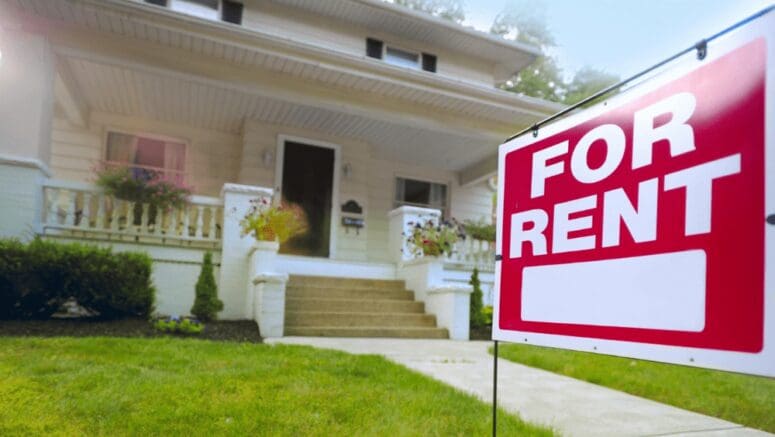
Should I Sell or Rent My House Out? Key Factors To Help You Decide
- Updated
- Originally published
- 13 min read
-
 Erika Riley, Contributing AuthorClose
Erika Riley Contributing Author
Erika Riley, Contributing AuthorClose
Erika Riley Contributing AuthorErika Riley is a journalist who has written about home design and real estate in a variety of outlets primarily in New York City. Now based in the D.C. Metro area, Erika enjoys painting her furniture too many times and finding the prettiest townhouses to walk by.
-
 Sam Dadofalza, Associate EditorClose
Sam Dadofalza Associate Editor
Sam Dadofalza, Associate EditorClose
Sam Dadofalza Associate EditorSam Dadofalza is an associate editor at HomeLight, where she crafts insightful stories to guide homebuyers and sellers through the intricacies of real estate transactions. She has previously contributed to digital marketing firms and online business publications, honing her skills in creating engaging and informative content.
A new job, a desire to relocate, or the opportunity to seize your dream home in another city or state can create an agonizing decision: Should I sell my house or rent it out? If you decide to rent, you could realize a new source of income from your tenant. But selling allows you to use your equity to help purchase your next home.
We spoke with two experienced investors who have been on both sides of the decision to sell or rent out a home. Greg Kurzner, founder of professional Atlanta-based homebuying company Resideum, and TJ Sayers, owner of Birmingham Homebuyers, share their insights to help you weigh the pros and cons of each option and decide what makes the most sense for your situation.

Step one: Talk to an expert
Connect with a top-rated local real estate agent who can help you navigate rent-to-own options near you.
Selling your home or renting it out: How to navigate the dilemma
Trying to decide whether to sell your home or rent it out can feel like a tough call. Selling gives you a chance to cash out and move on, while renting could turn your property into a source of ongoing income.
To help you understand the best course of action for you, we’ve sorted the most important factors in this dilemma into two camps: signs you should rent and signs you should sell. You may check boxes in both categories, but seeing where you stand can help you make your decision.
Signs you should rent out your home
Deciding whether to rent out your home is a big step, and it’s not always straightforward. Remember, real estate is hyper-local, so you should research your rental market thoroughly before making a decision.
Even in a strong rental market, not every home is a great fit for becoming a rental property. Before stepping into the role of landlord, take a step back and see if your home passes the rental litmus test,” in other words, whether renting it out makes sense financially and practically. Here are a few signs that your property could be a good candidate for a rental.
1. You’re in a prime location where demand for rentals is high
Monique Walker, a top real estate agent and investment property specialist in Phoenix, Arizona, has seen a spike in rental demand in her market, which has prompted more owners to list their properties on VRBO or Airbnb.
The rents have been really strong, particularly in urban areas, luxury areas, around colleges, and up-and-coming neighborhoods.
 Monique Walker Real Estate AgentCloseMonique Walker Real Estate Agent at Re/Max Excalibur Realty4.7Currently accepting new clients

- Years of Experience 24
- Transactions 2903
- Average Price Point $364k
- Single Family Homes 2311


Rental demand can also spike in communities with booming job growth or new developments. For example, after Amazon decided to establish its headquarters in Seattle in 2010, the median rental rate in the city skyrocketed 41.7% over the following seven years, compared to 17.6% nationally for the same time period.
To get a sense of rental demand in your area, check market reports from reputable organizations. For example, Apartment List publishes data on rental trends in dozens of major U.S. cities, including San Francisco, Chicago, and Orlando.
2. You’ve always wanted to own rental property
Being a landlord isn’t for everyone, but if you have always liked the idea of renting out and managing properties, that passion could help increase your chances of success.
Being a landlord has lots of advantages. Renting properties can help you build wealth and save for retirement. But there are also some less tangible benefits, such as taking more time for vacations, learning new skills, and taking on exciting challenges. Some landlords may also find it rewarding to provide stable and secure housing to people who need it.
3. You have a personal attachment to the house
Maybe you’ve been forced to relocate due to a job transfer, family demands, or other circumstances, but you don’t want to permanently give up your property. And maybe you have plans to return at some point down the line. Turning it into a rental can be a financially sound way to keep ownership until you’re ready to return.
4. Your house offers appealing amenities to renters
Even if it no longer meets your needs, your property could be someone else’s dream home. If it offers features that set it apart from other rentals and make it more appealing to renters, it may be in your best interests to maintain ownership.
According to a survey, the most in-demand rental home features include an in-unit laundry, high-speed internet, enough closet and storage space, clean and well-kept common areas, and parking and private outdoor spaces.
In Walker’s experience, short-term renters usually care most about features that make their stay more enjoyable, like plenty of bedrooms, a swimming pool, and great views. These are the kinds of amenities that can make your property stand out from the competition.
For long-term renters, the priorities look a lot like those of homebuyers. They tend to care more about things like a convenient commute, a good school district, a desirable neighborhood, and a well-located lot. Updated or well-maintained fixtures, appliances, and flooring can also make your property much more appealing. If your property has all these features and amenities, it may be worth considering renting it out.


5. You’re confident you could make a profit
Deciding to rent out a property comes down to number-crunching. Sayers provides an example of when the numbers support the decision to rent out a house:
Let’s say your $250,000 home will rent for $2,500 per month or $30,000 per year. If your mortgage payment is $1,250 per month and your property taxes and insurance total $400 per month, then you would have a cash flow of $850 per month (minus additional costs, such as vacancies and maintenance).
That may seem like a healthy profit, but is it worth the work of renting the property out versus selling it now?
Suppose renting the property would take you a little over seven years to make the $75,000 that you could likely get from selling it today. That seven-year wait may not make sense for your financial situation, but keep in mind that you’ll also gain more equity over those seven years, increasing your overall profit from selling the home later.
“In seven years, you would have much more equity in the property, because your tenants would have been helping you pay down the mortgage over time,” Sayers explains. Plus, you’d likely gain even more market equity in the home, as Sayers would have on his missed opportunity rental.
Signs you should sell your home
In some situations and time periods, it might make more financial and logistical sense to let go of a house. Here are a few signs you should consider cashing out.
1. Your home is in a “seller’s market”
A seller’s market happens when there are more buyers than homes for sale. With fewer listings to choose from, buyers are more likely to compete for available homes, giving your property more attention and helping you get the best possible price.
To monitor your local housing market, visit your local Realtor® association website and check out the most recent month’s market report. Look for stats like inventory changes year-over-year. The lower the drop in inventory, the better (unless you’re also looking to buy). Plus, if your area has seen several years of strong price growth, it could be a good time to cash out.
Is it a buyer’s market or a seller’s market right now? HomeLight’s Top Agent Insights for Spring/Summer 2026 report found that 41% of agents nationwide say it’s currently a buyer’s market, giving buyers more room to negotiate.
Buyer-friendly conditions are especially common in the Pacific (35% of agents), Mountain (61%), South Central (62%), and South Atlantic (61%) regions. In contrast, agents in the Midwest (42%) and Northeast (57%) are more likely to say it’s a seller’s market, where homeowners generally have the upper hand.
In summary, where you live can make a big difference in how much leverage you have in today’s housing market. If you’re in a seller’s market, you have more negotiating power, but you should still price your home realistically to maximize interest.
2. You couldn’t charge enough rent in relation to the home’s value
Kurzner points out that as homes increase in price, they become less desirable rentals because the return on rent goes down. It’s all about the gross rent multiplier (GRM), the ratio of the price of real estate to the rental income it generates.
For example, you can likely rent a $100,000 home for $1,000 per month (1% GRM), but you probably wouldn’t be able to rent a $200,000 house for $2,000.
“The higher the value, the flatter the rent curve becomes,” explains Kurzner.
3. You don’t have enough liquid cash on hand
If you decide to hold on to your property, Sayers explains that you need to have enough liquid cash to maintain it, paying property taxes and mortgage payments in the event of a vacancy. If you don’t have the funds, renting might not be right for you.
“When a rental property becomes vacant, not only do you lose rental income, but you still have to pay for the normal property expenses and any mortgages,” he explains. “And in most cases, there are capital expenditures needed to get the property in shape to rent again.”
Walker recommends having at least $10,000 in discretionary income at your disposal when renting out a property. If you’re short of that, selling may be the safer option.
4. You have other priorities for the equity you’ve built
If buying your dream home is your next move, selling is often the better choice. Purchasing a new home comes with upfront costs, including a down payment, closing costs, and moving expenses. Selling lets you turn the equity you’ve built in your current home into cash to help cover those costs. In fact, homeowners with mortgages have built up an average of approximately $295,000 in home equity.
But note that if ever you choose to sell, you’ll also need to consider any necessary repairs and maintenance, as well as roughly 10% in commissions and closing costs.
»Learn more: Selling your home could give you the cash you need for what’s next. Try our Net Proceeds Calculator to estimate how much you could receive after paying off your loan and other selling costs.
5. Your home’s age raises maintenance costs and concerns
There is always some degree of regular maintenance to be expected when you manage a rental. Faucets leak, water heaters get cranky, and ant colonies invade.
Home maintenance costs can run anywhere from $4,000 to $22,000 a year, depending on your home’s age, size, location, features, and overall condition. As a general rule of thumb, financial experts recommend setting aside 1% to 4% of your home’s value each year for maintenance and repairs so you’re prepared when unexpected fixes pop up.
The easiest properties to manage are those that are newer or have been well-maintained. If your property is older and still has a lot of the original components, like the HVAC system, roof, and appliances, the costs of upkeep and eventual replacement, which can be expensive, may make renting less appealing.
Walker constantly sells older properties for this very reason. The homeowners would rather unload their houses as-is in a hot market than run the risk of big expenses on the horizon.
6. You’re not thrilled about becoming a landlord
Renting out a property can be a good source of cash flow, but that profitability comes at a price: maintaining and repairing household amenities, finding new tenants, adhering to regulations, paying taxes, and more. If you handle all of these on your own, which nearly half of all landlords do, Kurzner warns that you could face some legal and operational risks.
Of course, you have the option to hire a property management company to do away with the stress. They can find quality tenants and field 2 a.m. phone calls when the heater sputters out on a sub-zero night. However, they cost an estimated 8% to 12% of the monthly rental value, which will cut into your profits.
The crux of a landlord’s obligation is to provide a rental property that is safe and fit to live in, including safe drinking water, heat and hot water, smoke and carbon monoxide detectors, secure doors and windows, and a sanitary unit, to name a few.
If all of that sounds daunting and you’re unwilling to take on the extra time, expense, and risk associated with owning a rental property, selling may be the better option.


7. Your home just isn’t a “good” rental
Sometimes, the rental stars align, and a property is a landlord’s dream. It rents easily to reliable tenants, has low operating costs, and yields good returns. But that’s not always the case.
Kurzner has owned rental homes that proved to be too much of a hassle and a cash drain, leading him to sell them rather than keep them in his portfolio.
“Generally, if the home that is rented constantly has issues with vandalism, bad tenants, costly maintenance or excessive HOA or other hassles, it can be better to sell that home and buy a different property,” he says.
Rent-to-own: A viable alternative
A rent-to-own arrangement can be a great middle ground if you’re still on the fence about selling or renting. Here are a few reasons why some homeowners choose this option:
- You get more time to decide: You keep ownership of the home while testing the market, so you don’t have to commit to selling right away.
- You can earn rental income in the meantime. The monthly rent can help cover your mortgage, property taxes, insurance, and other ownership costs while you figure out your next move.
- You may attract more committed tenants. Since rent-to-own tenants hope to buy the home someday, they’re often motivated to pay rent on time, take care of the property, and improve their finances so they can qualify for a mortgage.
Questions to ask to understand your core financial goals
Before deciding whether to sell or rent out your home, take a closer look at what you’re trying to accomplish financially. Ask yourself these questions:
- Do you need cash now or a steady income stream? One of the biggest factors to consider is whether you need a large amount of money upfront or prefer ongoing income over time. Selling gives you a lump sum that you can use toward a down payment on your next home, pay off debt, fund major expenses, or invest elsewhere. Renting, on the other hand, can provide a steady monthly income stream, but you’ll need to wait over time to see those returns.
- How much equity do you have in your home? Your home’s equity can play a major role in your decision. If your home is worth significantly more than what you owe on your mortgage, selling could give you access to a sizable amount of cash. However, if you have little equity or owe more than your home is worth, selling may not leave you with much money after paying off your loan and closing costs, making holding onto the property worth considering.
- How much risk are you comfortable taking on? Selling offers more certainty: once the deal closes, you get your money and move on. Renting can be a way to build wealth over time, but it also comes with responsibilities and risks, including finding reliable tenants, handling repairs, covering maintenance costs, and dealing with changes in the rental market. Consider whether you’re comfortable managing those challenges before turning your home into a rental property.
A tale of two owners
Whether you should sell your house or rent it out depends on several factors. These include your potential rental income compared to expenses, the work you want to put into it, your potential profit if you sell, and other goals you have. It’s certainly a difficult decision, even for experts. Here are two stories of how renting vs. selling didn’t work out as planned.
Renting regrets: Bad renters turn investment sour
Kurzner recalls a time when he bought and renovated a home in Stone Mountain, Georgia, a few years ago. Several agents asked if he was interested in selling, but he decided to rent it out.
He had trouble attracting tenants with decent credit and rental histories, so after the house sat empty for a few months, he relaxed his criteria and secured a tenant. Everything seemed OK for three months, but then the problems started: late rent, excuses, and finally, a drawn-out eviction.
When Kurzner regained possession of the house, he found that all of the brand-new fixtures and hard work he had put into it were ruined.
“I let my hope override my common sense and made a costly decision to rent a home to an unqualified tenant rather than have a vacant house and no rent,” he says. Kurzner eventually sold the property, but not until he had spent another $12,000 in repairs to fix what his tenant had damaged.


Seller’s remorse: A missed $185k opportunity
Meanwhile, Sayers owns a company that typically buys 50 to 60 properties per year, many of which are turned into rentals. To this day, he still regrets selling one particular property.
He bought the house in 2010 for $105,000 and lived there until 2017, when he sold it for $185,000. At the time, he owed around $80,000 on the mortgage. After commissions and closing costs, he profited about $85,000. In the current market, the property would sell for about $225,000. And if Sayers had kept it, he could have rented it for $1,250 per month for the last three years.
“If I had used all of the rent to pay down the mortgage, I would only owe around $40,000 today, so I would have $185,000 in equity if I still owned the property,” he says.
Should you sell your home or rent it out: It all comes down to numbers
You’ll weigh many factors in your “rent vs. sell” decision, but they all boil down to the same basic concept: how much you’ll earn by selling versus how long it will take you to make that same amount by renting the property. Once you have those numbers, you can decide if the monthly income is worth the potential hassle of renting out a house.
To help determine those numbers, you can use the National Association of Residential Property Managers’ Rent vs. Sell Calculator. All it needs is some information on your mortgage, taxes, and desired rental rate to give you an insightful answer.
When deciding, don’t forget about costs such as insurance and taxes. Property taxes can be high depending on where you live. However, landlords can also deduct some of their operating costs from their taxable income each year, such as maintenance and repairs, insurance premiums, and mortgage interest.
One factor in deciding whether to sell your home or rent it out is the potential value you might get by selling. Our Home Value Estimator uses your property information and local housing market data to deliver an accurate home value.
Get an Estimate on Your Home's Value
“When deciding whether to sell your home or rent it out, start with what your goals are, what you would do with the proceeds if sold, and what you will do to manage the house if you rent, and then proceed accordingly,” suggests Kurzner.
While it’s always good to do your own research, you can also reach out to a well-regarded professional real estate agent to get their opinion on the local market factors, whether your house would make a good rental, and how much your home is worth.
Frequently asked questions (FAQs) about selling or renting a home
There’s no minimum amount of equity you need to sell your house, but having enough can make the process much more worthwhile. Your sale proceeds will first go toward paying off your mortgage and other selling costs, so the more equity you have, the more money you’re likely to walk away with. If you have little to no equity, you’ll want to run the numbers carefully to make sure selling makes financial sense.
Selling a home comes with several costs, including agent commissions, closing costs, repairs, moving costs, and potential taxes. These costs can add up, so it’s important to factor them into your expected proceeds before listing your home. A net proceeds calculator can help you estimate how much money you may actually keep after everything is paid.
Owning a rental property involves more than just collecting monthly rent. You’ll need to budget for things like maintenance, repairs, insurance, property taxes, and possibly property management fees. It’s important to make sure the rental income will cover these expenses and still leave you with a profit.
Renting out your old home can create tax benefits, but it also comes with some tax responsibilities. Rental income generally needs to be reported, though you may be able to deduct certain expenses like repairs, property management fees, and depreciation. Since tax rules can get complicated, it’s a good idea to check with a tax professional about your specific situation.
In most cases, you can rent out your home even if you still have a mortgage. However, check your loan agreement first, since some mortgages have rules about renting out the property or require you to notify your lender. You’ll also want to make sure your rental income can comfortably cover your monthly payments and other costs.
There’s no one-size-fits-all timeline for how long you should rent out your home before selling. Some homeowners rent for a few years to build savings, wait for better market conditions, or see if being a landlord is the right fit. The best time to sell depends on your financial goals, the housing market, and whether owning a rental still makes sense for you.
Header Image Source: (Ksenia Ragozina / Shutterstock)
At HomeLight, our vision is a world where every real estate transaction is simple, certain, and satisfying. Therefore, we promote strict editorial integrity in each of our posts.
